Siemens Energy's Two-Front Week: A Nuclear Supply Pact and a Shifting Shareholder Base
Published on 09/09/2026 at 17:41 | Editorial boerse-global.de
The market's mood on Wednesday was unmistakably sour, yet the story at Siemens Energy is no longer simply about the daily tape. Between a freshly announced manufacturing role in Britain's small modular reactor programme and the former parent company quietly stepping further into the shadows, the company is navigating a week of strategic headlines that have little to do with the red numbers flashing across European bourses.
The shares slipped roughly 1.5 percent on Wednesday, a move that on its face looks unremarkable for a stock with a 30-day volatility reading of 44 percent. Context, however, matters. The DAX slid below the 26,000-point threshold, pressured by oil prices climbing toward $100 per barrel following a US strike on Iranian tankers, while traders braced for the European Central Bank's widely anticipated rate decision on Thursday. With the STOXX 50 off more than one percent by midday, Siemens Energy ranked among the index's larger decliners — a textbook case of a high-beta name catching the full force of a risk-off session rather than a company-specific deterioration.
That macro-driven pullback sits awkwardly against the message JPMorgan's Phil Buller carried out of conversations with CEO Christian Bruch. The analyst reaffirmed his "Overweight" rating and held firm on a €245 price target, citing robust summer demand and expressing confidence that the company is tracking toward the upper end of its annual profit guidance. Siemens Energy remains on JPMorgan's "Analyst Focus List," a designation suggesting the bank sees its thesis as durable even as the broader market wobbles. The tension between that operational optimism and the share price reaction is, for now, a function of sentiment rather than substance.
A Structural Shift in the Ownership Register
Beneath the surface, the shareholder base is evolving in ways that merit attention. Siemens Beteiligungen Inland GmbH, a subsidiary of former parent Siemens AG, has seen its voting stake dip below the 5 percent threshold to 4.98 percent, representing 42,896,843 shares. The decline marks another step in the gradual disentanglement that has characterised the relationship since the energy business was spun off in 2020.
The move is hardly a cause for alarm — it is the logical continuation of a process that has been underway for years. Still, it broadens the free float and leaves the door open to potential overhang concerns should the former parent elect to trim further. For investors, it is a structural data point to monitor rather than a signal of distress.
Should investors sell immediately? Or is it worth buying Siemens Energy?
Nuclear Ambitions Take Shape in Newcastle
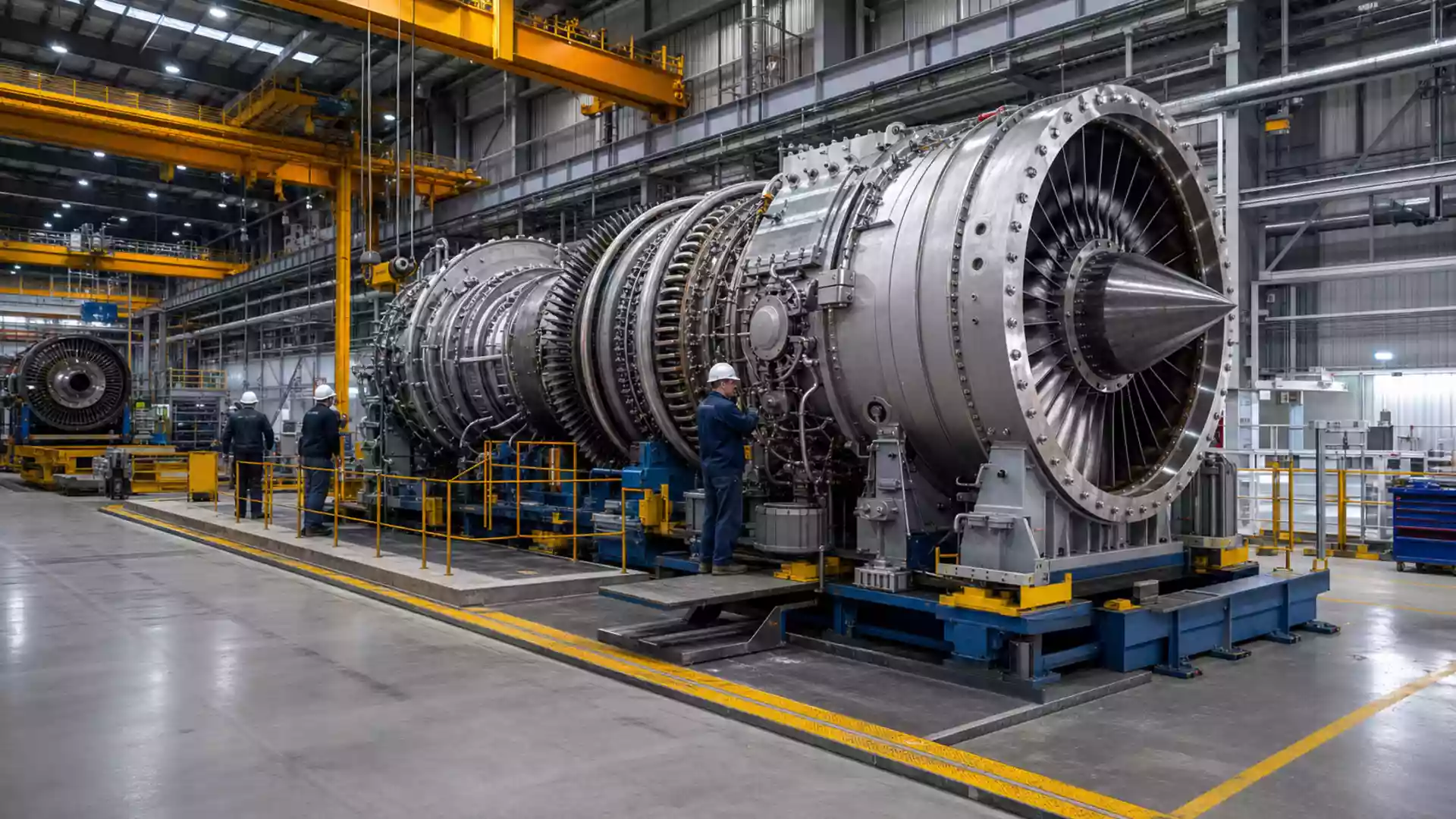
The more forward-looking development concerns what Siemens Energy will actually build. Reports indicate the company has agreed to manufacture steam turbine components at its Newcastle facility for Rolls-Royce SMR, the British developer of small modular reactors. The arrangement positions Siemens Energy as a supplier to the UK's nuclear programme and extends its reach beyond the traditional gas turbine and grid equipment businesses that have long defined its identity.
Small modular reactors are gaining traction in several markets as a decentralised, low-carbon option for future power generation, and the partnership gives Siemens Energy a foothold in a segment that could complement its existing portfolio. The financial dimensions of the deal have not been disclosed, leaving investors to weigh the strategic logic without a clear sense of the revenue upside.
The Valuation Debate Sharpens
Not everyone shares JPMorgan's conviction. MWB Research reiterated its sell recommendation on Friday, describing the valuation as "demanding" relative to the company's fundamentals. That caution stands in contrast to the predominantly optimistic tone from other analysts and underscores a widening divide over what the shares are actually worth.
The numbers tell a nuanced story. Tuesday's closing price of €147.64 sat roughly 3 percent below the 50-day average of €152.24, suggesting a consolidation phase after a 23 percent run-up since the start of the year. Even after Wednesday's decline to €145.50, the stock remains about 65 percent above its 52-week low of €88.42 — a reminder that recent jitters amount to a pullback from elevated levels, not a collapse.
CEO Bruch has also waded into broader policy debates, warning that Germany would be particularly vulnerable to attacks on its energy infrastructure. The comment lands as supply security and critical infrastructure protection gain political weight across Europe — themes that resonate directly for a company supplying grid and power plant technology.
The gap between the current share price and JPMorgan's €245 target remains substantial, and whether that ambition proves realistic will depend on whether Bruch's summer demand optimism translates into the coming quarters' results. For now, the bull case rests on operational momentum, the bear case on valuation discipline, and the share price sits somewhere between the two, buffeted by macro currents and a shareholder register that keeps shifting.
Ad
Siemens Energy Stock: New Analysis - 9 September
Fresh Siemens Energy information released. What's the impact for investors? Our latest independent report examines recent figures and market trends.