
Siemens Energy's Steam Turbine Business Has Become the Unlikely Prize in the AI Power Race
Published on 08/26/2026 at 03:02 | Redaktion boerse-global.de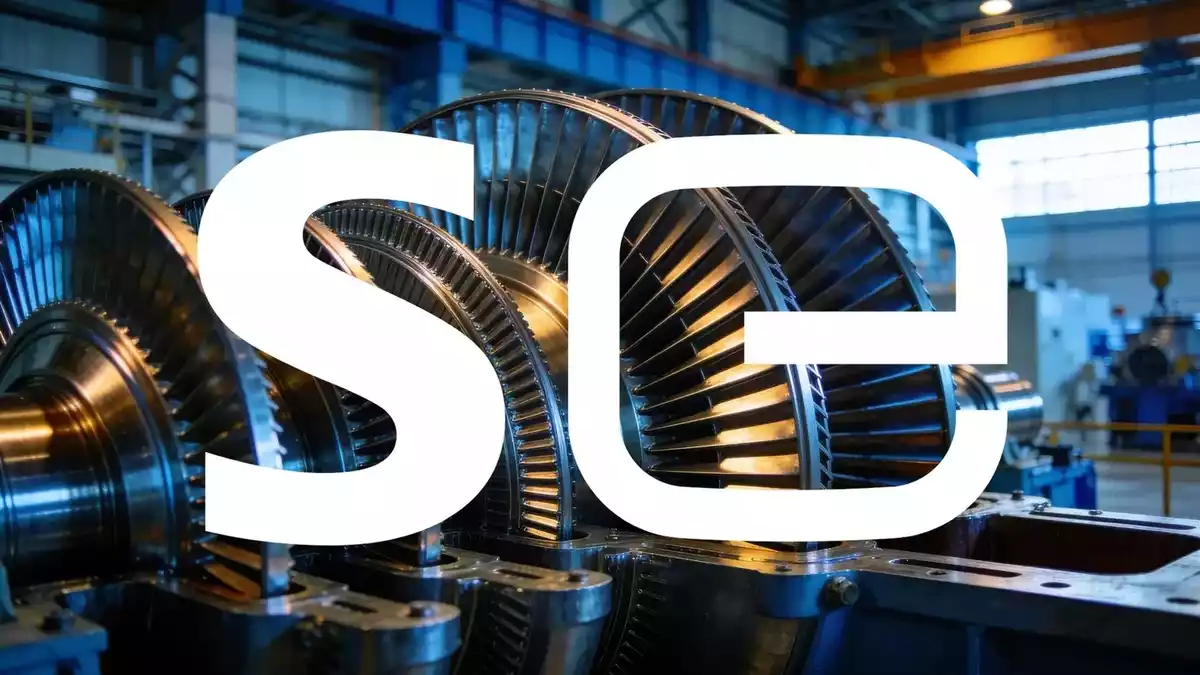
The irony is hard to miss. Steam turbines—the workhorse technology of fossil-fuel power plants that many investors had written off as a sunset business—are suddenly commanding a valuation north of €10 billion, with a queue of private equity heavyweights lining up for a piece of the action. The reason isn't a renaissance in coal or gas. It's the insatiable electricity appetite of artificial intelligence.
Siemens Energy's board is weighing the sale of a majority stake in its Transformation of Industry (TI) division, which bundles steam turbines, hydrogen electrolyzers, and industrial solutions. Goldman Sachs has been brought in as adviser, and the roster of interested buyers reads like a who's who of infrastructure investing: CVC, EQT, Bain, Brookfield, and KKR. The division generated roughly €5.7 billion in revenue in fiscal 2025 and employs somewhere between 15,000 and 17,000 people, depending on how the headcount is measured.
AI's Data Centers Are Rewriting the Demand Curve
The real catalyst sits thousands of miles from Munich in the server halls of hyperscale data centers. The electricity required to train and run AI models is staggering, and that demand is now flowing directly into orders for turbine equipment. Babcock & Wilcox, the plant builder, has placed an order for 20 turbines with a combined capacity of one gigawatt—power that would traditionally have been associated with entire power station fleets, now earmarked for data processing.
UBS recently lifted its global AI investment forecast to $1.2 trillion, a 15 percent increase. That single number helps explain why a business many considered terminal is suddenly an acquisition target. The valuation math has shifted dramatically in a matter of months: RBC analyst estimates put the division at up to €8 billion as recently as June. Now the talk is of more than €10 billion. That re-rating tracks almost perfectly with the data center boom—no coincidence, but rather a structural shift in which classic power generation technology becomes the backbone of the digital economy.
A Sharper Corporate Profile
For CEO Christian Bruch, the divestment is the most consequential answer yet to a question that has dogged the company: what exactly should Siemens Energy stand for? The logic is straightforward. Bruch wants to concentrate the group on power generation and transmission—the segments best positioned to ride the global investment wave in grid infrastructure and new generating capacity. TI, with its industrial customer focus, fits that vision only partially.
Should investors sell immediately? Or is it worth buying Siemens Energy?
A deconsolidation structure, in which Siemens Energy retains a significant minority stake while external investors inject fresh capital and entrepreneurial freedom, appears to be the most likely route. The company is reportedly weighing several options in parallel—a strategic partner, an initial public offering, or a hybrid structure with outside investors. That breadth of options suggests management is not rushing, but rather setting up the process to secure the best price and structure for remaining shareholders.
The supervisory board was expected to deliberate on the path forward as early as Wednesday, a sign of how advanced internal discussions have become.
What the Share Price Says
The market has already delivered its preliminary verdict. On Tuesday, Siemens Energy shares climbed 3.1 percent to €153.50, with some reports citing a 2.7 percent gain on the day. Either way, the direction is clear: investors are treating the potential sale not as a loss of substance but as a value-creating transaction. The market appears to believe that a more focused company with a clearer growth narrative could command a higher valuation than today's conglomerate structure.
Still, the stock remains 21 percent below its 52-week high of €195.38, even after recovering 84 percent from last September's annual low. The annualized 30-day volatility of 54 percent underscores just how turbulent the re-rating has been over the past year.
A Broader Industrial Realignment
The TI divestment is not an isolated event. It sits within a wider pattern of industrial restructuring across the German energy sector. The EU Commission has just approved Volkswagen's sale of a majority stake in Everllence—formerly MAN Energy Solutions—to Bain Capital in a €7.4 billion deal. At Siemens Energy itself, other strategic moves are underway: all electrolyzers for a hydrogen project in Hamburg with 100 megawatts of capacity have been delivered, set to produce 10,000 tons of green hydrogen annually from 2027.
The company is not simply shedding a peripheral business. It is actively deciding which technologies to advance internally and which to place in the hands of specialized investors. Steam turbines could actually grow faster outside the corporate umbrella, given that private equity firms like CVC and Brookfield specialize precisely in riding cyclical demand surges.
The Risks That Remain
The transformation carries real risks. Shedding a division with €5.7 billion in revenue leaves a hole in the group's balance sheet that the remaining businesses must fill. The final proceeds and structure remain uncertain—the gap between an IPO and a strategic investor leaves considerable room for interpretation. Shareholders would be wise to watch the coming weeks closely, as the specific terms will likely determine whether Tuesday's positive share price reaction proves durable.
The broader question this deal raises is whether the energy transition will be shaped less by wind farms and more by the server farms that are generating enormous electricity demand. Siemens Energy's steam turbine divestment offers at least one very concrete answer: the digital economy is now powerful enough to reprice even the most old-economy of technologies.
Ad
Siemens Energy Stock: New Analysis - 26 August
Fresh Siemens Energy information released. What's the impact for investors? Our latest independent report examines recent figures and market trends.


