
Shipping Firms Fined $1.75m for Concealing Illegal Oil Discharges
Published on 08/30/2026 at 20:27 | Editorial boerse-global.de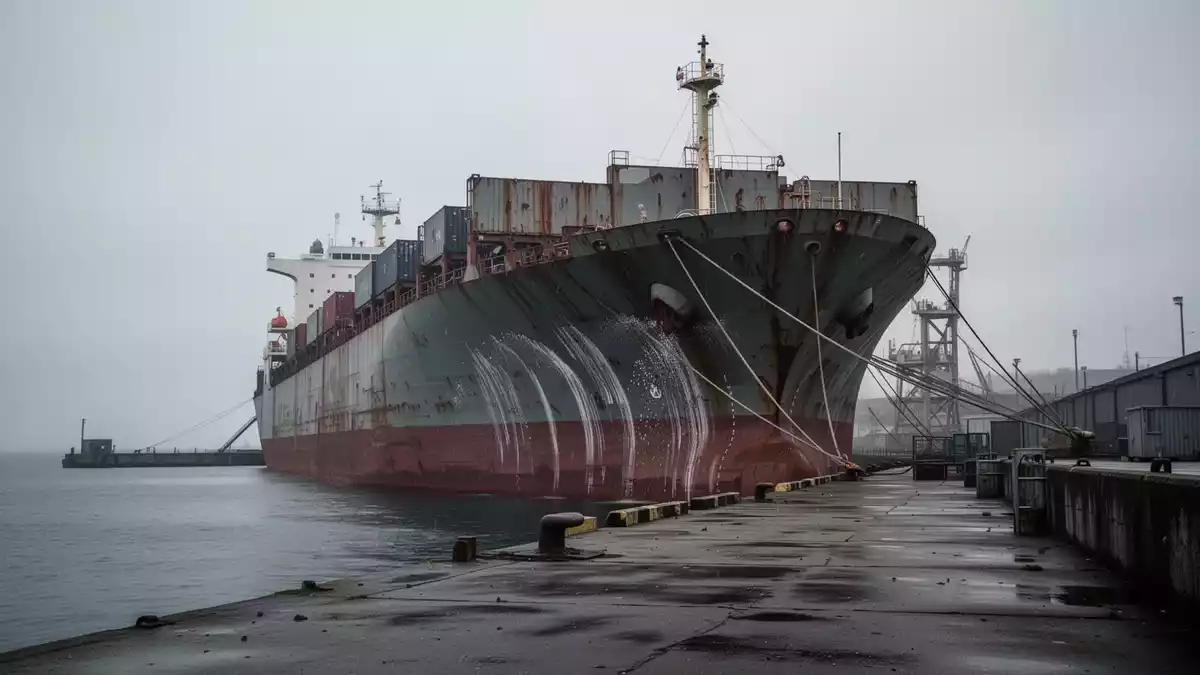
Two international shipping companies have been ordered to pay a combined $1.75 million after admitting to concealing the illegal discharge of oily waste into the ocean — a case that underscores the serious legal and financial consequences UK employers in the maritime sector can face for environmental breaches.
MSC Shipmanagement Ltd and Hong Kong Spirit Shipping and Trading Ltd each pleaded guilty to two counts of violating the Act to Prevent Pollution from Ships (APPS), the US legislation that enforces international marine environmental standards. In addition to the fine, both companies have been placed on four years of probation.
Environmental breaches carry heavy penalties, but many UK employers are also exposed when it comes to day-to-day workplace safety compliance. A free Health & Safety Toolkit provides ready-to-use risk assessments, checklists and toolbox talks that help you meet your legal duties under UK law. Download the free Health & Safety Toolkit
Court Proceedings
The case centres on the operations of the vessel MSC Samira III. Court records show the illegal discharges took place between June 2024 and January 2025, with the matter coming to light after inspections at a port in Pennsylvania.
Investigators found that the companies had failed to maintain an accurate oil record book — a mandatory log used to track the handling and disposal of oily waste and bilge water. By failing to document the discharges, the firms bypassed both international and domestic regulations designed to prevent marine pollution.
The oil record book is a core requirement under the International Convention for the Prevention of Pollution from Ships (MARPOL), which sets global rules on how vessels must manage and record waste. For UK-based operators and crew, the same standards apply through domestic legislation, and breaches can carry significant penalties.
Individual Accountability
The vessel's second engineer, Mikhail Tsurikov, has also pleaded guilty to charges related to the incident. His sentencing is scheduled for September 10.
The case against the engineering officer highlights the emphasis placed on individual responsibility for crew members who participate in or oversee the bypass of pollution control equipment. It serves as a reminder that liability can extend beyond the corporate entity to the individuals directly involved.
Just as individual crew members face personal liability, UK directors and managers can be held personally accountable for safety failures under the Health & Safety at Work Act 1974. A free toolkit with 9 practical tools — including risk assessments, checklists and a director's liability guide — helps you stay compliant and protect your workforce. Get the free Health & Safety at Work Act Toolkit
Regional Environmental Pressures
The sentencing comes amid a series of other maritime environmental incidents reported in recent months. In Omani waters, salvage operations are currently underway for the sanctioned tanker Caroline Bezengi, which ran aground on June 30. The vessel, reportedly carrying 800,000 barrels of fuel, has experienced leaks that threaten protected marine areas and nearby islands.
Separately, recent data from VesselBot has highlighted significant discrepancies in emissions efficiency across the shipping industry. A report covering the second quarter of 2026 found a 31.3% gap in emissions efficiency between major carriers on the trade route between Northern Europe and the North American East Coast.
While the fleet average for the period stood at 231.7 grams of CO2 per TEU-kilometre, individual carrier performance varied considerably, with feeder vessels noted as being less efficient than larger ships.


