
Safety Authorities Release Findings on Fatal Industrial Accidents and Construction Fraud
Published on 08/13/2026 at 12:37 | Redaktion boerse-global.de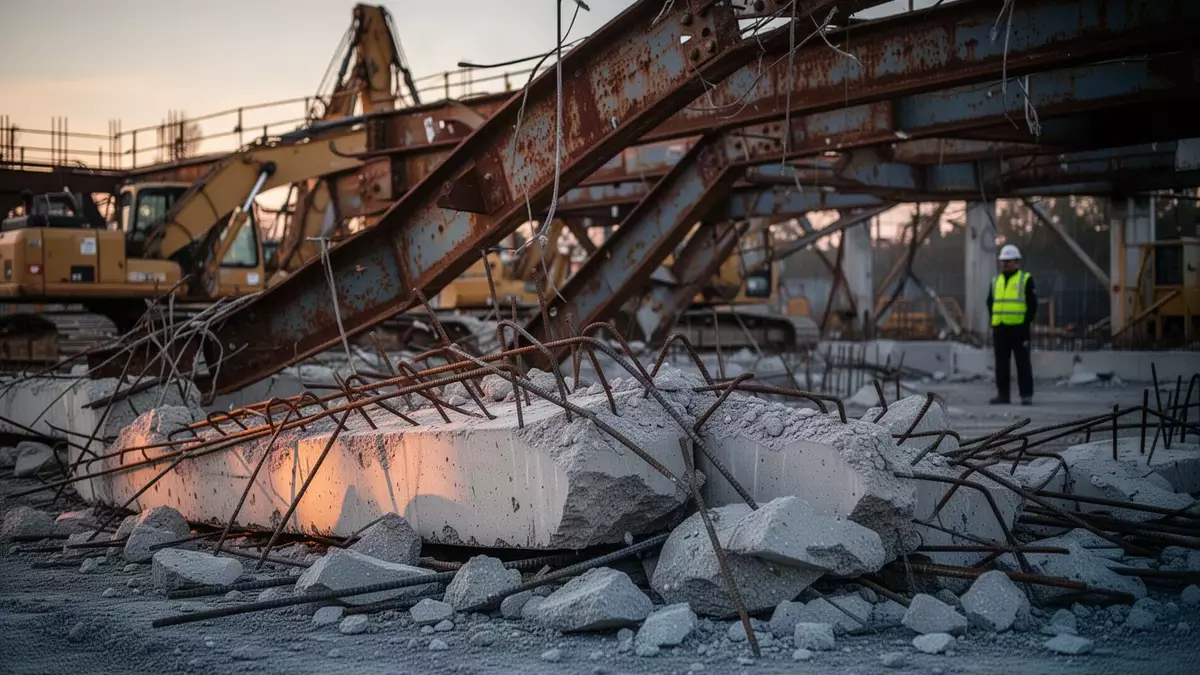
International safety authorities have published a wave of final investigation reports this week, exposing fatal industrial failures and systemic safety fraud across construction and manufacturing. The findings, covering major incidents in the United States and China, point to a recurring pattern of undocumented procedures and deviations from engineering specifications — a warning for UK employers reviewing their own safety protocols.
Chinese Probes Reveal Construction Fraud and Management Failures
In reports released on August 13, China's State Council Safety Committee and regional emergency bureaus detailed the results of investigations into major infrastructure failures. Investigators finalised their report on the February 23, 2023, collapse at a construction site in Chongqing, which killed five people and injured three others. The direct cause was improper backfilling of a mixing machine pit's brick wall, which was not carried out according to the original plan, leaving the structure with insufficient load-bearing capacity. Direct economic losses were estimated at approximately 6.68 million yuan.
These incidents highlight a stark reality: undocumented procedures and missing risk assessments are a leading cause of workplace fatalities. If you are responsible for safety at your company, a free toolkit with 41 ready-to-use templates and checklists can help you document hazards properly and stay compliant. Download the free Risk Assessment Toolkit
Authorities recommended fines between 1.5 million and 1.55 million yuan for Shanxi Spring Construction Company and other involved entities, with several individuals facing criminal charges for major liability in the accident.
In a separate briefing, the State Council Safety Committee office highlighted five cases of safety production fraud. Among these was the July 19, 2024, bridge collapse on the Daning Highway in Shaanxi province during a rainstorm, which caused 25 vehicles to fall into a river, leaving 62 people dead or missing. A technical evaluation concluded that while natural forces like water pressure and debris contributed to the failure, significant construction defects were a critical factor. The contractor, a subsidiary of China Communications Second Highway Engineering Bureau, was found to have deviated from blueprints by raising tie beams by 3.143 meters. Supervisors were accused of illegal acceptance of the work, and testing agencies were found to have falsified reports.
Recent central safety inspections in 2026 have identified ongoing hazards in the construction sector. In Guizhou province, inspectors found two tower cranes with overlapping rotation radii and failed safety limiters, despite reports labeling them as qualified. In Xinjiang, scaffolding foundations at a residential project were found to be sinking or suspended, creating a high risk of collapse.
US Chemical Safety Board Concludes US Steel Explosion Probe
In the United States, the Chemical Safety Board (CSB) released its final report on August 12 regarding a fatal explosion at the US Steel Clairton Works. The incident, which occurred on August 11, 2025, killed two employees and seriously injured five others.
The CSB investigation identified that the blast resulted from an undocumented valve-washing operation. Workers were using pressurized water to clean valve seats without a formal procedure or a thorough risk assessment. This led to a catastrophic failure of the valve, releasing coke oven gas that subsequently ignited. The report noted that the surrounding buildings were not designed to withstand the pressure of such an explosion, exacerbating the injuries and damage. Investigators concluded that the incident was preventable and stemmed from the lack of a standardized safety protocol for the cleaning process.
The US Steel explosion is a sobering reminder that even routine maintenance can turn deadly without a formal risk assessment. Over 37,000 UK businesses already use a free COSHH toolkit with 43 customisable templates and checklists to identify hazardous substances and document safe procedures before work begins. Get the free COSHH Toolkit
Technical Malfunctions and Personnel Conduct Under Review in Aviation Incident
Aviation investigators are currently examining a dual-track cause for a mid-air drop involving an Air India flight on August 4, 2026. Flight AI2379, an Airbus A320neo traveling from Phuket to Delhi with 137 passengers, lost 300 feet of altitude, resulting in injuries to at least 17 people.
A post-flight report indicated that the aircraft experienced multiple system warnings, including a triple hydraulic failure, an autopilot disconnect, and an elevator fault. A stall warning triggered a nose-down recovery maneuver by the co-pilot. While technical malfunctions are a primary focus, the pilot-in-command has been grounded following a non-negative drug test for cannabis. The Airline Pilots' Association of India has defended the crew, noting that the pilot-in-command was not at the controls during the technical failure and that the co-pilot successfully recovered the aircraft. The Air Accidents Investigation Branch is continuing its probe with assistance from Airbus and the French BEA.
In other recent safety developments, fire services in London responded to a warehouse blaze at an industrial estate in Barking on August 12, 2026, involving 125 firefighters. In Bulgaria, prosecutors are investigating suspected arson following an explosion at a military plant near Tryavna on the same day. No injuries were reported in either incident.


