
Rheinmetall's Two-Speed Reality: Record Orders, Sliding Shares, and a December Verdict
Published on 09/07/2026 at 20:41 | Editorial boerse-global.de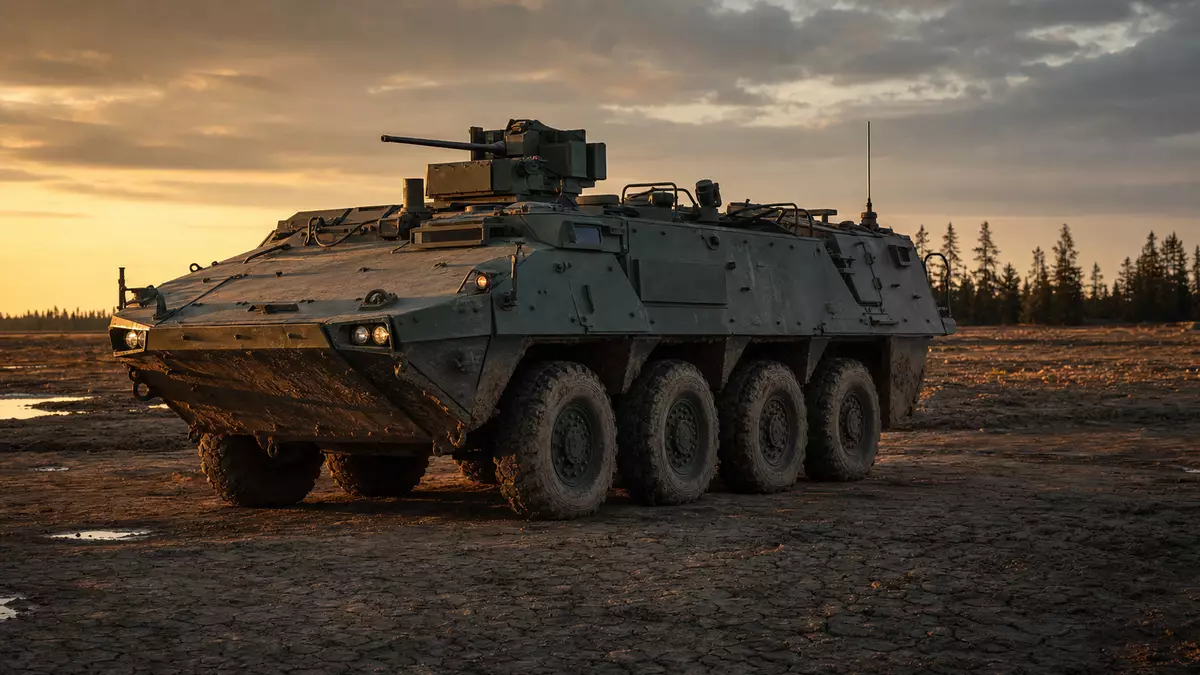
The arithmetic of Rheinmetall's current predicament is almost paradoxical. The Düsseldorf-based defence group just closed a fiscal year that saw revenue jump 29 percent to €9.9 billion, operating profit climb 33 percent to €1.8 billion, and net income edge up 3 percent to €0.8 billion. Management is guiding for another 40 to 45 percent revenue expansion in 2026. Yet the share price, which briefly slipped below the psychologically important €1,000 threshold before recovering to €1,042, remains stubbornly weak — trading roughly 5.1 percent beneath its 50-day moving average.
That disconnect between operational momentum and market sentiment is the defining feature of Rheinmetall's current chapter. The order book, after all, has never looked healthier. At €63.8 billion, it stands at an all-time high, and when including the order intake expected at partner and subsidiary level — including TKMS, where a €6.3 billion contract for four MEKO A-200 frigates for the German navy is already booked — the combined pipeline exceeds €100 billion. Add a further €25 billion-plus at TKMS itself, and the visibility stretches years into the future.
A December Decision That Could Reshape the Pipeline
The next major catalyst is political rather than industrial. The Arminius project — the procurement of Boxer wheeled vehicles for the Bundeswehr — has moved into its final negotiation phase, which closed in the second week of September. Parliamentary scrutiny in the budget committee is scheduled for December 9, and the fixed contract for vehicles and servicing is expected to land between €14.4 billion and €14.5 billion. Two optional tranches could extend the ceiling to as much as €26 billion. A down payment of roughly 30 percent is anticipated for late December or January 2027.
A green light on Arminius would do more than swell an already record order book — it would test whether the market's scepticism is about fundamentals or simply about the August guidance cut that knocked 11 percent off the stock over a 30-day stretch. The share price currently sits at €1,023.20 in the most recent trading, about 6.8 percent below its 50-day average of €1,097.59, suggesting investors have yet to fully digest the lowered full-year outlook issued last month.
From Lynx to Kassel: The Operational Engine Keeps Turning
Beneath the share price noise, the operational cadence has been relentless. American Rheinmetall has handed over the first of eight Lynx XM30 prototypes to the US Army, marking the start of development and performance testing under the Phase 3/4 EMD contract worth approximately $764 million. The remaining seven prototypes are slated for delivery this year. The Lynx features a hybrid-electric drivetrain and modular architecture with real-time digital connectivity, developed within the "Team Lynx" consortium alongside Textron Systems, Raytheon, L3Harris, Allison Transmission and Anduril Industries.
Should investors sell immediately? Or is it worth buying Rheinmetall?
The US push extends beyond the Lynx programme. American Rheinmetall has also secured a Kongsberg contract to manufacture components for MCT-30 turrets used in the ACV-30 vehicle operated by the US Marine Corps — a $710,000 order with production in Michigan and deliveries scheduled for 2026 and 2027. Rheinmetall Canada, meanwhile, continues to supply spare parts for the MSU-200NAV to the US Navy under a contract worth a low single-digit million euro figure, with deliveries running through 2028.
Closer to home, the Bundeswehr placed an additional order in mid-August worth more than €500 million gross for 149 further mobile rescue stations. That brings the total ordered systems to 165 units, valued at over €600 million — the largest single contract in the history of subsidiary Rheinmetall Project Solutions, with production scheduled to begin in the first quarter of 2027.
Kassel's Transformation and a Cloud Over Wolgast
Nowhere is Rheinmetall's growth ambition more visible than in Kassel. The company is investing roughly €270 million to convert the site into a tank production facility with an integrated drone testing centre, supplemented by approximately €25 million from the state of Hesse. Site revenue is projected to more than triple from €1.5 billion this year to €5 billion by 2029, while headcount is expected to grow from around 2,200 to 3,500 employees.
Not every project, however, is running smoothly. The planned F126 frigate programme was halted in June after Dutch partner Damen Schelde failed to meet its time and financial commitments. Costs had ballooned to nearly €13 billion, of which €2.4 billion had already been spent. TKMS's MEKO A-200 concept is now the proposed replacement, albeit at higher unit costs of €1.6 billion per vessel versus roughly €1 billion previously. For the Peene shipyard in Wolgast, employing around 400 people and owned by Rheinmetall, the uncertainty is acute — the company is currently reviewing alternatives for the facility.
The Valuation Question and a Raw-Materials Subplot
Even after the recent share price decline, valuation remains a point of contention. Analysts point to an expected price-to-earnings ratio of roughly 32.5 for 2026, which they argue still implies a rich price even for a company growing at the current clip. That debate — whether Rheinmetall's growth justifies its multiple — is unlikely to be settled by the December Arminius decision alone.
A quieter concern is beginning to surface around critical raw materials. Niobium, a metal whose production is heavily concentrated in Brazil, is increasingly viewed as a potential bottleneck for the defence industry at large. For Rheinmetall specifically, this is not yet an acute operational challenge, but the discussion underscores how tightly supply chains and geopolitical dependencies are woven into the sector's growth trajectory.
The picture for investors, then, is genuinely two-sided. Record orders, expanding US operations and a transformative Kassel investment sit alongside a share price that has yet to recover from the August guidance reduction, a halted frigate programme, and valuation concerns that persist even after the sell-off. The €1,000 mark is likely to remain a key psychological reference point in the near term — and December's Arminius decision may well determine whether the order book finally wins the argument with the market.
Ad
Rheinmetall Stock: New Analysis - 7 September
Fresh Rheinmetall information released. What's the impact for investors? Our latest independent report examines recent figures and market trends.


