
Rheinmetall's Tungsten Squeeze Adds to a Share Price Already Down 43% From Its Peak
Published on 08/31/2026 at 12:03 | Editorial boerse-global.de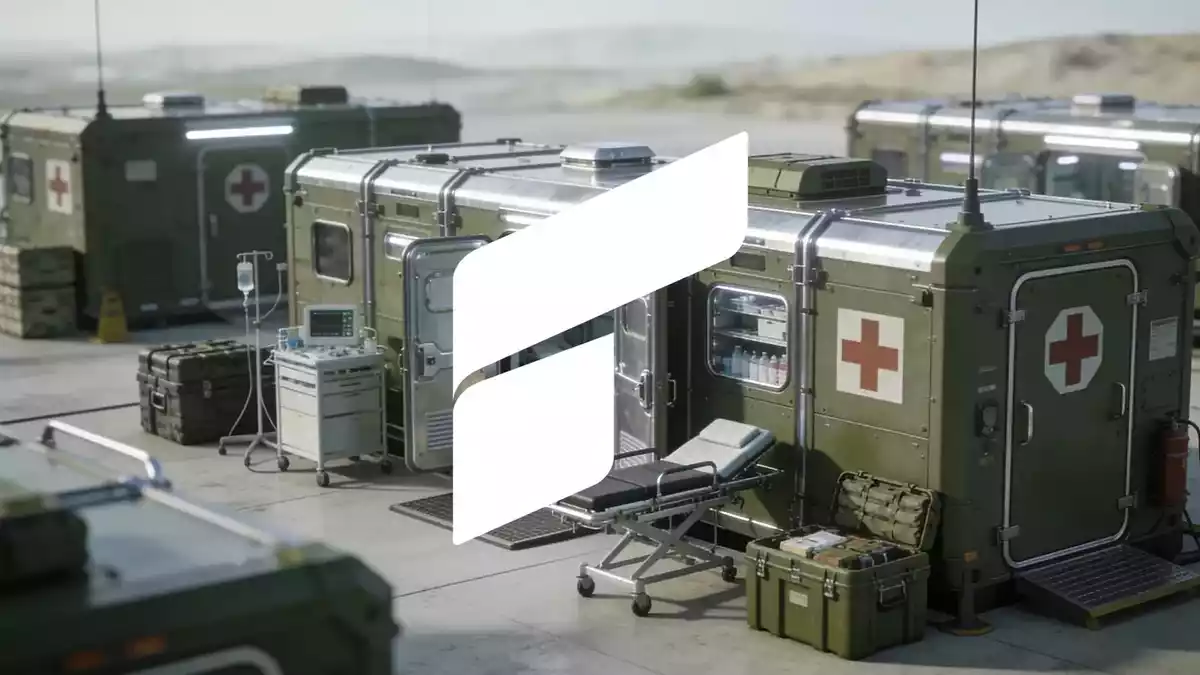
The defence contractor's shareholders have a fresh worry to weigh against a steady drip of contract wins: the global scramble for tungsten. The rare metal, essential for armour-piercing ammunition and hardened manufacturing tools, is becoming a contested commodity, and Rheinmetall is directly exposed to any tightening of supply. The stock slipped 1.1 percent on Monday morning to EUR 1,139.80, having closed Friday at EUR 1,152.40.
The Strategic Metal Behind the Munitions
Tungsten's role in Rheinmetall's production lines is not peripheral. It sits at the heart of the company's ammunition and tank manufacturing, making supply security a strategic concern. While no concrete figures have been published on how intensifying competition for the metal might hit Rheinmetall's costs, market watchers are flagging it as a fresh overhang on the shares.
The stock's trajectory tells its own story. From a 52-week high of EUR 2,007.00 struck in early October, the shares have shed roughly 43 percent. The decline has been steep enough to test investor patience, though the price has found some footing around the EUR 1,100 mark in recent sessions.
A Busy Order Book Away From the Headlines
Away from the tungsten narrative, the company has been quietly adding to its backlog. The Bundeswehr last Tuesday placed a first call-off under the G-CAP II SU programme for a modular storage facility in Lithuania, a component Rheinmetall frames as part of the broader build-out of NATO infrastructure along the eastern flank.
That followed an earlier move on 17 August, when the German military expanded an existing contract for mobile field hospitals. The additional 149 protected and unprotected systems carry a gross order value of more than EUR 500 million, with production slated to begin in the first quarter of 2027.
Should investors sell immediately? Or is it worth buying Rheinmetall?
These are not the kind of headline-grabbing mega-deals that have historically moved Rheinmetall's share price in a single session. Instead, they read as evidence of operational continuity — a steady accumulation of mid-sized orders that underpins the long-term growth story without generating much market excitement.
Sensing a Broader Technology Push
The company also demonstrated on 19 August, together with Hensoldt, the successful integration of passive sensor technology into a modern air defence system. No new financial order accompanied the announcement, but the collaboration highlights how far Rheinmetall's technology base now extends — from logistics and field infrastructure to the sensor domain.
Analysts Remain Split
The analyst community has yet to reach a consensus on the shares. On 19 August, mwb research reaffirmed its "Sell" recommendation, pointing to a gap between consensus expectations and the order intake needed by the 2028 financial year. JPMorgan, on the same day, confirmed a neutral stance without issuing a new price target. Both assessments are now more than a week old, reflecting the state of play from mid-August rather than any fresh re-evaluation.
The Technical Picture: Stabilising, But Not Out of the Woods
The technical indicators offer a mixed read. The relative strength index sits at 49.4, putting the stock in neither overbought nor oversold territory. Yet at EUR 1,139.80, the shares trade roughly 19 percent below their 200-day moving average of EUR 1,411.92 — a sign that the broader downtrend has not been broken. At the same time, the stock stands 26 percent above its 52-week low of EUR 902.50, set as recently as June.
Two Forces Pulling in Opposite Directions
Investors are left weighing two competing forces. On the one hand, there is the near-EUR 40 billion in Bundeswehr orders tied to the "Arminius" project, which would expand tank production at the Kassel site and grow the workforce there from 2,200 to 3,000 employees by the end of 2028. A final decision on that expansion is expected in September, and the plans have already drawn criticism from the Kassel Peace Forum, which warned on Anti-War Day (1 September) of an escalation spiral driven by rearmament.
On the other hand, geopolitical risks — including the recent escalation between the US and Iran — and now the competition for critical raw materials like tungsten are weighing on sentiment. Until it becomes clearer how much the raw materials question will actually dent margins, the shares look likely to remain trapped in their current trading range. The stock closed Friday down 2.1 percent on the day, though it still managed a 2.5 percent gain for the week. Since the start of the year, it has given up 26 percent.
Ad
Rheinmetall Stock: New Analysis - 31 August
Fresh Rheinmetall information released. What's the impact for investors? Our latest independent report examines recent figures and market trends.


