
Rheinmetall's Transatlantic Balancing Act: US Contracts Keep Flowing While Munich's Munitions Debate Weighs Heavy
Published on 09/09/2026 at 07:42 | Editorial boerse-global.de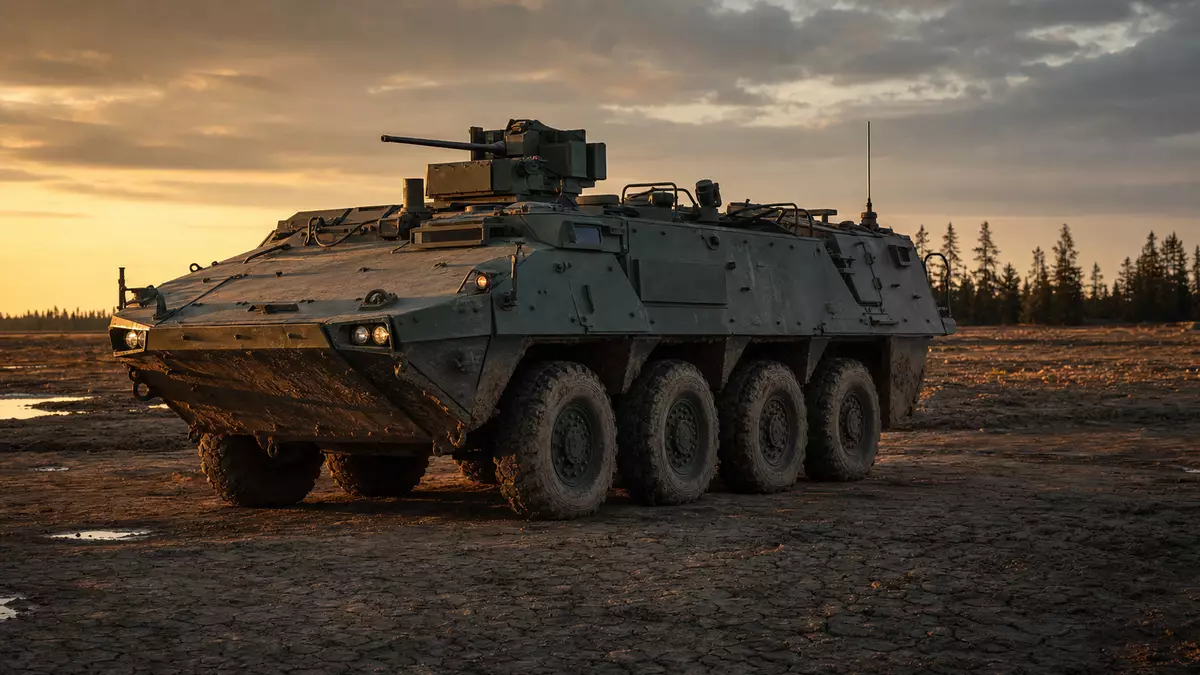
The German defense contractor Rheinmetall is living a split-screen existence right now. On one side, a steady drumbeat of American contracts—from U.S. Navy spare parts to armored vehicle components—reinforces the company's deepening transatlantic footprint. On the other, a bruising share price that remains nearly 50 percent below its October peak suggests investors are looking past the order flow and fixating on something more unsettling: the possibility that Germany's appetite for munitions spending may cool before the decade is out.
Shares in the Düsseldorf-based group clawed back 2.7 percent on Tuesday to close at 1,050.00 euros, a modest rebound that does little to mask the scale of the sell-off. The stock has shed 32 percent since the start of the year and trades roughly 48 percent beneath its 52-week high of 2,007.00 euros, reached on October 3, 2025. That peak now looks distant, and the gap between Rheinmetall's long-term growth narrative and its near-term chart is becoming harder for shareholders to reconcile.
The Munitions Debate Hanging Over the Stock
At the heart of investor unease is a debate percolating in Berlin over potential reductions to German munitions spending from 2027 onward. The discussion remains preliminary—no decisions have been made—but for a company whose growth thesis rests so heavily on expanding defense budgets, even the prospect of a future pullback carries weight. Media reports have framed the debate as one of the key overhangs on the share price, and it is not difficult to see why: Rheinmetall's order book may be stuffed, but the market is increasingly asking what happens when the procurement taps tighten.
The company's backlog has now crossed the 80 billion euro threshold, providing exceptional planning visibility for the years ahead. Yet that figure has done little to steady the stock, which fell as low as 1,016 euros the previous session—its weakest level since July—before Tuesday's recovery attempt.
Should investors sell immediately? Or is it worth buying Rheinmetall?
A Quiet But Steady Stream of American Work
Against that political backdrop, Rheinmetall continues to methodically expand its U.S. presence. On Friday, the company announced it would supply spare parts for mobile air-start units to the U.S. Navy, the latest in a series of American deals that have accumulated over recent weeks.
Earlier this month, American Rheinmetall received an order from Kongsberg Defence & Aerospace valued at roughly 710,000 U.S. dollars for machined components of the MCT-30 turret. Production will take place at the company's Lapeer and Lansing facilities in Michigan, with deliveries scheduled for 2026 and 2027. Individually, these contracts are financially modest—a rounding error for a group of Rheinmetall's scale. Collectively, however, they underscore a strategic point: the company is embedding itself deeper into the U.S. defense supply chain, a market that remains largely insulated from European budget politics.
The broader American push includes the handover of the first Lynx XM30 prototype to the U.S. Army as part of the service's next-generation armored vehicle program, as well as a planned investment of around 270 million euros to expand the Kassel site into a hub for tank production and logistics.
Analysts Split on What Comes Next
The analyst community remains divided on how to read the current juncture. Goldman Sachs' Sam Burgess has held firm, maintaining a price target of 2,300 euros and arguing that even with an anticipated softening in the munitions business after 2030, a fair value of roughly 1,450 euros remains realistic. Of ten experts surveyed in August, eight recommended buying the stock and two advised holding, with an average price target of 1,645 euros.
MWB Research struck a more cautious tone, upgrading Rheinmetall from sell to hold on September 2—but slapping a price target of 1,050.00 euros on the shares, essentially at the current level. That suggests a view that near-term headwinds, particularly the munitions debate, are not yet fully reflected in the valuation.
A Pipeline That Keeps Growing
The order momentum, at least, shows no signs of abating. Rheinmetall recently received a German military order for 149 additional mobile medical stations, valued at over 500 million euros, bringing the total contract value to more than 600 million euros. An even larger package from Romania, worth approximately 5.7 billion euros, covers combat vehicles, air defense systems, ammunition, and four naval vessels.
Rheinmetall at a turning point? This analysis reveals what investors need to know now.
Not everything has gone according to plan. After losing the F-126 frigate program, Rheinmetall trimmed its 2026 revenue guidance to 13.7 to 14.2 billion euros, down from a previous range of 14 to 14.5 billion euros. The revision was a reminder that even the most well-stocked order books cannot fully insulate a company from program-level setbacks.
What to Watch Next
For investors seeking clarity, the coming days offer opportunities. Rheinmetall's management is scheduled to appear at the Bernstein 23rd Annual Pan-European Conference and the Jefferies Industrials Conference, where executives will likely face questions about the munitions spending debate and the company's ability to convert its record backlog into cash-generative growth.
The core tension is straightforward: Rheinmetall's transatlantic strategy is working, with American contracts accumulating and the U.S. relationship deepening at precisely the moment European budget uncertainties are creeping into the narrative. Whether the stock can close the gap between its operational trajectory and its market valuation may depend less on the next contract announcement and more on how convincingly management can argue that Germany's munitions debate is noise, not signal.
Ad
Rheinmetall Stock: New Analysis - 9 September
Fresh Rheinmetall information released. What's the impact for investors? Our latest independent report examines recent figures and market trends.


