
Rheinmetall's Satellite Factory Opens as Cash Burn Clouds the Picture
Published on 10/07/2026 at 03:50 | Editorial boerse-global.de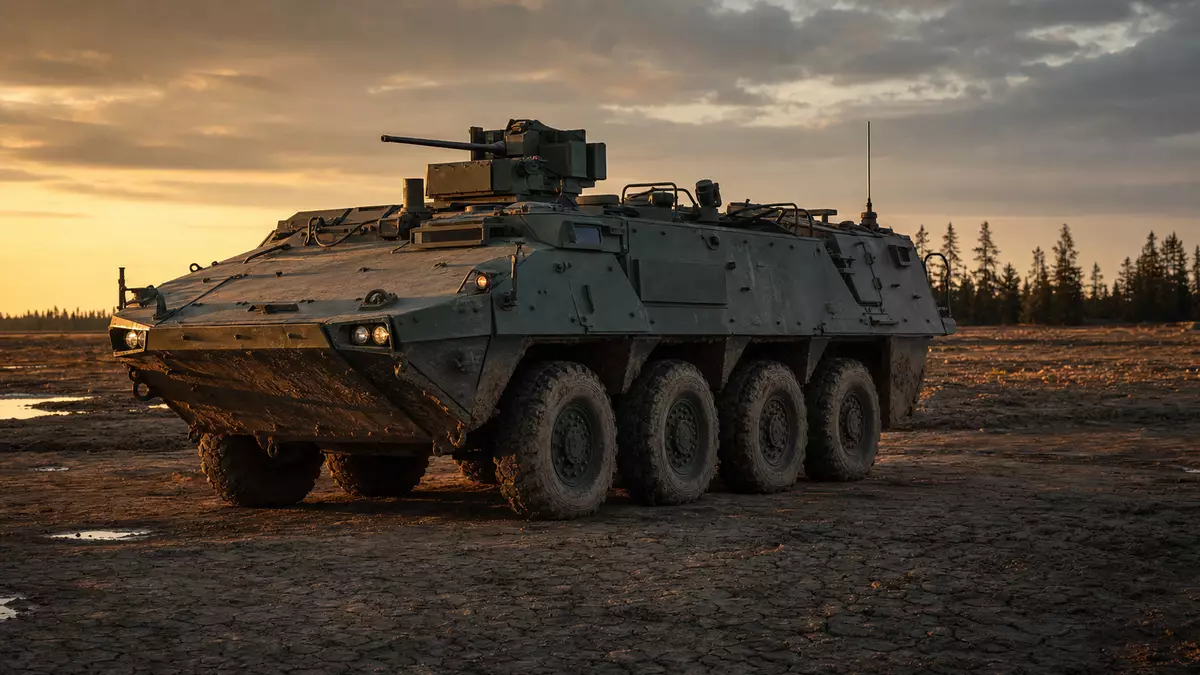
Rheinmetall has flipped the switch on serial production of radar reconnaissance satellites at its Neuss facility, a move that pushes Europe's largest ammunition maker squarely into the space-surveillance business. The Düsseldorf-based group holds a 60% stake in the Rheinmetall Iceye Space Solutions joint venture, which is targeting output of roughly 50 satellites per year.
The milestone lands alongside a fresh partnership with Australian defense startup Breaker to wire voice-controlled autonomous drone swarms into the Boxer wheeled armored vehicle. Rheinmetall Defence Australia and Breaker have already put the in-vehicle voice command system through a successful trial, according to the company.
Yet the stock market greeted the expansion with a shrug. Rheinmetall shares shed 3.2% on Tuesday to close at 952.00 euros, with political uncertainty over continued support for Ukraine and doubts about the company's ability to work through its existing order backlog weighing on defense names. No single confirmed trigger for the decline was identified. The prior session had already seen the stock drop 3.1% to 953.10 euros.
The cash question hanging over the growth story
What matters more than any single day's trading, analysts argue, is whether Rheinmetall can convert its breakneck capacity build-out into hard cash. The multi-year Bundeswehr satellite reconnaissance contract carries a total volume of around 1.7 billion euros, but expanding into new business lines has consumed substantial liquidity. Operating free cash flow for the first half of 2026 came in at roughly minus 1.6 billion euros.
Investors now want proof that the new space and digital ventures will rein in that outflow before long. The Bundeswehr order secures multi-year baseline utilization of the Neuss production line, and the first satellite built there is slated to launch aboard a SpaceX rocket in early 2027. Management is guiding for full-year 2026 revenue of between 13.7 billion and 14.2 billion euros.
Should investors sell immediately? Or is it worth buying Rheinmetall?
Deutsche Bank Research's Christoph Laskawi reiterated his Buy rating and 1,800-euro price target on Tuesday, projecting revenue growth of more than 40% in the upcoming quarterly report. Rheinmetall is due to publish detailed third-quarter figures on November 5.
Arminius looms as the next catalyst
Laskawi flagged the Bundeswehr's Arminius armored vehicle program as a key share-price driver. Should the large-scale project clear parliamentary hurdles in the final quarter, the core business would land another major order — a scenario in which Rheinmetall could translate its technological lead in autonomous land systems and satellites into profitable scale effects.
The political calendar adds a second checkpoint in early December, when the Bundestag's budget committee is expected to take up the Arminius procurement.
Beyond the satellite and robotics work, Rheinmetall has agreed in principle with train manufacturer Alstom on the main terms for taking over the locomotive plant in Kassel, where roughly 750 people are employed. Details of the transaction are still pending.
Space activities are broadening as well. Rheinmetall and partner Argotec placed a jointly developed satellite into orbit aboard a SpaceX Falcon 9 on October 1 for airspace surveillance. Under the SPOCK-1 program, the Bundeswehr gains exclusive access to SAR reconnaissance satellites through Rheinmetall ICEYE Space Solutions.
Insiders step in
Transactions from the leadership circle have accompanied the corporate developments. On October 2, the Sara Georgi Foundation — connected to supervisory board member Andreas Arthur Georgi — acquired Rheinmetall shares worth 238,706.60 euros. The management board had already bought stock a good week earlier.
Rheinmetall at a turning point? This analysis reveals what investors need to know now.
The bull case rests on a hefty order backlog and high-margin platforms. The bear case points to persistent investment burdens and execution risk. Since the start of the year the stock has lost 39%, a sign of continued restraint among institutional investors. The Neuss venture demands significant spending at the innovation center, and the Bundeswehr uses the satellites under a service model rather than purchasing the hardware outright.
Competitive pressure in European space is mounting, with established players such as Airbus Defence and Space and OHB positioning for upcoming large tenders. Delays in future award procedures, or technical snags in integrating complex AI-driven drone technology into existing vehicle platforms, could push back the profitability of the new business lines further — and with negative cash flow in the background, that could narrow the stock's valuation headroom considerably.
For the medium-term trajectory, one level stands out: as long as the shares hold above their 52-week low of 902.50 euros, the chance of stabilization remains intact. A sustained break below that support would open the door to a re-rating at a lower level. The November 5 interim report — with cash flow in the spotlight alongside confirmation of the annual revenue targets — will be the first real test of whether the fundamentals can carry the story.
Ad
Rheinmetall Stock: New Analysis - 7 October
Fresh Rheinmetall information released. What's the impact for investors? Our latest independent report examines recent figures and market trends.


