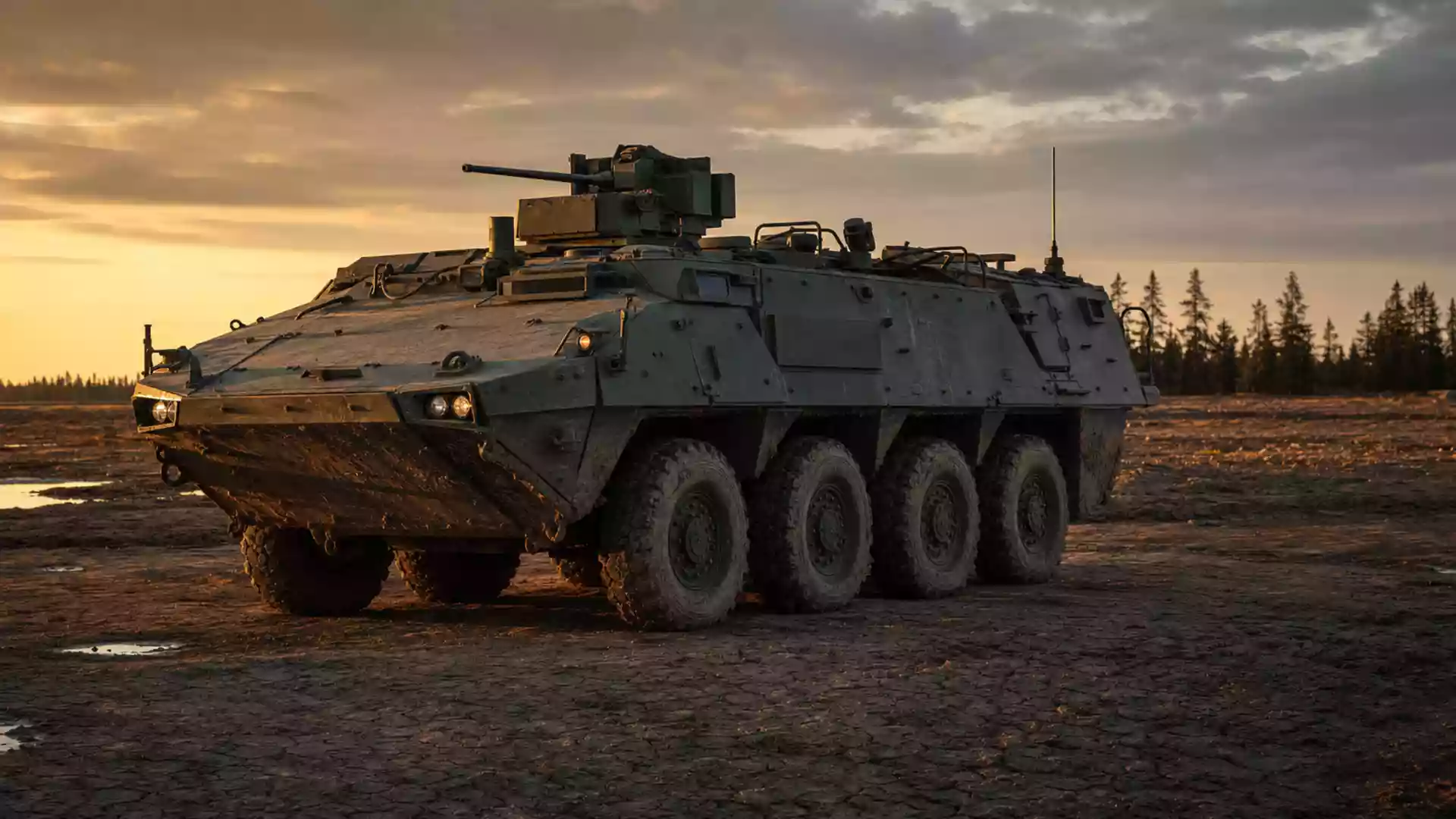
Rheinmetall's Record Order Book Meets a Market in Retreat
Published on 09/12/2026 at 09:21 | Editorial boerse-global.de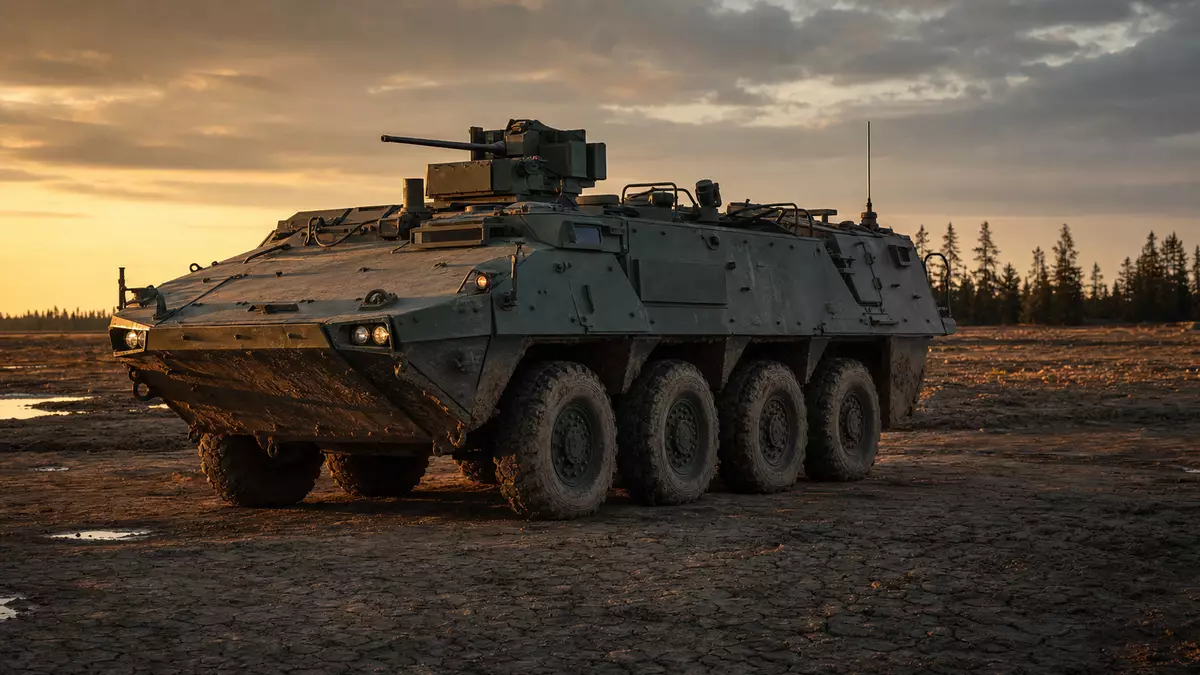
Rheinmetall finds itself caught between two opposing forces. On one side stands an order backlog that CEO Armin Papperger puts at more than EUR 100 billion. On the other, a share price that keeps sliding — closing Friday at EUR 993.00, down 2.1% on the day and roughly 51% below the 52-week high of EUR 2,007.00 reached on 3 October 2025. Since the start of the year, the stock has shed 36% of its value.
No single company-specific event appears to explain the latest leg down. According to media reports, the stock is simply moving with a broad softness across European defense names. The previous session had already been weak, with rising oil prices and an ECB rate hike weighing on markets generally. RWE, Deutsche Bank and Siemens Energy likewise struck a cautious tone on political developments in Germany — a mood that seems to have spilled over into Rheinmetall.
Order Books and Budgets Tell a Different Story
The disconnect between business fundamentals and price action is stark. European defense spending hit a record EUR 418 billion in 2025, with EUR 454 billion planned for 2026 — an increase of 75% compared with 2021. That tide is lifting the entire sector. At the MSPO defense fair in Kielce on Friday, 16 German companies exhibited jointly for the first time. Mid-sized firms such as Barth Präzisionstechnik report that defense will account for 50% of revenue in 2026 and expect both sales and headcount to double by 2027.
Not everyone views the boom with unqualified optimism. Consultant Klostermann warned mid-sized suppliers against positioning themselves as pure contract manufacturers for primes like Rheinmetall or KNDS, noting that margins in such subcontracting relationships tend to be thin.
Should investors sell immediately? Or is it worth buying Rheinmetall?
Rheinmetall's own interim report for 2026 showed revenue of EUR 5.2 billion, an operating result of EUR 786 million and an operating margin of 15%. The order backlog stood at EUR 80.5 billion. Management guided for full-year revenue of between EUR 13.7 and 14.2 billion and an operating margin of around 19% — figures that would normally underpin a growth narrative.
A Steady Stream of Smaller U.S. Contracts
Operationally, the group continues to deliver. American Rheinmetall won a USD 7.28 million order from the U.S. Marine Corps on 10 September for twelve Mission Master SP land vehicles plus five amphibious kits and accessories, with delivery scheduled between late 2026 and late 2028. Production takes place in the United States with support from Rheinmetall Canada, and a site in Maine is to serve as a future competence center.
That award was preceded by several others. On 4 September, Rheinmetall Canada announced a contract for replacement components for mobile air-start units of the U.S. Navy, awarded via the Canadian Commercial Corporation and in the low single-digit millions. Earlier in September came an order from Kongsberg Defence & Aerospace worth roughly USD 710,000, under which American Rheinmetall will manufacture components for MCT-30 turrets used in the ACV-30 program of the U.S. Marines — production in Michigan, delivery in 2026 and 2027.
Delays Cloud the Longer-Term Pipeline
Set against those wins are setbacks elsewhere. The introduction of unmanned combat drones for the Bundeswehr is facing significant delays, according to internal ministry documents. Originally, twelve aircraft were planned by 2029 at a cost of more than EUR 800 million; internal assessments now consider initial operational capability "not achievable." The adaptation of the MQ-28 "Ghost Bat," on which Rheinmetall is working with Boeing, is also internally in question. NATO now expects corresponding capabilities only from 2035, with a technology competition unlikely to begin before 2027.
The market has shown little appetite for the positives. A brief rally on 8 September, when the stock reportedly turned more than 3% positive on an optimistic analyst assessment, faded within days. Rheinmetall spent this week courting investors directly: a meeting with Bernstein in London and participation in the Jefferies Industrials Conference in New York on 9 September, followed a day later by Gabelli Funds' 32nd Annual A&D Symposium.
Two Speeds, One Stock
What emerges is a picture of two speeds. A multi-billion-euro order pipeline and a run of incremental U.S. contracts stand against near-term delays in future programs and a tense political backdrop in Germany. Technically, the stock trades about 9.2% below its 50-day moving average of EUR 1,093.75 — a sign that the recent downtrend has yet to be broken. Whether the order book can eventually outweigh the political skepticism will only become clearer in the coming weeks, as further details on program delays and the broader political climate emerge.
Ad
Rheinmetall Stock: New Analysis - 12 September
Fresh Rheinmetall information released. What's the impact for investors? Our latest independent report examines recent figures and market trends.