Rheinmetall's Post-2030 Order Gap Takes Centre Stage as Berenberg Cuts to Hold
Published on 10/09/2026 at 11:40 | Editorial boerse-global.de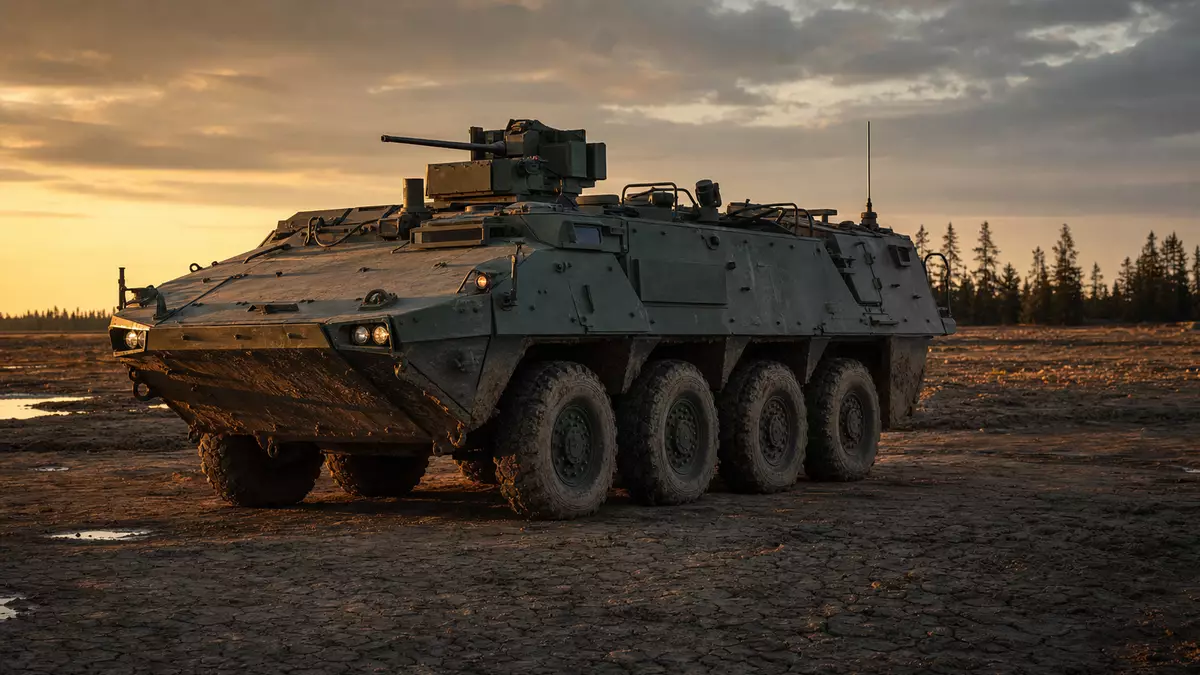
Rheinmetall shares are testing investors' nerves at a critical juncture. The defence contractor's stock has been grinding lower for months, and on Friday it changed hands at EUR 929.80 on Xetra — a level that leaves it barely 3.0% above its 52-week low of EUR 902.50. The immediate trigger for fresh caution came from Berenberg, where analyst George McWhirter downgraded the DAX heavyweight from "Buy" to "Hold" and slashed his price target from EUR 1,600 to EUR 1,020.
What makes the move more than a routine ratings tweak is the nature of the concern. McWhirter's caution is not about short-term supply chain snags; it goes to the heart of whether Rheinmetall can keep growing once the current decade of rearmament spending runs its course.
The Question Hanging Over the Order Book
Production for existing defence programmes is largely mapped out through the end of the 2020s. Beyond that, the picture blurs. The central debate now is whether incoming orders are sufficient to sustain growth rates after 2030, or whether a gap opens up that the market will have to price in. McWhirter cited uncertainty over medium-term growth prospects and the need for substantial new contracts for the period beyond 2030 as the explicit reasons for his downgrade.
That distinction matters enormously for valuation. Defence stocks traditionally trade at a discount the moment investors suspect a cyclical equipment cycle has peaked — and that is precisely the risk perception now taking hold among institutional investors. With the share already down 40% since the start of the year, the market has shifted from awarding an unquestioned growth premium to scrutinising the actual order backlog.
Diversification Efforts Cut Both Ways
The bull case rests on Rheinmetall's push into technology fields well beyond traditional munitions and armoured vehicle manufacturing. On Tuesday, the company signed a cooperation agreement with Breaker to integrate its human-machine teaming technology via an open architecture into Boxer CRV armoured vehicles operated by the Australian Army. Space-based capabilities are expanding in parallel: Rheinmetall ICEYE Space Solutions is providing the Bundeswehr with exclusive access to SAR satellites, and roughly a week ago a first satellite was launched into orbit aboard a SpaceX Falcon 9 from Vandenberg Space Force Base as part of the partnership with Argotec.
Should investors sell immediately? Or is it worth buying Rheinmetall?
Management has been signalling confidence in its own valuation. On 29 September, CEO Armin Theodor Papperger acquired 525 shares, and on 2 October the Sara Georgi Stiftung, closely linked to supervisory board member Andreas Georgi, reported the purchase of a further 250 shares. Additional financial flexibility comes from the renewal of the syndicated credit line, which was doubled from EUR 750 million to EUR 1.5 billion for general corporate purposes. In the fourth quarter of 2026, demonstrations of the containerised AERIE counter-drone system are due to begin in Australia in cooperation with Praetorian Aeronautics.
Yet the pivot carries its own earnings risk. JPMorgan placed the stock on its negative catalyst watch list on 10 September while keeping a "Neutral" rating, warning that a shift toward missiles, digital systems and drones could come at the expense of highly profitable munitions production. Delays in ramping up new lines could temporarily weigh on the cost base just as demand for traditional defence goods normalises. The share's 41% decline since the start of the year reflects that tension.
Margins, Not Revenue, Are the Real Battleground
The decisive question for the stock is whether Rheinmetall can lift profitability in its new technology fields to the level of its legacy business. For years, high-margin deliveries of ammunition and armoured vehicles drove earnings momentum. Digital system solutions and space components, by contrast, require substantial upfront investment in development and manufacturing conversion. Whether these segments can deliver comparable returns at rising volumes is now the key valuation factor — only once it is clear that the technological overhaul is not coming at the expense of group margins is the market likely to reward the strategic repositioning with a premium.
On the optimistic side, seamless integration of reconnaissance satellites and automated combat systems with existing vehicle platforms would cement Rheinmetall's role as an integrated systems provider across NATO states. International business is adding momentum: American Rheinmetall secured a USD 20.7 million U.S. Army order for MK93 softmount systems on 30 September. Jefferies analyst Chloe Lemarie reiterated her "Buy" rating on 7 October, noting that capacity conversion is progressing relatively swiftly. The company is also strengthening its international footprint, including a site opened in Skoppum, Norway, on 1 October spanning more than 4,500 square metres.
The bear scenario is equally concrete. Should Western defence ministries slow procurement after the recent equipment waves or reallocate budgets, the Düsseldorf-based group faces a phase of stagnating order intake. The risk is not a sudden revenue collapse but a shrinking valuation premium: if momentum for the business fails to materialise from 2031, the market will price in a flattening growth profile. Heavy investment in manufacturing capacity and new technology fields amplifies that risk — expensive new sites that must be operated during a slowdown would put pressure on operating margins.
Chart Levels and the November Verdict
For investors, the situation boils down to a clear line in the sand. As long as the 52-week low of EUR 902.50 holds, the chance of stabilisation around this psychologically important support remains intact. A sustained break below it, however, would threaten a slide into a deeper revaluation phase. Conversely, any upward trend reversal requires hard evidence that the order pipeline will continue to be filled beyond 2030.
The next major catalyst is already scheduled: on 5 November 2026, Rheinmetall plans to publish its results for the third quarter of 2026. Until then, management's commentary on the medium-term order book and global tenders will determine whether the stock can halt its downward trajectory — or whether the sceptics' margin concerns gain the upper hand.
Ad
Rheinmetall Stock: New Analysis - 9 October
Fresh Rheinmetall information released. What's the impact for investors? Our latest independent report examines recent figures and market trends.