
Rheinmetall's Order Book Hits €125 Billion — Yet the Share Price Keeps Sliding
Published on 09/07/2026 at 10:23 | Editorial boerse-global.de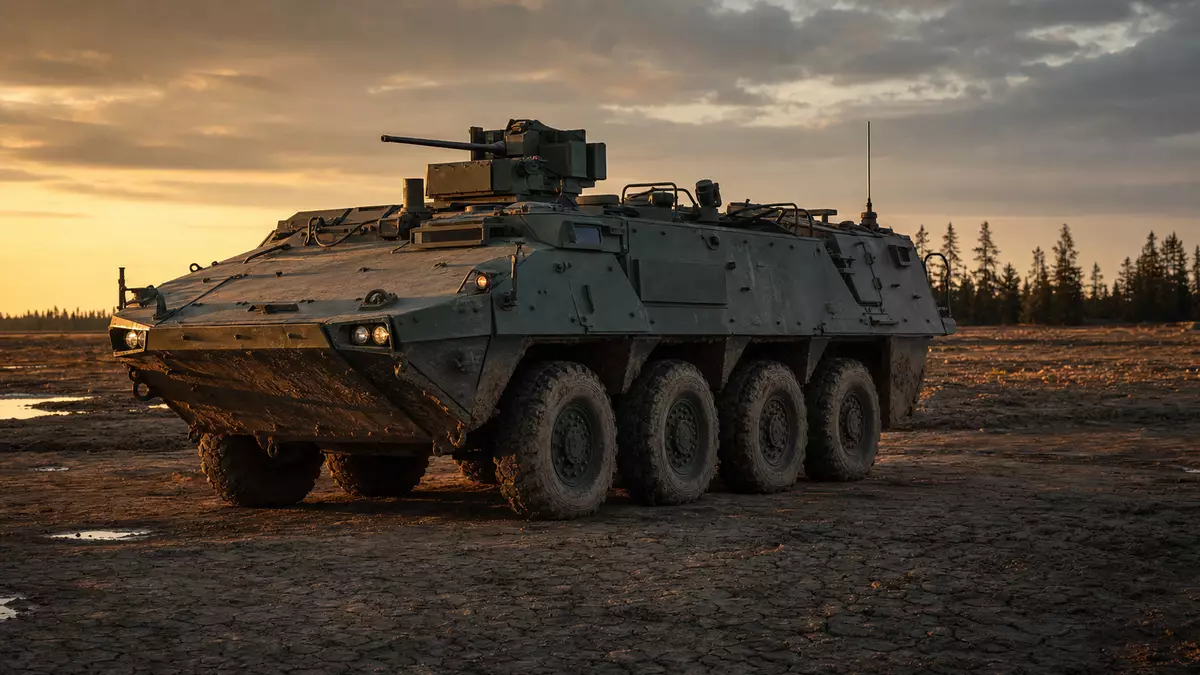
The gap between Rheinmetall's operational momentum and its stock market performance has rarely been wider. Even as the defence group flags a combined order backlog of more than €125 billion with its TKMS subsidiary, the shares closed Friday at €1,036.00, down 3.2 percent on the day and roughly 5.5 percent below their 50-day moving average of €1,096.57.
That disconnect is becoming harder for investors to ignore. Since the company trimmed its guidance in early August — the cut landed on the 6th of that month — the equity has shed nearly ten percent, extending a slide that has now erased 7.1 percent over just seven trading sessions. The market's caution stands in sharp contrast to the flow of contract announcements emerging from the group's various divisions.
A Backlog Built on Frigates and Fighting Vehicles
The headline figure is striking: over €100 billion in orders sits with Rheinmetall itself, while TKMS contributes more than €25 billion to the combined total. A substantial slice of that comes from a €6.3 billion contract for four MEKO A-200 frigates destined for the German Navy — a programme that also carries strategic significance for one of Rheinmetall's own facilities.
That shipyard, the Peene-Werft in Wolgast, has been at the centre of an awkward reversal. The F126 frigate programme originally earmarked for the site was halted in June after partner Damen Schelde ran into scheduling and financing trouble. Roughly €2.4 billion had already been sunk into the project without a single vessel emerging. The MEKO A-200 platform from TKMS is now being positioned as the replacement, albeit at a cost of around €1.6 billion per ship — well above the €1 billion originally budgeted.
For the roughly 400 employees at Peene-Werft — a number that can swell to 800 during peak daytime operations — the uncertainty is palpable. Rheinmetall has indicated it intends to redirect the yard's capacity toward other naval programmes, though specifics remain thin.
Just as Rheinmetall is having to reassess and redirect its naval strategy after the F126 setback, many employers discover their own operational plans contain hidden gaps when unexpected disruptions occur. A free Risk Assessment Toolkit with 41 ready-to-use templates and checklists can help you document workplace hazards systematically and stay ahead of compliance issues. Download the free Risk Assessment Toolkit
Small Contracts, Strategic Signals
The naval setback has done little to cool Rheinmetall's appetite for expansion in the maritime segment. Having recently completed its acquisition of shipbuilder Lürssen, management says further purchases in the sector are being considered.
Meanwhile, a steady drumbeat of smaller wins continues across the group. American Rheinmetall has picked up a Kongsberg Defence & Aerospace order worth approximately $710,000 for machined components used in the MCT-30 turret fitted to the ACV-30 variant of the US Marine Corps' Amphibious Combat Vehicle. Production will take place in Michigan, with deliveries scheduled for 2026 and 2027. Rheinmetall Canada, for its part, is supplying spare parts for MSU-200NAV air-start equipment to the US Navy — a low-single-digit-million-euro contract running through 2028.
A more substantial piece of business came via the Bundeswehr's procurement office roughly two weeks ago: Rheinmetall will build a modular camp in Lithuania capable of housing up to 2,000 soldiers. Construction is valued at €250 million, with ongoing operations adding €40 million per year. The company's remit extends beyond building to include facility management and catering, with handover scheduled from mid-August 2027. Revenue from the contract will be recognised in the third quarter of 2026.
Air Defence Momentum and a Key Date in December
The group's air defence business, which posted 78 percent revenue growth in the second quarter, also continues to develop. Mid-August saw Rheinmetall Air Defence and Hensoldt demonstrate the integration of passive sensor technology for networked air defence during the "Timber Express 2026" exercise at Manching — a signal that this growth area retains its technological edge.
For the current year, management sees potential order intake of up to €80 billion. The drivers are substantial: the Boxer armoured vehicle programme alone accounts for €37.7 billion, while the F126 and F127 frigate programmes together contribute €12 to €13 billion.
Investors now face a waiting game on several fronts. December brings parliamentary consideration of the Arminius Boxer contract, with a down payment of roughly €3 to €3.5 billion expected either that month or in January 2027. Before that, the third-quarter results due on 5 November will test whether the revised revenue guidance of €13.7 to €14.2 billion holds up.
The paradox is hard to escape: record order books and a steady stream of contract wins, yet a share price that keeps drifting lower. Whether that reflects lingering doubts about timely execution — the F126 saga being a case in point — or simply a valuation recalibration after a prolonged run, the coming months will force the question to a resolution.


