
Rheinmetall's Kassel Plant Deal Meets a Hard Truth From Kyiv
Published on 10/06/2026 at 05:20 | Editorial boerse-global.de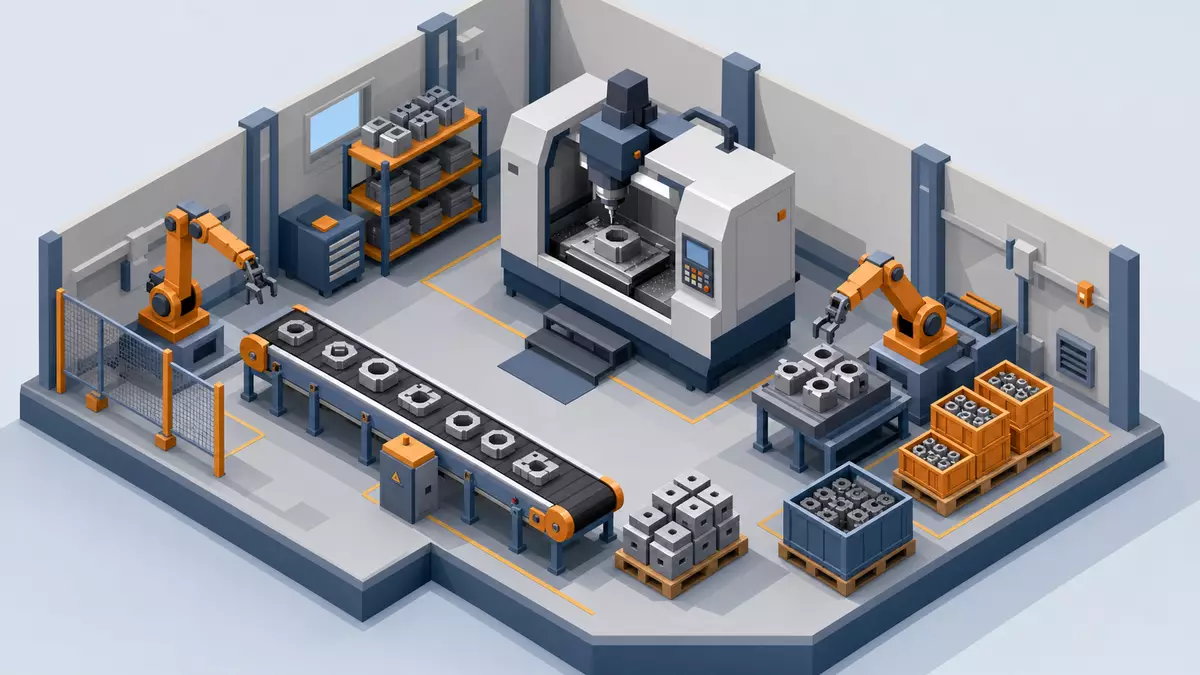
Rheinmetall shares advanced 2.0% to EUR 978.70 on Monday, a rebound that lifted the defense contractor to the top of the DAX gainers' list even though no company-specific announcement drove the move. The stock had closed at EUR 983.30 the previous session, up 2.5%, and the two-day climb offers little comfort against a year-to-date decline of 37%. Trading remains well beneath its moving averages, and the 52-week low of EUR 902.50 now stands as the key technical floor. A single strong session does nothing to close that gap.
What investors are actually weighing is a split-screen story. On one side, Rheinmetall has reached a preliminary agreement to take over Alstom's Kassel facility, a move that would deepen its industrial footing in heavy land systems. On the other, Chancellor Friedrich Merz's recent commitments in Kyiv made plain that Rheinmetall sits outside the circle of prime contractors for freshly negotiated packages covering drone defense, airspace surveillance and satellite technology.
Where the Value Chain Actually Sits
That exclusion matters more than a headline suggests. In advanced air-defense systems such as IRIS-T SLM, as much as 80% of value creation flows to electronics, optronics, missiles and software — territory where rivals Diehl and Hensoldt hold strong positions. Rheinmetall's contribution to such programs runs mainly through the RMMV joint venture, which supplies military trucks for logistics, leaving the group with only a marginal role in the newly announced Ukrainian interceptor and drone projects.
The company's own unmanned aircraft operations remain modest in market share, and its systems are regarded as expensive relative to competing offerings. Should defense ministries favor alternatives from specialists such as Quantum Systems, Rheinmetall risks a lasting exclusion from some of the sector's most profitable growth segments.
Kassel as the Linchpin
The counterweight to all of this is Kassel. Rheinmetall intends to bring the Boxer wheeled armored vehicle to full serial production there and to expand capacity substantially. A further large order from Berlin is in the pipeline, though it has yet to be signed. If Alstom employees transition to Rheinmetall Landsysteme on schedule, the Boxer line can ramp up without friction — a clear edge once the Bundeswehr formally awards the expected contract.
Should investors sell immediately? Or is it worth buying Rheinmetall?
The company is also showing how legacy platforms can be kept relevant. Its Defence Australia unit recently integrated a tactical control agent developed with Australian startup Breaker into the Boxer, allowing crews to direct drone swarms by voice command. Under the LAND400 Phase 2 program, Rheinmetall is delivering 211 of these vehicles with a 30-year service life. Rolling that technology out across other fleets worldwide, and capturing additional wheeled-vehicle procurement volume, would go a long way toward restoring confidence in revenue visibility.
The Risks That Won't Go Away
None of that is locked in. The Kassel takeover is agreed only in principle; contracts and detailed terms with Alstom, the works council and IG Metall are still outstanding. If negotiations drag on for weeks, or if acquisition costs run above plan, the profitability of the land-systems division takes a hit. And if the anticipated Bundeswehr order for the Boxer falls short of market expectations, the stock loses its most important fundamental catalyst.
The broader market backdrop offers little support. The DAX closed Monday at 25,254.21 points, a gain of just 0.09%, still far below its late-August record of 26,618. Elevated oil prices, rising government bond yields in parts of Europe — France among them — and political uncertainty in Germany, France and Spain have kept buyers cautious. The index had recovered from Thursday's low, its weakest since late July, helped by a softer-than-expected U.S. jobs report that eased inflation and rate worries. Schneider Electric's multibillion-dollar bid for U.S. software firm PTC also lent support to software names.
A Mixed Board Beyond the Defense Story
Monday's session laid bare how differently individual DAX members are faring. Continental climbed 1.9% to EUR 69.42 after Morgan Stanley upgraded the stock from Equal-weight to Overweight and raised its price target from EUR 62 to EUR 78, citing expected margin expansion in the U.S. business. The upgrade followed a pre-close call on the evening of September 30 that had already brightened sentiment, with a Citigroup analyst pointing to continued momentum in the third quarter from ultra-high-performance tires and U.S. commercial-vehicle demand. UBS, which carries a Buy rating and a EUR 90 target, sees room for the company to lift its annual guidance.
Fresenius Medical Care added 1.9% to EUR 40.36, drawing defensive demand as oil and bond yields weighed on sentiment. The dialysis provider remains 12% lower over twelve months and has moved sideways on a monthly basis, with the next quarterly report the likely trigger for any re-rating.
Bayer was the weakest performer, sliding 2.4% to EUR 43.92 and extending its weekly loss to 13% as glyphosate litigation concerns resurfaced. The company is still awaiting court approval of a USD 7.25 billion settlement intended to resolve a large share of the claims, and a planned USD 2.2 billion pharmaceutical plant in New Albany, Ohio, did nothing to shift the narrative. Despite a 55% gain over twelve months, the stock now reacts more to legal developments than to operational news.
Rheinmetall at a turning point? This analysis reveals what investors need to know now.
Scout24 shed 2.0% to EUR 67.80, still dogged by debate over whether AI agents could erode the classifieds business model — a theme that first pressured the shares on September 24. Analyst sentiment remains constructive, with seven Buy ratings, a Goldman Sachs target lifted from EUR 107 to EUR 108 and Berenberg at Buy with a EUR 140 target, yet the stock is down 21% year-to-date.
Infineon gave back 1.6% to EUR 63.57, a pause after leading the index on Friday with a jump of nearly 9%. The drivers behind that rally — a plant opening in Thailand, a partnership with Eaton and strong Micron results — remain intact, and Jefferies reiterated Buy with a EUR 96 target. The chipmaker is up 11% on the week after bottoming near EUR 54, but it must clear resistance at EUR 65 to challenge EUR 70, and holding the breakout zone around EUR 61 is the more important test.
What Comes Next
For Rheinmetall, the decisive milestone is the binding completion of the Kassel purchase in the coming weeks. Only once personnel and commercial terms are legally settled, and the Bundeswehr formally places its announced Boxer order, will the market get a clear read on how solid the foundation for the next several years truly is. Until then, the stock trades on two competing narratives: an expanding industrial base for armored vehicles, and a conspicuous absence from the highest-value segments of Europe's rearmament.
Ad
Rheinmetall Stock: New Analysis - 6 October
Fresh Rheinmetall information released. What's the impact for investors? Our latest independent report examines recent figures and market trends.


