
Rheinmetall's Kassel Ambition: A €270 Million Bet That the Market Isn't Buying
Published on 09/07/2026 at 17:41 | Editorial boerse-global.de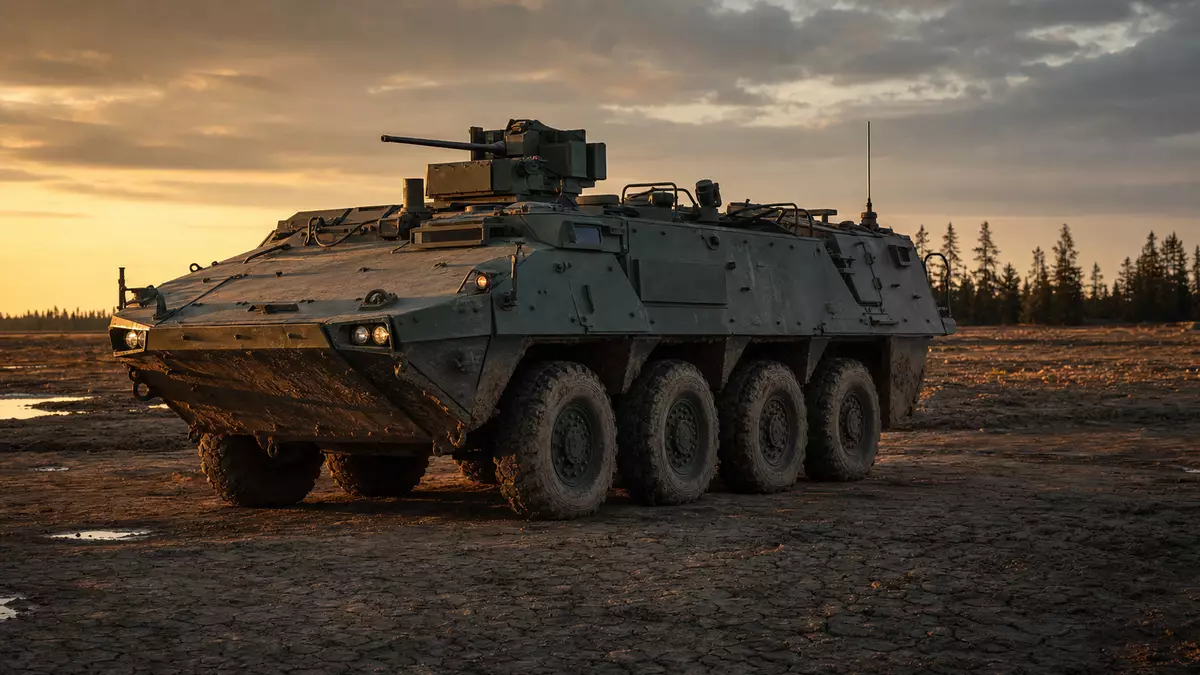
The arithmetic of Rheinmetall's current predicament is hard to reconcile. The Düsseldorf-based defence group closed out 2025 with revenue up 29 percent to €9.9 billion, operating profit climbing 33 percent to €1.8 billion, and an order backlog that has swollen to a record €63.8 billion — roughly six times annual sales. Management is guiding for another 40 to 45 percent revenue expansion this year. Yet the share price has spent recent weeks oscillating around the psychologically significant €1,000 mark, down roughly a third since the start of the year and still about 49 percent below its all-time high of €2,007.00.
The disconnect has become the defining feature of Rheinmetall's market narrative: operational excellence colliding with valuation anxiety and profit-taking.
Kassel: Europe's largest tank plant in the making
Against this fractious backdrop, chief executive Armin Papperger is pressing ahead with an ambitious expansion of the company's Kassel site. The plan calls for transforming the facility into Europe's largest tank plant, complete with drone testing grounds in northern Hesse, a new logistics hub, and significantly expanded armoured vehicle production. Headcount is slated to grow from roughly 2,200 to around 3,500 employees.
The investment package totals approximately €270 million, with the state of Hesse contributing around €25 million. It is a bet on the longevity of Europe's defence spending surge — even as equity markets signal that much of this growth may already be priced in, or worse, that the current valuation already anticipates it.
Should investors sell immediately? Or is it worth buying Rheinmetall?
The numbers that should matter — but don't
Rheinmetall's first-half 2026 figures, reported separately, add further evidence of momentum: revenue reached €5.2 billion, operating profit hit €786 million, and the order book jumped from €56.0 billion to €80.5 billion year-on-year — a record that has so far drawn a shrug from investors.
The full-year 2025 results tell a similar story. Net profit came in at €0.8 billion, up 3 percent, while the company's forward guidance implies another year of breakneck expansion. Analysts, however, point to an expected price-to-earnings ratio of roughly 32.5 for 2026 as evidence that the stock remains richly valued even after its slide. The shares currently trade about 5.1 percent below their 50-day moving average, underscoring the near-term weakness.
At the last close, Rheinmetall stood at €1,026.00, down 1.0 percent on the day, with weekly losses of 8.1 percent and a monthly decline of 11 percent. The relative strength index sits at 34.7 — approaching oversold territory but not yet there.
A frigate programme hits the rocks
Operational setbacks have done little to steady investor nerves. The planned F126 frigate project was halted in June after Dutch partner Damen Schelde failed to meet its time and cost commitments. Costs had ballooned to nearly €13 billion, of which €2.4 billion had already been spent.
TKMS — Rheinmetall's partner and affiliate — has proposed its MEKO-A-200 design as a replacement, but at a higher unit cost of €1.6 billion per vessel versus roughly €1 billion previously. The change leaves the Peene shipyard in Wolgast, employing around 400 people and owned by Rheinmetall, facing an uncertain future as the company reviews alternatives.
The broader naval picture remains substantial: TKMS is expected to contribute more than €25 billion in orders, including a €6.3 billion contract for four MEKO-A-200 frigates for the German navy. Combined with expectations of over €100 billion in total order volume for Rheinmetall alone, the pipeline is not the problem — confidence in execution and valuation is.
North America: small wins, steady progress
International expansion continues quietly. American Rheinmetall received an order from Kongsberg to manufacture components for MCT-30 turrets used in the ACV-30 vehicle of the US Marine Corps. The contract is worth around $710,000, with production in Michigan and deliveries scheduled for 2026 and 2027. Separately, Rheinmetall Canada is supplying spare parts for the MSU-200NAV to the US Navy, a contract in the low single-digit millions of euros with deliveries running through 2028.
Rheinmetall at a turning point? This analysis reveals what investors need to know now.
These are modest sums relative to the company's scale, but they reflect a deliberate strategy of deepening transatlantic ties — one that has yet to move the needle on the share price.
The raw materials question
Rheinmetall's growth trajectory has also drawn attention to a less visible vulnerability: critical raw materials. Niobium, a metal whose production is heavily concentrated in Brazil, is emerging as a potential bottleneck for the defence industry as a whole. For Rheinmetall specifically, it is not yet an acute operational challenge — but the discussion highlights how tightly supply chains and geopolitical dependencies are now woven into the sector's expansion plans.
A sector-wide pattern
Rheinmetall is not alone in this bind. Across European defence equities, record order books at Rheinmetall, Renk, OHB and Hensoldt are meeting sceptical price action. Investors appear to be front-running order announcements rather than rewarding them. Rheinmetall's Kassel investment, the largest single commitment of its kind in the company's recent history, is a bet on the secular story — but the market, for now, is focused on the cyclical reality of a stock that ran too far, too fast.
The €1,000 level is likely to remain a key psychological reference point in the near term. Whether the Kassel expansion, the TKMS naval pipeline, and the steady drip of North American contracts can eventually shift the narrative remains an open question. The company's operational trajectory is clear; the market's willingness to pay for it is not.
Ad
Rheinmetall Stock: New Analysis - 7 September
Fresh Rheinmetall information released. What's the impact for investors? Our latest independent report examines recent figures and market trends.


