
Rheinmetall's Growth Engine Revs While Its Share Price Stalls
Published on 09/07/2026 at 16:11 | Editorial boerse-global.de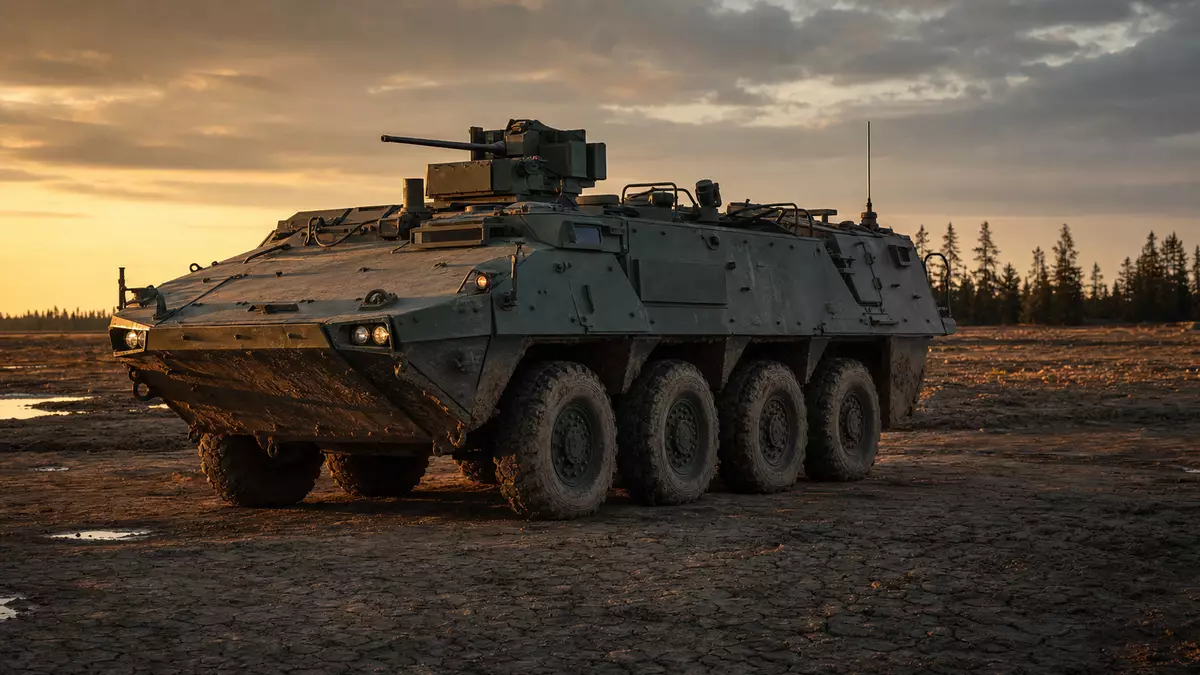
The disconnect between Rheinmetall's operational trajectory and its market valuation has rarely been sharper. The defence group is pouring hundreds of millions into new facilities, delivering hardware to the US Army and watching its order book swell to record levels — yet its stock has shed roughly a tenth of its value in a single month.
Kassel: From Tank Plant to Drone Hub
At the heart of the expansion push is a €270 million commitment to the company's Kassel site, unveiled on 27 August. The package includes a drone testing centre at Calden airport, a logistics hub and upgraded production lines. Chief executive Armin Papperger has set his sights on transforming the location into what he calls the world's most modern tank factory.
The workforce at Kassel is slated to grow from 2,200 to 3,500 employees, part of a group-wide ambition to reach around 70,000 staff by 2030. Revenue generated at the site currently stands at €1.5 billion annually, with management targeting €5 billion by 2029.
These plans arrive despite a recent setback: the cancellation of the F126 frigate programme forced Rheinmetall to trim its annual guidance roughly a month ago, with the naval business expected to take a €300 million hit to 2026 expectations. The decision to press ahead with billion-euro site investments nonetheless signals confidence in sustained demand from the land systems and ammunition divisions.
American Milestones and Drone Certification
The Kassel announcement was followed days later by progress across the Atlantic. On 1 September, American Rheinmetall confirmed delivery of the first of eight Lynx XM30 prototypes to the US Army — a programme viewed as a crucial gateway to one of the world's largest defence procurement markets.
Should investors sell immediately? Or is it worth buying Rheinmetall?
Just one day later, the Bundeswehr's aviation authority granted provisional airworthiness certification to the LUNA NG reconnaissance drone, clearing the path toward operational deployment of the system.
These developments build on a steady stream of contract wins. July brought an international order worth several hundred million euros for four complete Skynex air defence systems, with delivery scheduled over 39 months. By mid-August, Papperger was projecting the order backlog for 2026 at over €100 billion.
Record Order Book, Persistent Valuation Questions
The full-year 2025 results paint a picture of robust momentum. Revenue climbed 29 percent to €9.9 billion, while operating profit advanced 33 percent to €1.8 billion. Net income reached €0.8 billion, up 3 percent, and the company has guided toward revenue growth of 40 to 45 percent for 2026.
The order backlog hit a record €63.8 billion — a figure that multiplies annual turnover several times over and speaks to the long-term visibility of the business. Additional reporting points to an expected order volume exceeding €100 billion for Rheinmetall alone, with more than €25 billion attributed to subsidiary and partner TKMS, including a €6.3 billion contract for four MEKO A-200 frigates for Germany.
Yet the share price tells a different story. The stock recently traded at €1,027.40, having lost around 10 percent over the preceding 30 days, and sits roughly 6.4 percent below its 50-day moving average. It has at times slipped beneath the psychologically significant €1,000 threshold before recovering to €1,042.00. The equity now stands just 14 percent above its 52-week low from 25 June — a far cry from the highs of last autumn.
Valuation concerns persist even after the pullback. Analysts point to an expected price-to-earnings ratio of approximately 32.5 for 2026, which some interpret as evidence the stock remains richly priced. The shares currently trade about 5.1 percent below their 50-day average, underscoring the weak short-term momentum.
The F126 Fallout and Its Ripples
The halted frigate project continues to generate uncertainty. The F126 programme was suspended in June after Dutch partner Damen Schelde failed to stay within its time and budget constraints. Costs had ballooned to nearly €13 billion, of which €2.4 billion had already been spent.
Rheinmetall at a turning point? This analysis reveals what investors need to know now.
TKMS's MEKO A-200 concept has emerged as the replacement, though at a higher unit cost of €1.6 billion per vessel compared with roughly €1 billion previously. The Peene shipyard in Wolgast, employing around 400 people and owned by Rheinmetall, now faces an uncertain future as the company evaluates alternatives.
North American Orders and Supply Chain Concerns
Beyond the headline-grabbing prototype delivery, Rheinmetall's North American operations are quietly accumulating smaller wins. American Rheinmetall received an order from Kongsberg to manufacture components for MCT-30 turrets used in the ACV-30 vehicle of the US Marine Corps — a contract worth roughly $710,000, with production in Michigan scheduled for 2026 and 2027. Separately, Rheinmetall Canada is supplying spare parts for the MSU-200NAV to the US Navy, a contract in the low single-digit millions of euros with deliveries running through 2028.
The company's growth trajectory has also drawn attention to critical raw materials. Niobium, a metal whose production is heavily concentrated in Brazil, is emerging as a potential bottleneck for the defence industry at large. For Rheinmetall specifically, this is not yet an acute operational challenge, but the discussion highlights how tightly supply chains and geopolitical dependencies are woven into the sector's expansion story.
For investors, the picture remains a study in contrasts: record operational figures and a swelling order book set against an ambitious valuation and project-level setbacks. The €1,000 mark looks set to remain a key psychological reference point in the near term, even as the company's industrial machine shows few signs of slowing.
Ad
Rheinmetall Stock: New Analysis - 7 September
Fresh Rheinmetall information released. What's the impact for investors? Our latest independent report examines recent figures and market trends.


