
Rheinmetall's Execution Gap: Why a €45 Billion Prize Can't Mask Delivery Doubts
Published on 09/07/2026 at 00:00 | Editorial boerse-global.de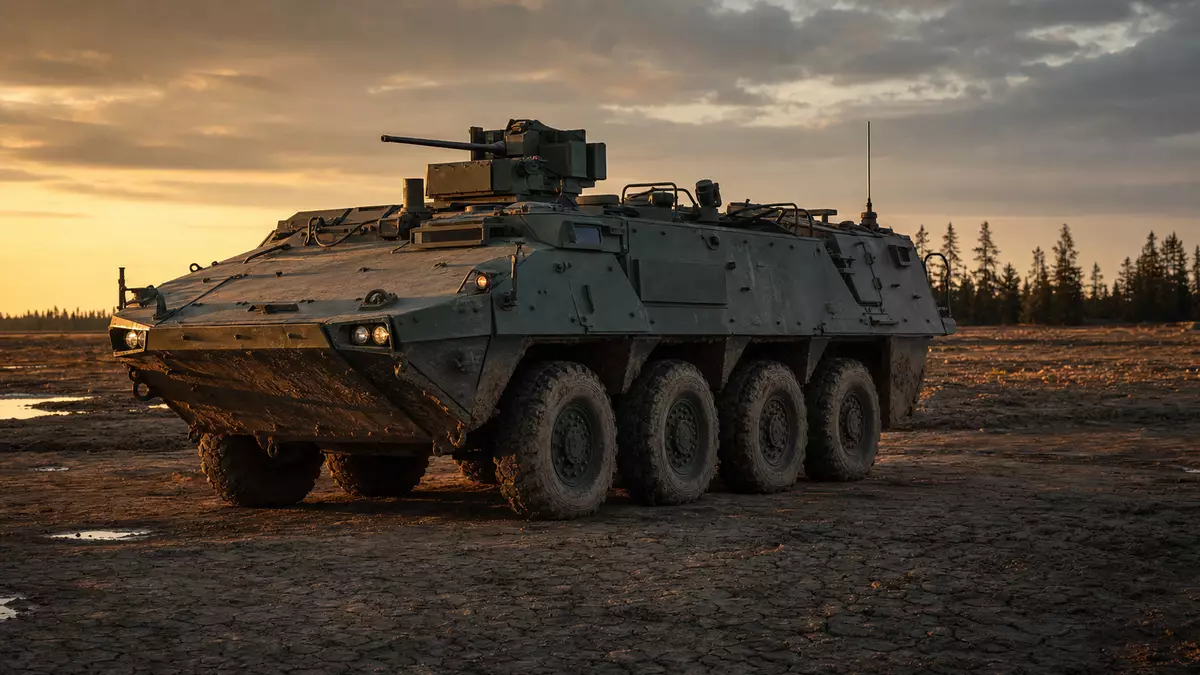
The arithmetic of Rheinmetall's current predicament is brutally simple. On paper, the Düsseldorf-based defence group has never looked stronger — second-quarter revenue climbed 69 percent year-on-year to €3.289 billion, operating profit jumped 115 percent to €562 million, and the order backlog now towers above €80 billion. Yet the share price tells a very different story, one shaped less by the numbers on the income statement and more by a mounting perception that the company cannot always deliver on what it promises.
That disconnect came into sharp focus on Friday, when the stock slid 3.2 percent to close at €1,036.00, extending the weekly decline to 9.9 percent. The shares now trade roughly 5.5 percent below their 50-day moving average of €1,096.57, a technical signal that the weakness has moved beyond a fleeting reaction into something more entrenched. The broader European defence sector has been caught in the same downdraft, with peers like RENK, HENSOLDT and TKMS all losing ground.
Quality Concerns and a Stalled Frigate Program
What makes this sell-off different from previous dips is the nature of the criticism. Rather than a single dramatic catalyst, investors are grappling with a steady accumulation of negative reports about delivery delays and quality control across the German defence industry. Berlin's decision to pull more than 5,200 ballistic protection plates from police body armour over defects — plates originating from the Rheinmetall group's sphere — has cast a particularly unwelcome spotlight on the company's quality assurance processes. The Bundeswehr and its procurement office have separately voiced frustration over slow operational handling of key projects.
The most consequential setback, however, came in July when the €12.8 billion F126 frigate program was scrapped after roughly €2.3 billion had already been sunk into it. Rheinmetall had been slated as lead contractor; instead, Germany pivoted to eight MEKO A-200 frigates from ThyssenKrupp Marine Systems. The company subsequently trimmed its 2026 revenue guidance to a range of €13.7 billion to €14.2 billion and flagged a sharply negative operating free cash flow — a combination that has done little to calm nerves.
Should investors sell immediately? Or is it worth buying Rheinmetall?
The US Prize Remains in Play
For all the near-term turbulence, the strategic pipeline offers reasons for optimism. American Rheinmetall has handed over the first of eight Lynx XM30 prototypes to the US Army, where the vehicle now enters government-led development and performance testing. The stakes could hardly be higher: the program to replace the M2 Bradley infantry fighting vehicle covers roughly 4,000 tracked vehicles with a total value estimated at over $45 billion. Rheinmetall Canada has also secured a low-single-digit-million-euro order from the US Department of Defense for spare components for the Navy's MSU-200NAV mobile launchers, with deliveries running from late 2026 through late 2028. A separate contract from Kongsberg Defence and Aerospace covers manufactured components for the MCT-30 turret.
European demand remains robust as well. The Bundeswehr has ordered an additional 149 mobile rescue stations worth over €500 million, while Rheinmetall's roughly €1 billion stake in the Omnia Training consortium will support digitisation of British Army combat training over a 15-year horizon. The LUNA NG "HUSAR" reconnaissance drone system has also received provisional traffic approval.
A €260 Million Bet on Kassel
The company is pressing ahead with expansion even as its share price falters. More than €260 million is flowing into a new defence hub in North Hesse at Kassel Airport, encompassing a tank production facility, logistics centre and drone testing site. The state of Hesse is contributing €25 million to the project, which is expected to create around 1,000 jobs. Rheinmetall is simultaneously recruiting roughly 2,300 new employees across Germany, predominantly in industrial roles.
The tension is palpable: record orders and ambitious capacity investments on one side, persistent questions about execution reliability on the other. The quality-control issues, the halted frigate program and the cash-flow outlook have all fed a narrative that Rheinmetall's growth may be outpacing its operational maturity. Until the company can demonstrate that its production lines can match the ambition of its order book, the market's scepticism is unlikely to fully dissipate — no matter how impressive the quarterly figures look.
Ad
Rheinmetall Stock: New Analysis - 7 September
Fresh Rheinmetall information released. What's the impact for investors? Our latest independent report examines recent figures and market trends.


