
Rheinmetall's December Deadline: A €14.5 Billion Prize That Could Reset the Narrative
Published on 09/07/2026 at 14:41 | Editorial boerse-global.de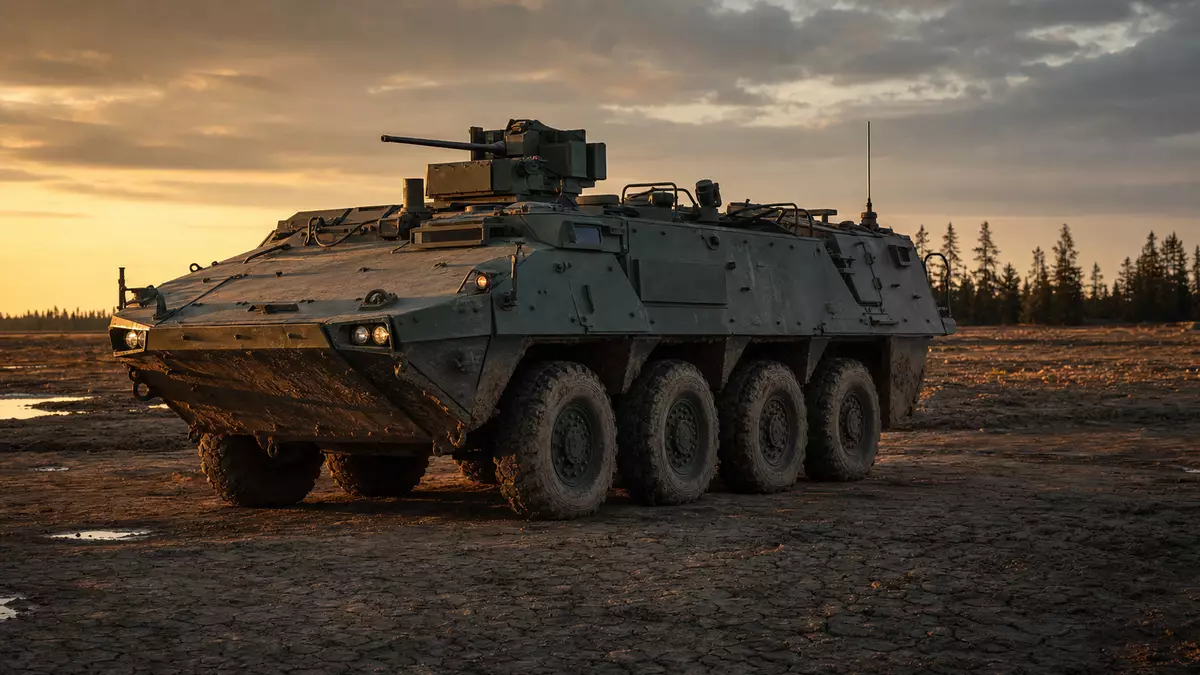
The defense contractor's share price has spent months in the wilderness, trading roughly 49 percent below its October 2025 peak of 2,007.00 euros. Yet the company is now counting down to a moment that could fundamentally reshape investor perception: a Bundestag vote on December 9 over Project Arminius, the largest armaments deal in Rheinmetall's corporate history.
Final negotiations between the consortium and the Bundeswehr are scheduled for the second week of September, with CEO Armin Papperger treating the parliamentary timetable as settled. Should the vote proceed as planned, contract signing would follow within five to ten days, potentially clearing the way for a roughly 3 billion euro down payment — equivalent to 30 percent of the vehicle order's value — to land in Rheinmetall's accounts as early as December or January.
The Full Scope of Arminius
The headline figure from the vehicle business alone stands at approximately 12.4 billion euros expected by year-end. But the complete package extends considerably further. A separate support agreement, valued at around 4 billion euros in total with roughly 2 billion euros attributable to Rheinmetall, could reach closure by January 2027. Combined, the Arminius complex represents an order volume of approximately 14.4 to 14.5 billion euros for the company.
That scale helps explain why management is so focused on execution. The operational foundation, meanwhile, continues to strengthen. Second-quarter revenue reached 3.29 billion euros, a year-on-year increase of roughly 69 percent, while operating profit of 562 million euros surpassed the analyst consensus of 469.9 million euros by about 20 percent.
A Tale of Two Order Books
The company's financial disclosures have created an unusual accounting puzzle. For fiscal year 2025, Rheinmetall reported revenue growth of 29 percent to 9.9 billion euros, with operating earnings climbing 33 percent to 1.8 billion euros. Net profit rose a more modest 3 percent to 0.8 billion euros. Management has guided toward revenue expansion of 40 to 45 percent for 2026.
Should investors sell immediately? Or is it worth buying Rheinmetall?
The order backlog tells a story of its own — and one that depends on which reporting period one examines. The 2025 figures showed a record 63.8 billion euros, while more recent data indicates the backlog has since surged past 80 billion euros, buoyed by a Bundeswehr contract for loitering munitions and a Romanian order under the SAFE program. Industry observers also point to an expected order volume exceeding 100 billion euros for Rheinmetall alone, with an additional 25 billion-plus euros at partner company TKMS — including a 6.3 billion euro contract for four MEKO A-200 frigates for Germany.
Setbacks and Substitutions
Not everything has gone according to plan. The F126 frigate project was halted in June after Dutch partner Damen Schelde failed to meet its time and cost commitments. Expenditures had climbed to nearly 13 billion euros, with 2.4 billion euros already disbursed. TKMS's MEKO A-200 concept has emerged as the replacement, though at higher unit costs of 1.6 billion euros per vessel versus roughly 1 billion previously. For the Peene shipyard in Wolgast, employing around 400 workers and owned by Rheinmetall, the transition brings uncertainty as the company evaluates alternatives.
North American Momentum
Across the Atlantic, Rheinmetall's expansion continues on multiple fronts. American Rheinmetall has delivered the first of eight Lynx XM30 combat vehicle prototypes to the US Army, while its Canadian unit secured a US Navy order for replacement components for mobile launch devices, valued in the single-digit millions of euros with deliveries running through the end of 2028. A separate Kongsberg contract covers component production for MCT-30 turrets used in the Marine Corps' ACV-30 vehicle — approximately 710,000 US dollars in value, manufactured in Michigan with deliveries scheduled for 2026 and 2027.
The company is also advancing its unmanned systems portfolio: Germany's military aviation authority has granted provisional traffic approval for the LUNA NG reconnaissance system, and Rheinmetall has announced a 260 million euro investment in northern Hesse to expand capacity.
The Valuation Debate
Despite the operational momentum, the equity story remains contested. The stock recently dipped below the psychologically significant 1,000 euro threshold before recovering to 1,042.00 euros, yet it still trades roughly 5.1 percent below its 50-day moving average. Analysts point to an expected price-to-earnings ratio of around 32.5 for 2026 as evidence of lingering overvaluation, even after the steep decline of recent months.
A guidance reduction roughly a month ago continues to weigh on sentiment, creating an unusual disconnect between the company's fundamentals and its market performance. Adding to the strategic conversation is the question of niobium, a critical raw material heavily concentrated in Brazilian production that could emerge as a supply-chain constraint for the broader defense industry — not yet an operational challenge for Rheinmetall specifically, but a reminder of how geopolitical dependencies shadow the sector's growth trajectory.
For now, investors are left weighing record order intake against valuation concerns and project-specific setbacks. The next concrete catalyst arrives with the September negotiation round, followed by the December parliamentary vote — a sequence that could finally give the share price something the backlog alone has not: a near-term reason to move.
Ad
Rheinmetall Stock: New Analysis - 7 September
Fresh Rheinmetall information released. What's the impact for investors? Our latest independent report examines recent figures and market trends.


