Rheinmetall's $78 Billion Backlog Meets a Harder Question: How Much of It Is Locked In?
Published on 11/29/2026 at 18:03 | Editorial boerse-global.de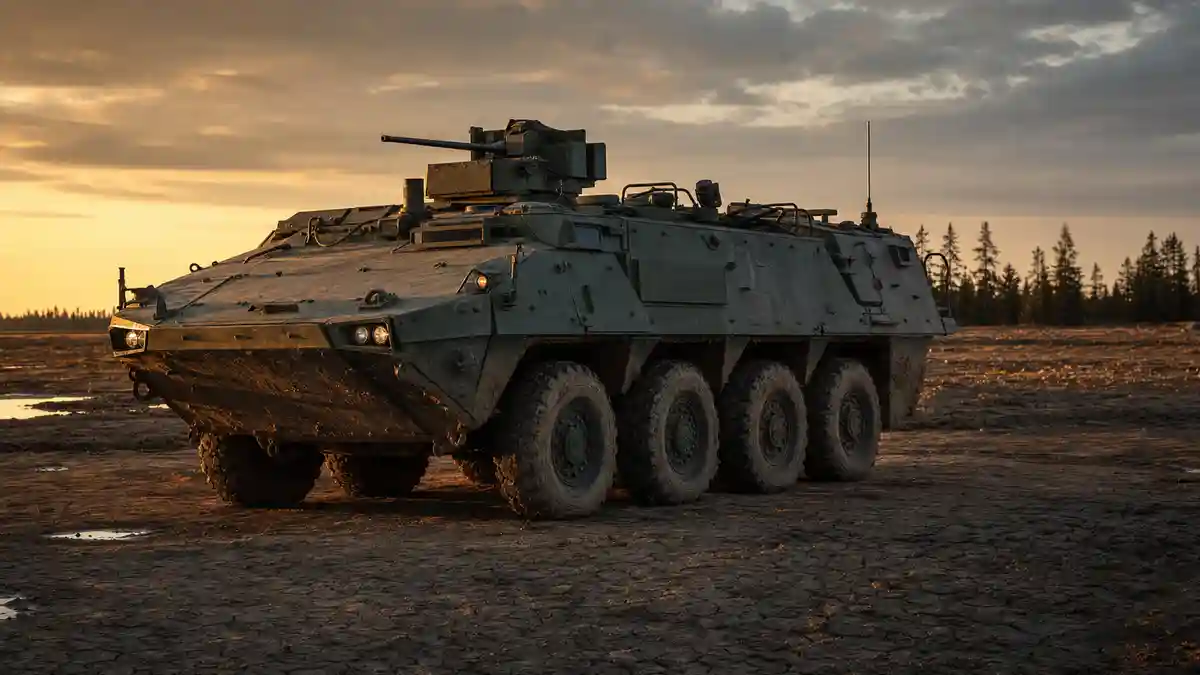
AlsterResearch reaffirmed its buy rating on Rheinmetall on Friday, but the note carried a caveat that cuts to the heart of the investment case: the defence group's growth may not last. The research house expects revenue to peak and then decline, shifting scrutiny onto the quality of the order book and the profit that can be sustained over time. Rheinmetall's lowered medium-term targets, announced the same day, now serve as the yardstick.
A Backlog That Is Only Partly Binding
Rheinmetall's order book stands at EUR 78 billion, of which EUR 54 billion is classed as firm orders. That distinction matters for valuation: the headline figure is not made up entirely of committed work. For contracts scheduled to run beyond two years, framework agreements account for 45%. A fat reported backlog therefore does not mean every euro of revenue within it is already secured — what counts is how much has been firmly ordered and when Rheinmetall can actually deliver.
The company attributed its more cautious planning to project delays and supply-chain risks. CEO Armin Papperger stressed that the revision does not reflect weaker demand. On the Boxer Arminius project, price negotiations are still under way, and he does not expect the order before 2027.
The Ukrainian Shell Plant Slips Away
Papperger also indicated at Friday's capital markets day in Hamburg that Rheinmetall will probably not proceed with its planned artillery ammunition plant in Ukraine, citing Kyiv's preference for domestic production. The facility had been designed for a capacity of 250,000 rounds a year. He stopped short of a definitive cancellation, saying Rheinmetall could instead supply presses and other equipment.
Should investors sell immediately? Or is it worth buying Rheinmetall?
That leaves two possible shapes of engagement on the table — the original shell plant, or a role as equipment supplier — and neither is a confirmed order. The distinction is central: a likely retreat from the plant is not the same as a full withdrawal from the project. Papperger put Ukraine's annual consumption at 1–1.3 million rounds, at least 50% of which the country produces itself — the very push for self-sufficiency that prompted Rheinmetall to review its plans for the site.
Fewer Shells, More Reach
Artillery capacity is being scaled back regardless. Rheinmetall now plans for 1–1.1 million rounds a year instead of 1.5 million, with planned output shifting toward long-range munitions. The change is as much about mix as about volume.
It sits alongside the long-term goals trimmed at the capital markets day. Papperger described a discount baked into the vehicle systems targets as a strategic buffer against project delays and supply-chain disruption — so the more conservative stance extends well beyond the Ukrainian project.
What the Model Rests On
AlsterResearch trimmed its price target to EUR 1,000 from EUR 1,050 while keeping its buy call, pairing a positive investment view with a lower valuation. Its caution centres on the years after the planned expansion: it sees revenue peaking at EUR 34.4 billion in 2030 before slipping to around EUR 29 billion by 2033. That reframes the debate from short-term growth momentum to how much of the built-out business endures — a temporary top carries a different meaning for equity value than a permanently higher revenue base. Roughly 65% of the model's value sits in the terminal value, the period beyond the explicit forecast, giving long-run assumptions outsized weight.
Rheinmetall at a turning point? This analysis reveals what investors need to know now.
Nor does every euro of profit reach shareholders. AlsterResearch expects minority interests of about EUR 1.3 billion in 2030, roughly a quarter of net income. Profitability is contested too: JPMorgan keeps a neutral rating and questions the margin target in the weapons and ammunition business, so the lowered group guidance has not dispelled scepticism about individual earnings assumptions.
Read together, the buy recommendation is no blanket endorsement of ever-rising revenue. It rests on three things investors must weigh side by side — how binding the backlog really is, whether the revenue level holds, and how much profit ultimately belongs to Rheinmetall's shareholders.
Ad
Rheinmetall Stock: New Analysis - 29 November
Fresh Rheinmetall information released. What's the impact for investors? Our latest independent report examines recent figures and market trends.