
Rheinmetall's €1,000 Line Gives Way as Order Momentum Fails to Move the Needle
Published on 09/11/2026 at 19:01 | Editorial boerse-global.de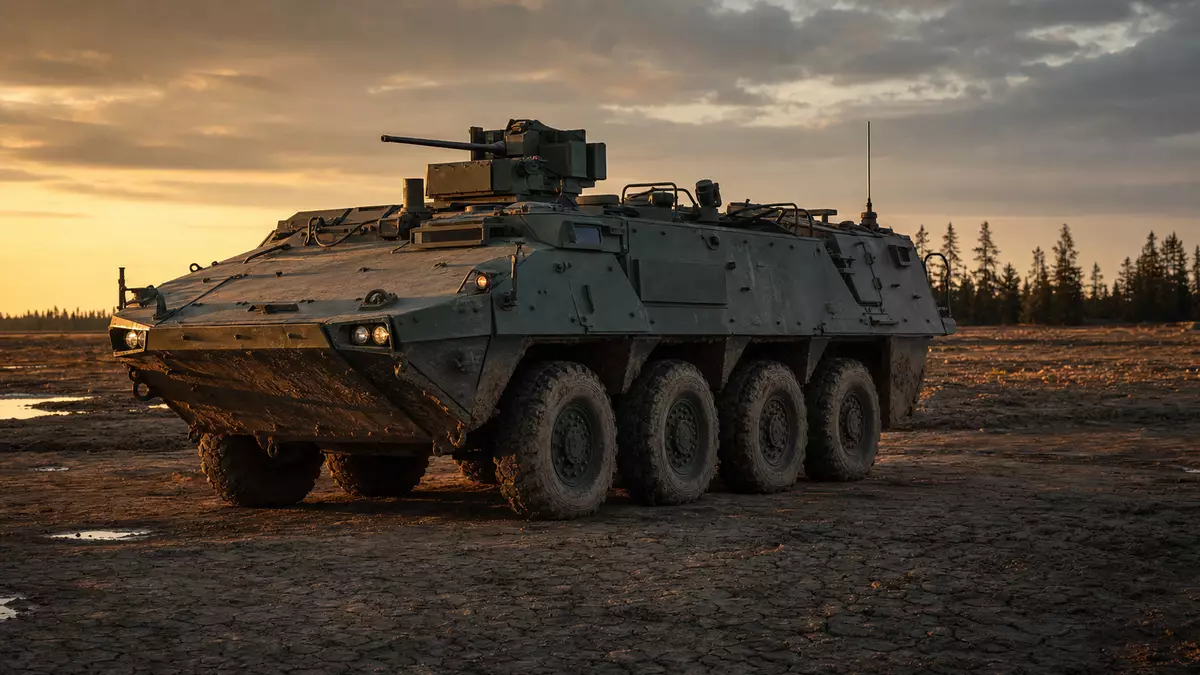
Rheinmetall shares slipped back below the €1,000 threshold on Friday, a level they had not traded beneath in months. The stock shed 2.1% to close at €992.00, extending a slump that has now erased 36% of its value since the start of the year. No single catalyst appeared to drive the session's decline — the move simply folded into a downtrend that has been building for weeks.
That absence of fresh news has pushed investors to refocus on the company's underlying performance, which presents a decidedly mixed picture. On the operational front, the defense contractor keeps delivering. The market, however, has grown increasingly hard to impress.
Record Top Line, but Cash Flow Clouds the View
Rheinmetall's second-quarter 2026 results, released in early August, showed revenue climbing 69% to €3.289 billion — comfortably ahead of the company's own guidance for growth above 60%. Operating profit reached €562 million, roughly 20% above the €469.9 million consensus. The order backlog swelled past €80 billion.
The market's initial reaction to the ad-hoc announcement in late July had been a 7.42% jump. But when the full figures landed in early August, sentiment flipped: the stock tumbled 8.5% after management trimmed its full-year guidance and flagged a significantly negative operating free cash flow. That gap between record sales and weak cash generation has colored how investors view the equity ever since.
A Robust Pipeline, Tempered by a High-Profile Setback
The order book itself remains a source of strength. In early June, Rheinmetall secured a €5.7 billion package in Romania covering combat vehicles, air-defense systems, ammunition and naval vessels — by the company's own account, its largest international order package in recent corporate history. Smaller but strategically meaningful wins have followed, including a U.S. Navy order routed through Rheinmetall Canada for replacement components used in mobile aircraft launch equipment, and a turret contract from Kongsberg Defence and Aerospace for American Rheinmetall.
Should investors sell immediately? Or is it worth buying Rheinmetall?
Set against those gains is a costly reversal. On June 24, Germany scrapped the €12.8 billion F126 frigate program, of which roughly €2.3 billion had already been spent. The Bundeswehr is pivoting instead to eight smaller MEKO A-200 frigates from ThyssenKrupp Marine Systems. Rheinmetall had been slated to serve as lead contractor on the original program, so the cancellation weighed on second-quarter order expectations.
Washington Adds Another Brick — and Opens a Door
Across the Atlantic, American Rheinmetall picked up a $7.28 million contract from the U.S. Marine Corps Warfighting Laboratory for twelve Mission Master SP A-UGVs plus five amphibious Marine Kits. The Defense Logistics Agency is handling procurement, with ADS Inc. acting as prime contractor.
The unmanned ground vehicles rely on PATH autonomy technology from Rheinmetall Canada for navigation and obstacle avoidance, while the amphibious kits are designed to make the systems suitable for littoral operations. Production will take place in the U.S., with the long-term ambition of expanding the Maine site into an ALACOE — a center for land and amphibious combat capabilities. For Rheinmetall, the order marks another step in building out its American footprint, even if the dollar volume is modest next to its multi-billion-euro backlog.
Alongside the hardware news, Rheinmetall published the onboard and tactical APIs of its Battlesuite as open source on GitHub. Only the interface specifications were disclosed; the proprietary core remains protected. The Battlesuite connects sensors, cameras, drones and effectors across manufacturers, serving both military and civilian applications. The aim is to reduce customers' dependence on individual vendors and bring systems into service faster.
Price Action Tells Its Own Story
None of this has translated into share-price momentum. In a separate session, the stock traded at €1,018.60, up 0.5% on the day, yet still down 13% over 30 days — a sign that recent contract announcements have done little to win over investors. The shares remain 49% below their 52-week high of €2,007.00, set in October 2025.
The pullback has unfolded against a tougher backdrop for defense names broadly. Rising oil prices tied to escalating U.S.-Iran tensions, a fresh ECB rate hike and expectations of a Fed increase the following week have dampened risk appetite across markets. The DAX fell well short of its previous record highs on Thursday, while German government bonds drew buyers on higher rate expectations — conditions that tend to work against high-valuation growth stocks.
Rheinmetall at a turning point? This analysis reveals what investors need to know now.
Fundamentals Versus Sentiment
The operational numbers continue to hold up. First-half 2026 revenue rose 39% to €5.23 billion, with operating profit up 74% to €786 million. The order backlog grew 44% year over year to €80.5 billion. Even so, the company cut its 2026 revenue guidance to a range of €13.7 billion to €14.2 billion.
Analysts, by and large, remain undeterred. Of 21 covering the stock, 18 recommend buying and none advise selling. Deutsche Bank reaffirmed its €1,800 price target in early September. The consensus points to roughly 65% upside over twelve months — a striking disconnect from a market mood dominated by geopolitical risk and rising rates.
Two Dates to Watch
Attention now turns to early December, when parliament is set to take up the Arminius project, a major Boxer wheeled-vehicle order for the Bundeswehr. Under current terms, the fixed contract covers roughly €14.4 billion to €14.5 billion for vehicles plus a service agreement, with two options that could lift the total as high as €26 billion. A contract signing is expected five to ten days after the parliamentary decision.
Before that, in early November, Rheinmetall reports third-quarter figures. Those results should reveal whether the negative free cash flow from the second quarter persists or whether the picture stabilizes. Until then, the stock remains caught between a strong operational order book and lingering doubts about capital allocation — the very tension that explains the price swings of recent weeks.
Ad
Rheinmetall Stock: New Analysis - 11 September
Fresh Rheinmetall information released. What's the impact for investors? Our latest independent report examines recent figures and market trends.


