Rheinmetall Confronts Dual Test: Fatal Kuwait Strike and JPMorgan's Margin Doubts
Published on 11/27/2026 at 21:04 | Editorial boerse-global.de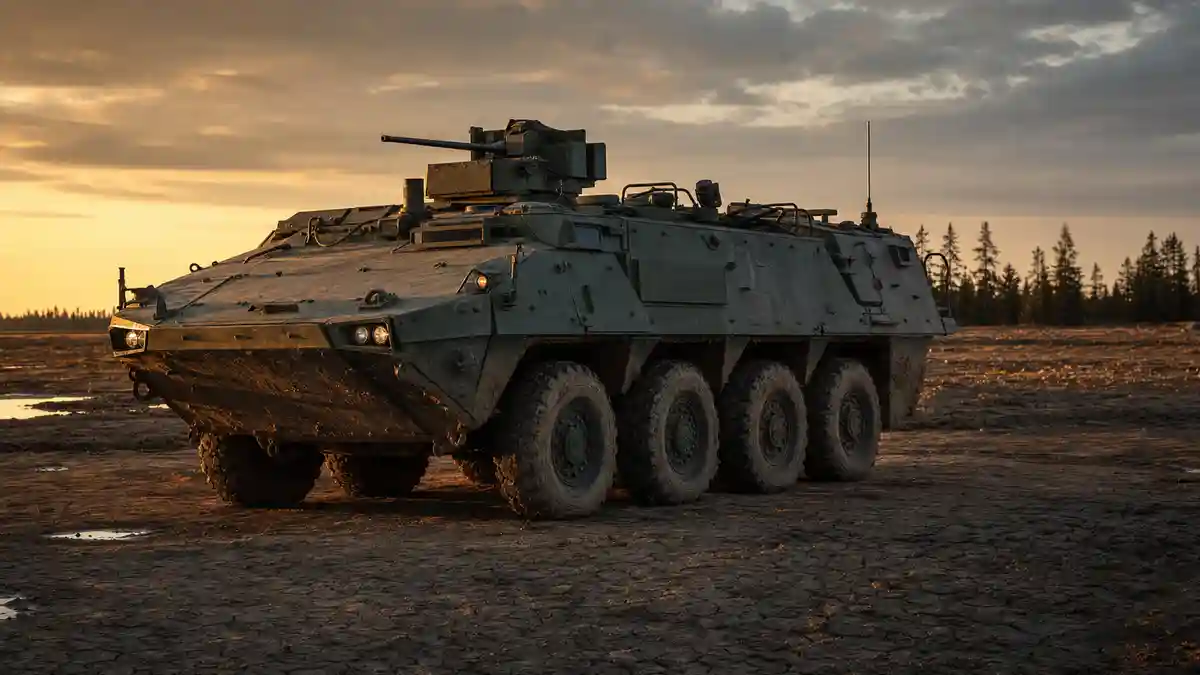
Two Rheinmetall Italia technicians were killed in a drone attack in Kuwait, the defence group confirmed, as the same day brought a skeptical verdict from JPMorgan on the company's profitability ambitions. The fatalities and the analyst's reservations landed alongside a capital markets day at which Rheinmetall trimmed its long-term revenue outlook.
The dead men were named as Antonio Saccoccio, 65, of Formia, and Emanuele Lo Russo, 36, of Rome. Both were maintaining the Skyguard air-defence system and working on its detection antennas when they were struck. According to Italy's foreign minister Antonio Tajani, the technicians were inside an air-surveillance station. A Kuwaiti captain and a Pakistani national were also wounded.
Rheinmetall expressed its grief and offered condolences to the families, saying the employees had sought through their work to help protect people in Kuwait. The attack therefore hit staff providing on-site technical support for air defence. Italy's Corriere della Sera reported that falling debris from a drone intercepted by Kuwaiti air defences killed the two men, describing a strike that caught the workers during maintenance operations.
Kuwait and Italy blame Iran for the attack, while Tehran denies involvement and has proposed a joint investigation. Tajani said Kuwaiti enquiries had found the drone was built in Iran. The competing accounts remain sharply contested. The strike occurred against the backdrop of continuing conflict in the region: since late February the US and Israel have carried out attacks on Iran, and a ceasefire collapsed in July. Italy announced at the start of October that it would withdraw most of its soldiers from Kuwait; the dead technicians, by contrast, were Rheinmetall Italia employees servicing the Kuwaiti air-defence system. Rheinmetall's work in Kuwait also includes fitting naval vessels with ship-protection systems, a major order the group announced in July.
Should investors sell immediately? Or is it worth buying Rheinmetall?
JPMorgan Backs the Revenue Side, Not the Margin
Separately, JPMorgan's David Perry now regards Rheinmetall's revenue planning as considerably more credible, but still sees high hurdles on profitability. He called the revised margin ambition very demanding. For investors, the test therefore lies not only in order growth: Rheinmetall must also show that projects can be delivered at the targeted returns.
The bank reiterated its "Neutral" rating and a price target of EUR 1,150. According to Perry, the reduced business targets sit below the median Bloomberg estimates. His assessment is nuanced: greater confidence in the revenue plan does not automatically translate into greater confidence in the planned operating margin.
At its capital markets day, Rheinmetall lowered its organic revenue target for 2030 to EUR 33–37 billion. The group described its planning path as more credible, according to Bloomberg. That shifts attention beyond growth to the durability of the assumptions underpinning the plan. On operating group margin, Rheinmetall is aiming for around 20%, down from more than 20% previously; the analyst consensus stands at 20.1%.
The proximity to the consensus estimate does not dispel Perry's reservation, which is directed at the ambition of the target margin itself. That distinction matters for valuation: a more plausible revenue plan does not automatically remove the risks on the earnings side.
Delayed Programs Cloud Visibility
Just how strongly individual procurement programmes sway the business is illustrated by the Boxer order "Arminius", where price negotiations are delaying contract signature. Chief executive Armin Papperger expects the deal to be signed in 2027. Add to that the halted F-126 frigate programme. Both projects sit behind the guidance cuts already made, so the issue is not merely the pace of growth but the reliability of the underlying order assumptions.
Papperger attributed the lower revenue plan for vehicle systems in part to a buffer for delays and supply-chain risks, CNBC reported. That more cautious approach explains the greater credibility of the revenue side, though it is not yet proof that Rheinmetall will reach its intended profitability.
Rheinmetall at a turning point? This analysis reveals what investors need to know now.
For 2026 the group confirmed revenue of around EUR 13.2 billion and an operating margin of around 18.5%. After the earlier cuts, that annual guidance remains unchanged.
Romania Provides a Tangible Counterweight
Offsetting the delayed projects is an order call-off from Romania reported today. According to Reuters, the country is ordering a further 66 Lynx vehicles for around EUR 738 million, under a framework agreement covering 298 vehicles in total. The framework is now fully exhausted. Unlike the still-unsigned Boxer order, this is a binding call-off. Rheinmetall is also expanding production capacity in Romania to execute its local orders. Delivery of the full order is scheduled for 2028 to 2030, so the deal supports future utilisation but does not translate into near-term revenue.
The Romanian call-off offers tangible evidence of business potential, yet it does not answer JPMorgan's margin caveat. Execution remains decisive: binding orders must turn into deliveries and, ultimately, into the planned returns.
Ad
Rheinmetall Stock: New Analysis - 27 November
Fresh Rheinmetall information released. What's the impact for investors? Our latest independent report examines recent figures and market trends.