
Rheinmetall Chases €12.4 Billion Boxer Deal While Artillery and Naval Orders Keep Rolling In
Published on 09/18/2026 at 18:41 | Editorial boerse-global.de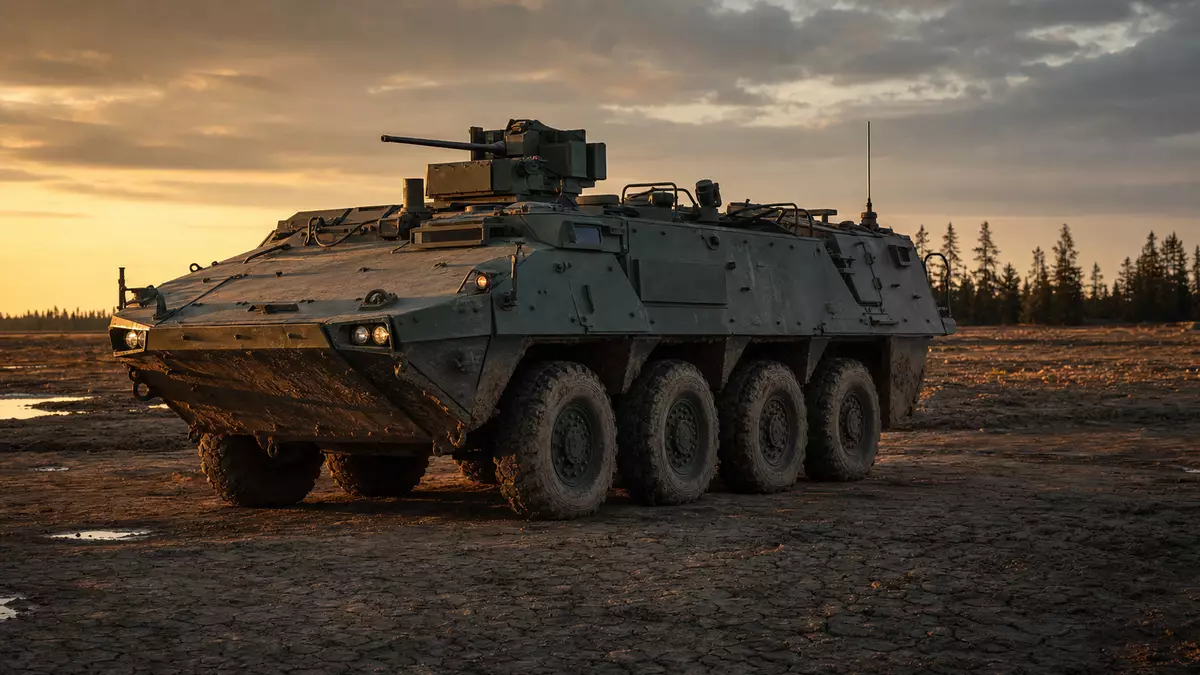
Rheinmetall is positioning itself for what could be one of Germany's largest defense procurement decisions this year, even as its share price continues to lag well behind where it started 2026.
At the heart of the company's medium-term planning sits the Arminius program built around the Boxer wheeled armored vehicle. Rheinmetall is targeting a contract volume of roughly EUR 12.4 billion for the vehicles, with deliveries slated to run through 2029. A separate service agreement worth about EUR 2 billion forms part of a broader EUR 4 billion package. Two additional options could stretch the total framework to as much as EUR 26 billion.
Should the deal go through, Rheinmetall expects a 30 percent down payment — equivalent to more than EUR 3 billion — due at the end of December or in January. The final say rests with the Bundestag, whose parliamentary review is scheduled for December 9, 2026. Rheinmetall anticipates signing the contract within five to ten days of that decision.
Fresh Orders Across Land, Sea and Air
The potential Boxer windfall comes on top of a steady stream of new business. On Monday, Rheinmetall disclosed a major order from an unidentified international customer for 155-millimeter artillery shells. The contract carries a value in the low triple-digit millions of euros and will be booked in the third quarter of 2026. Production is already underway, with deliveries set for completion by 2027.
Should investors sell immediately? Or is it worth buying Rheinmetall?
Naval business is also moving forward. According to Reuters, Defense Minister Boris Pistorius announced on Monday the order of a fourth fleet service boat, with the budget draft submitted to parliament for approval. Rheinmetall is involved through its Wolgast shipyard, where it recently laid the keel for the third vessel. Media reports also indicate the company secured a USD 7.3 million contract for unmanned vehicles for the U.S. Marine Corps.
Beyond contracts, Rheinmetall is pushing ahead with expanding its operational footprint abroad. On Tuesday, subsidiary Rheinmetall UK commissioned a new vibration testing facility to broaden testing capacity in Britain. The investments at foreign sites are designed to support the armed forces of key partner nations directly through local infrastructure. Decentralized development and testing capabilities are gaining importance for the defense group, as governments increasingly prioritize industrial value creation on their own soil when placing new orders.
Share Price Still Searching for Traction
Despite the steady flow of business, investors remain cautious. The stock is down 0.3 percent today at EUR 1,012.40, and has shed 35 percent since the start of the year. The pullback has not gone unnoticed by the company's leadership, which used the price correction of recent months to make significant purchases.
Analysts, meanwhile, have adopted a wait-and-see stance. JPMorgan placed the stock on a "Negative Catalyst Watch" on September 10, though it maintained its "Neutral" rating, according to media reports. The current price sits 13 percent above its 52-week low.
Market participants will get further direction from upcoming events this quarter. Management will attend investor conferences in Munich on September 23 and 24, ahead of the interim report for the third quarter of 2026 on November 5. Should the Arminius project clear its parliamentary hurdle in December, it would not only reinforce the existing order backlog but also lock in revenue visibility through the end of the decade. Until then, the final rounds of negotiations with procurement authorities remain the decisive factor for the company's business momentum.
Ad
Rheinmetall Stock: New Analysis - 18 September
Fresh Rheinmetall information released. What's the impact for investors? Our latest independent report examines recent figures and market trends.


