Renk's Production Gambit Exposes the Divide Between Factory Floor and Trading Floor
Published on 09/02/2026 at 10:01 | Editorial boerse-global.de
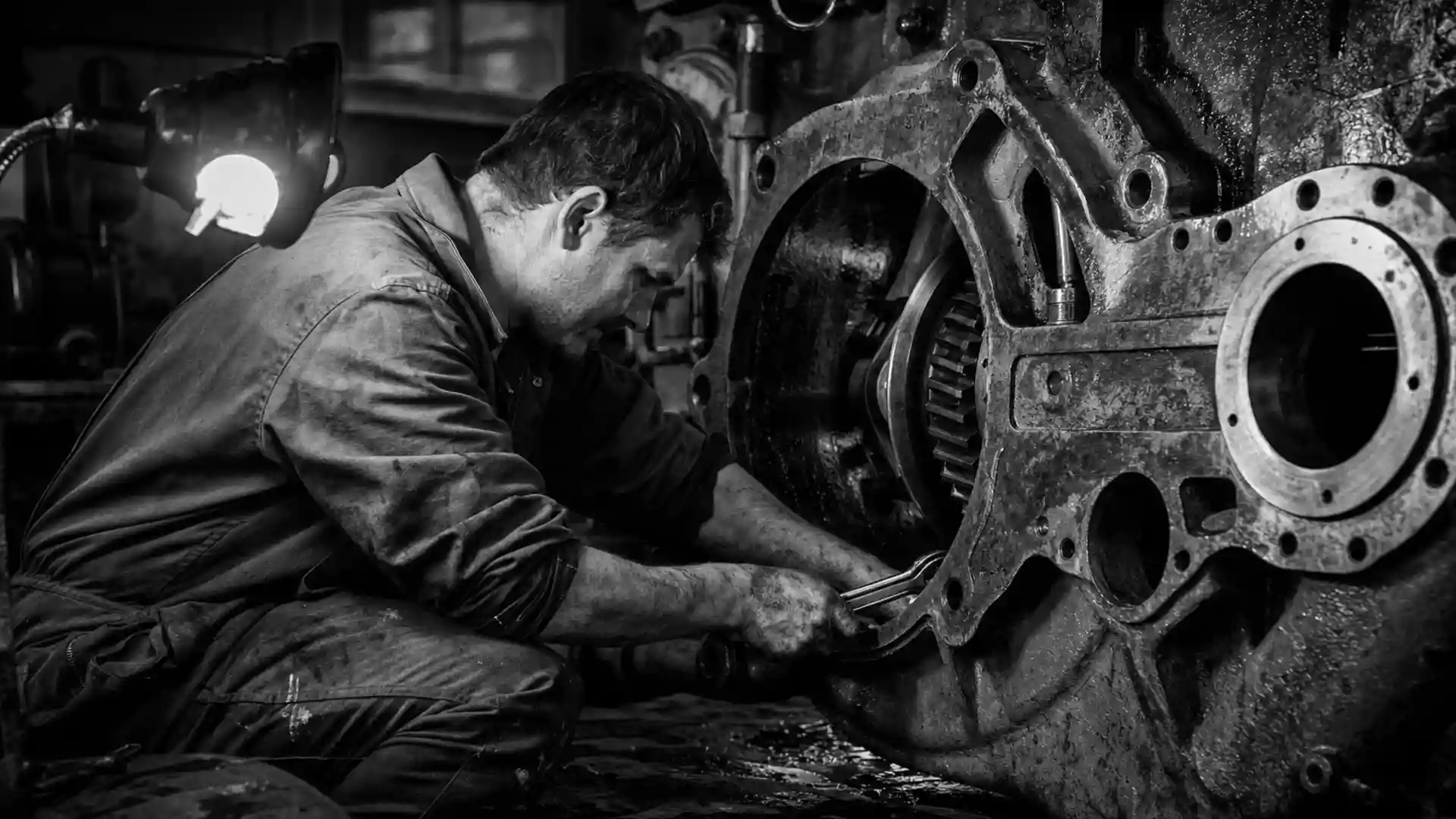
The Augsburg plant that has long been the beating heart of Renk's gearbox manufacturing is set for a transformation that would have seemed unthinkable just a few years ago. By 2030, the company aims to push annual output at its flagship site to more than 2,000 units — over three times current levels — with the Rheine facility in North Rhine-Westphalia also earmarked for significant expansion. The announcement, made on Monday and fleshed out in subsequent reporting, marks one of the most concrete commitments yet to Europe's rearmament agenda.
Renk frames the move in straightforward terms: demand for tank transmissions and military drivetrains has outstripped what its existing production footprint can deliver. The capacity offensive is designed to close that gap, converting a swelling order book into actual hardware rather than leaving growth on the table.
A Record First Half Provides the Rationale
The expansion plans rest on a solid operational foundation. When Renk reported its first-half 2026 results in early August, the headline numbers were unambiguous — record order intake and a disproportionate jump in adjusted EBIT. Management simultaneously reaffirmed its full-year guidance for both revenue and earnings, signalling confidence that the demand surge is not a fleeting spike.
That order momentum is precisely what makes the investment decision coherent. Doubling down on production capacity would make little sense without the backlog to justify it. The company is effectively betting that the current procurement environment represents a structural shift in European defence spending rather than a cyclical uptick.
Yet for all the operational vigour, the share price tells a different story. The stock changed hands at €44.39 recently, roughly 51 percent below its 52-week high of €90.20 set in early October. Year-to-date, the shares have shed 18 percent. A separate trading session saw the stock slip 5.1 percent to €44.83 on the day the expansion details emerged — a pattern that has repeated itself with each capacity announcement, as investors appear to weigh the capital intensity of expansion against its deferred payoff.
The Order-Book Quality Debate
The disconnect between corporate momentum and market scepticism centres on a single question: how firm are those record orders? MWB Research, which kept a "Hold" rating on the stock in mid-August, pointed to the elevated share of so-called "soft" orders in the backlog — bookings whose final, binding conversion into revenue is not yet fully secured.
That caution stands in contrast to more bullish voices. JPMorgan reaffirmed its "Buy" recommendation around the same time, while other analysts issued price targets ranging from €60 to €75 — levels well above the current trading price. The divergence reflects a fundamental disagreement about how to value a defence contractor whose order book is growing faster than its ability to ship.
A Test of Execution
The Augsburg and Rheine expansion now becomes the clearest test of whether Renk can translate its order intake into tangible results. The timeline stretches to 2030, leaving ample room for the "soft" orders in the pipeline to either harden into binding contracts or dissolve under budgetary pressure.
When companies scale up operations and take on ambitious expansion plans, the pressure to keep every workplace process compliant grows too. But many employers overlook a critical gap in their health and safety documentation — leaving them exposed if an incident occurs. A free toolkit with 41 ready-to-use templates and checklists helps you document risks properly and stay on the right side of the law. Download the free Risk Assessment Toolkit
Defence-sector uncertainty adds another layer. Across the industry, questions linger over the trajectory of future European defence budgets, even as current procurement accelerates. Capacity investments tie up capital today for returns that materialise only gradually — a dynamic that may continue to weigh on the stock even as the company delivers operationally.
For now, Renk finds itself in an uncomfortable middle ground: delivering record results, committing to ambitious expansion, yet watching its valuation compress as investors demand proof that the order book is as solid as management insists. Until that proof arrives, the shares look set to remain hostage to the debate between those who see a growth story and those who see unquantified risk.