
Primary Hydrogen's Insider Reversal and Staking Spree Expose the Gap Between Momentum and Proof
Published on 08/31/2026 at 06:33 | Editorial boerse-global.de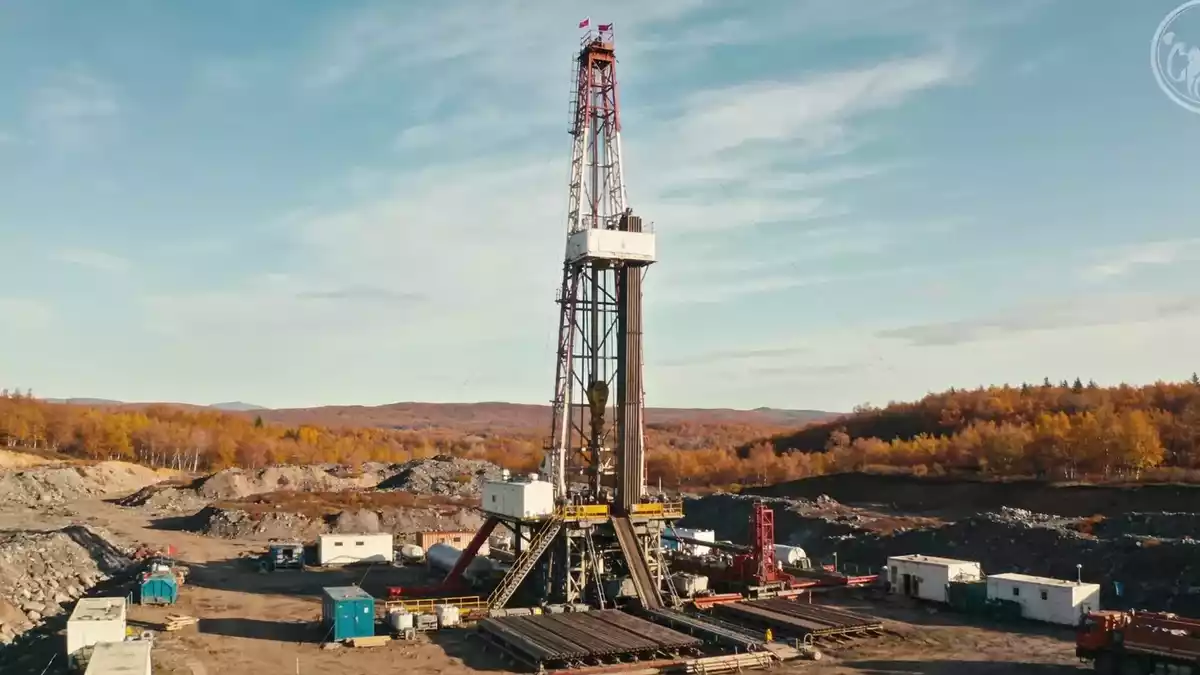
A curious contradiction is playing out inside Primary Hydrogen Corp. The company is racing to lock up exploration ground across two Canadian provinces, its shares are levitating near record highs, and yet its own directors are quietly pulling money out of an earlier financing round.
The insider retreat came to light on Wednesday, when the company disclosed it was rescinding C$10,000 worth of subscriptions from its July 8 private placement — C$5,000 apiece from directors Martin Kowcun and William Timothy Heenan, representing 16,666 units in total. The move sits awkwardly alongside a fresh placement of 2,442,904 shares that the company announced the same week, raising questions about how management views its own capital commitment at current levels.
A Rally Built on Paper, Not Rock
The market, for now, is paying little attention to such subtleties. Shares closed Friday at €1.45, up 9.8 percent on the day and just 0.7 percent below the 52-week high of €1.46 set on August 28. The 30-day gain stands at 127 percent, with the stock trading a staggering 88 percent above its 50-day moving average. The relative strength index has hit 87.5 — firmly in overbought territory.
That technical froth has drawn a sober assessment from an automated screening tool that rated the stock "Neutral" late last week, citing the absence of revenue and recurring losses despite the price surge. The screener's verdict is no substitute for a full analyst report, but it underscores how far the share price has run ahead of the operating reality.
The Seagull North Reality Check
The recent staking activity helps explain some of the enthusiasm — and why the company felt compelled to add a dose of caution. Just days after announcing its claim over the Seagull North project in Ontario, Primary Hydrogen issued a clarification: no discoveries have been confirmed, and no drilling, sampling, or geophysical surveys have been conducted on the property.
That Ontario ground is the third exploration area the company has secured in a matter of weeks. The Seagull North claims — 313 contiguous claims covering roughly 65 square kilometres — sit near the Seagull property where Rift Minerals and Anteros Metals are actively drilling for natural hydrogen and helium. The proximity alone was enough to ignite speculation.
When a company's share price runs far ahead of its operating reality, prudent risk management becomes essential — and the same principle applies to workplace safety. Many employers overlook gaps in their risk assessments until an incident forces the issue. A free toolkit with 41 ready-to-use templates and checklists helps you document hazards properly and stay compliant. Download the free Risk Assessment Toolkit
Earlier, Primary Hydrogen had locked up two exploration licences and 72 claims covering about 1,166 hectares in Nova Scotia's Cumberland Basin for its Northumberland project. Media coverage framed that move variously as strategic positioning in an emerging hydrogen district or, more plainly, as a land grab.
Regulatory Limbo in Nova Scotia
The Nova Scotia ground carries its own complications. The province passed the Subsurface Energy Resource Extraction Act in April 2026, which would regulate natural hydrogen and helium as distinct resources. But the legislation has yet to be proclaimed into force, meaning Primary Hydrogen's new licences remain under the existing Mineral Resources Act for now.
That leaves the company with legal certainty under the established framework but an open question about what conditions the new law will impose once fully implemented. For investors, the regulatory limbo adds another layer of uncertainty to the long-term valuation of the Nova Scotia projects.
What Actually Moves the Needle
The Ontario announcement alone drove the stock up 28 percent in a single week — a telling measure of how sensitively the market is reacting to every piece of news from the company. The broader rally has unfolded against a backdrop of leadership change roughly a month ago; since then, the share price has more than doubled.
Yet the only project in the portfolio with concrete field work attached is Wicheeda North, the company's core asset. A fully funded and permitted exploration and initial drilling program is underway there for 2026, with a first 1,500-metre drilling campaign scheduled for autumn. The campaign targets anomaly clusters identified in 2025.
The staking spree in Ontario and Nova Scotia broadens the company's strategic footprint across multiple North American hydrogen districts, but it has yet to produce a single geological data point. Whether the recent price momentum can be sustained will likely hinge on what the Wicheeda North drills actually bring up this fall — and whether the directors' decision to trim their own exposure proves to be an outlier or a harbinger.


