Nvidia's Silent Pivot: How a Memory Shortage Is Quietly Rewriting the Chipmaker's Identity
Published on 09/08/2026 at 04:20 | Editorial boerse-global.de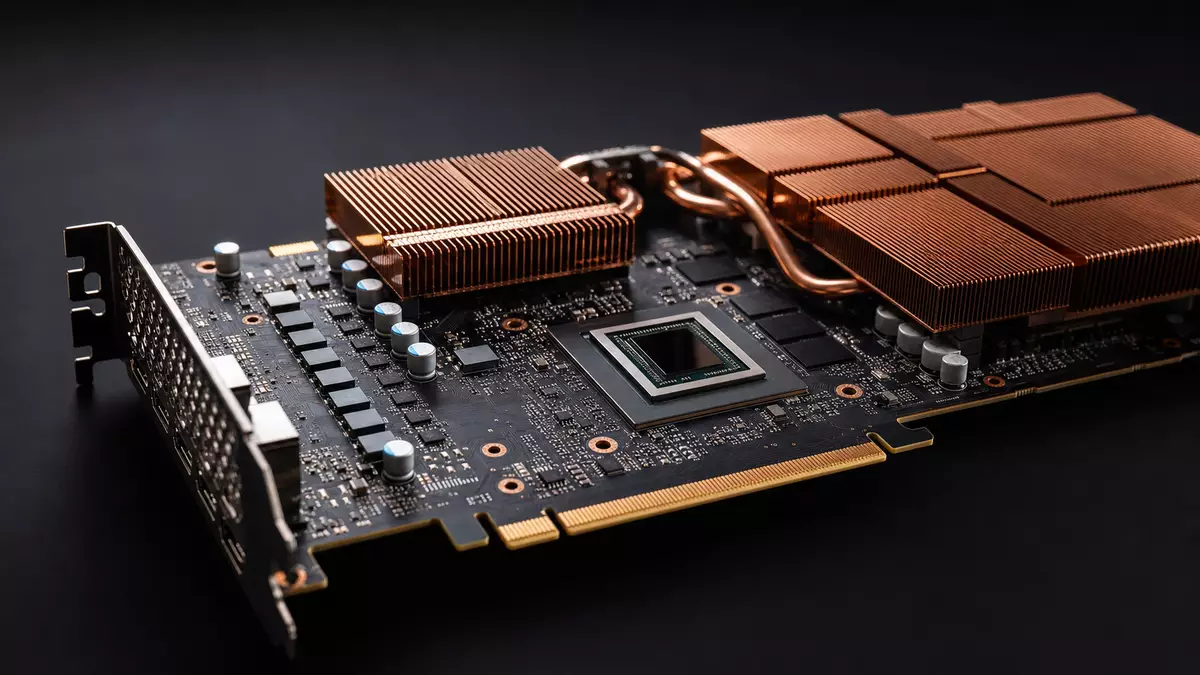
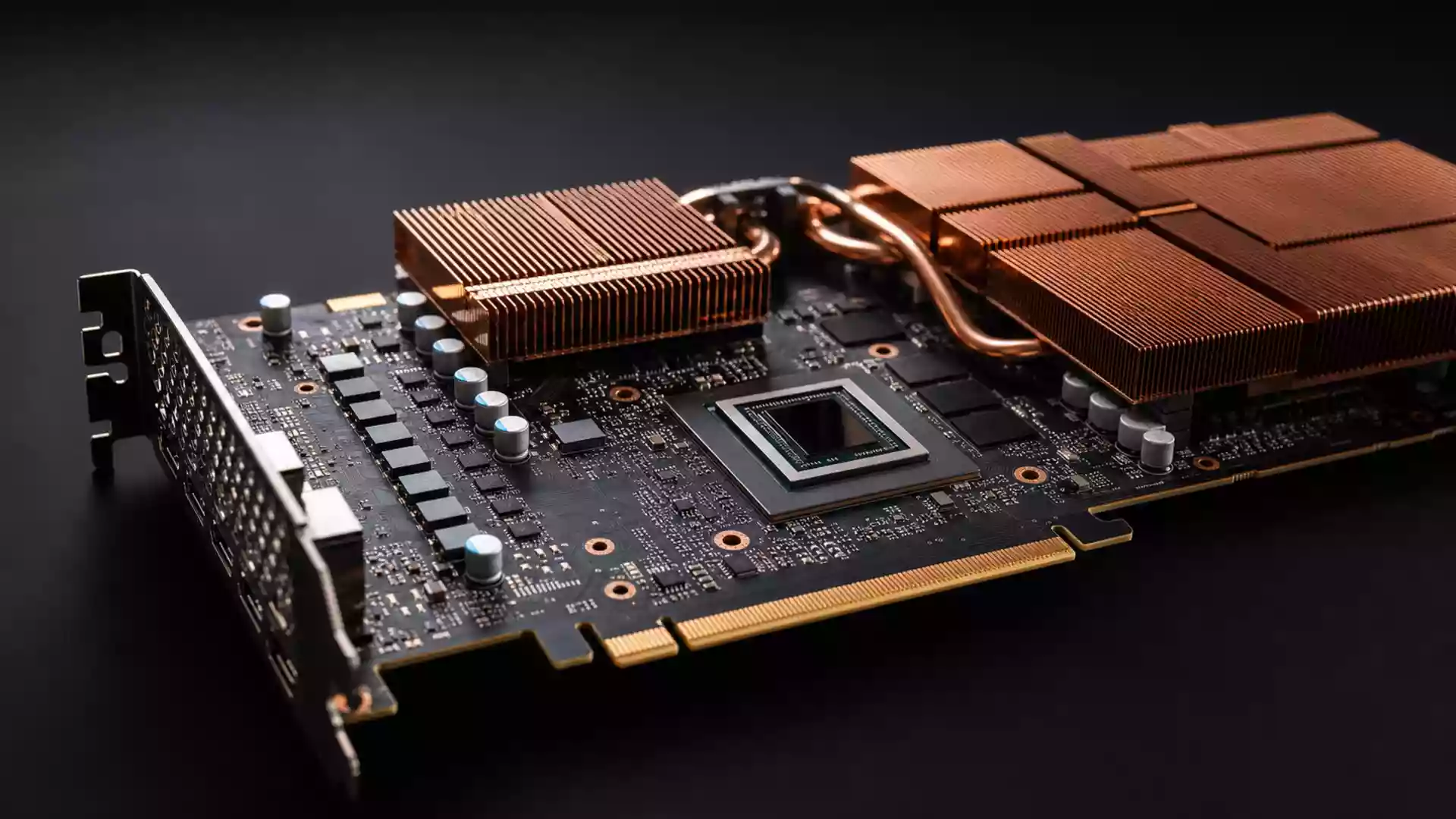
The calendar on Nvidia's wall tells a story the company would rather not shout about. Every year since the GeForce 256 debuted in October 1999, the chipmaker has delivered at least one new gaming GPU architecture. That unbroken 26-year streak comes to an end in 2026. No new gaming graphics cards are slated for release this year, according to multiple reports — a first for a company whose very name was forged in the crucible of PC gaming.
The culprit isn't a lack of engineering ambition. It's a global shortage of DRAM and HBM memory so severe that industry insiders have dubbed it "RAMageddon." Faced with finite supply, Nvidia is making a calculated choice: route every available memory chip into its highest-margin products — the AI accelerators powering the data-center boom — and let the consumer graphics business wait its turn.
That decision carries a symbolism that transcends simple supply-chain logistics. Nvidia, once the undisputed champion of enthusiast gaming hardware, has completed its metamorphosis into something closer to an infrastructure titan. The mental image the company now conjures isn't a glowing RGB-lit graphics card in a gamer's rig, but sprawling server racks humming inside hyperscale data centers.
The Numbers Behind the Transformation
The financial logic of this pivot is difficult to argue with. In the company's second fiscal quarter, which closed at the end of July, Nvidia posted revenue of $96.2 billion — a 106 percent surge year over year and an 18 percent jump from the prior quarter. Gross margin held steady at 75.0 percent under both GAAP and non-GAAP accounting, a figure that would be virtually unattainable in the razor-thin consumer graphics market. Earnings per share came in at $2.46 GAAP and $2.22 on an adjusted basis.
Management's guidance for the current quarter points to revenue of $108.0 billion, plus or minus 2 percent, with gross margin expected to ease to 74.0 percent. Notably, that forecast deliberately excludes any data-center revenue from China — a conservative assumption that signals the company is pricing in geopolitical friction rather than hoping it will disappear.
Should investors sell immediately? Or is it worth buying Nvidia?
CEO Jensen Huang has gone further, floating a 70 percent revenue growth target for fiscal 2028. If realized, that trajectory would put Nvidia in rarefied air, potentially rivaling consumer giants like Apple and Alphabet in sheer top-line scale.
A Boardroom in Motion
While the company redirects its resources toward artificial intelligence, its directors have been quietly trimming their own exposure. Between late August and early September, board member Mark Stevens sold approximately 1.85 million shares through a trust at prices ranging from roughly $220 to $226 per share, pocketing about $410.84 million in the process. He retains close to 30 million shares — the sale barely dents his overall position.
Fellow director Tench Coxe, on the same day, gifted 500,000 shares from a trust under a pre-arranged Rule 10b5-1 plan, leaving him with roughly 24.1 million trust-held shares. Both moves were scheduled transactions, not spontaneous votes of no confidence. Still, they arrive at a moment when the stock is hovering near record levels — the shares recently closed at €199.92, barely 1 percent below their 52-week high of €202.50.
The insider activity coincides with a period of extraordinary corporate spending. Nvidia completed its acquisition of Hugging Face for $12.93 billion — confirmed on September 2 and the second-largest deal in company history, trailing only its purchase of Groq assets. A day earlier, the company invested $3.5 billion in convertible bonds issued by MediaTek, tying that investment to a strategic partnership under which MediaTek will adopt Nvidia's NVLink Fusion platform to offer hyperscalers and cloud providers a pre-validated path toward custom chip designs.
Add to that mix a steady dividend: the next quarterly payout of $0.25 per share arrives on October 1, with a September 10 record date. The combination of a blockbuster acquisition, a strategic stake in a chip-design partner, and consistent shareholder returns paints a picture of a company deploying its considerable firepower across multiple fronts simultaneously.
What Gamers Lose, Investors Gain
For the gaming community that once formed Nvidia's bedrock, the news is undeniably disappointing. The company has promised that RTX 40-series cards will receive support for new software features like DLSS 5 this autumn, but that's cold comfort for those hoping for fresh hardware architectures. The gaming division, once the company's crown jewel, has been relegated to a supporting role in a drama dominated by AI infrastructure.
Nvidia at a turning point? This analysis reveals what investors need to know now.
The stock market, for its part, appears to have absorbed the message without alarm. The shares have gained roughly 24 to 25 percent since the start of the year and stand about 39 to 40 percent higher over the past twelve months, depending on the trading session cited. The stock sits approximately 18 percent above its 200-day moving average — a sign of a robust but potentially overheated uptrend.
The market's interpretation seems clear: skipping a gaming generation isn't a warning sign but rather the natural consequence of a company directing its capital — and its scarce memory supplies — toward the strongest demand it has ever seen. Nvidia's real competition these days isn't AMD or Intel on the graphics front; it's every other company on earth fighting for access to the same finite supply of high-bandwidth memory.
The deeper question is what this means for the company's identity. Nvidia is no longer primarily a graphics card maker. It has become the indispensable supplier to an industry that competes for every gigabyte of memory it can secure. The gaming roots that gave the company its name and its start have receded into the background — a quiet acknowledgment that in the race to dominate AI infrastructure, even the most storied product lines can find themselves waiting their turn.
Ad
Nvidia Stock: New Analysis - 8 September
Fresh Nvidia information released. What's the impact for investors? Our latest independent report examines recent figures and market trends.