
Nvidia's October Offensive: From Consumer Desktops to a $3.5 Billion Strategic Embrace
Published on 09/08/2026 at 07:30 | Editorial boerse-global.de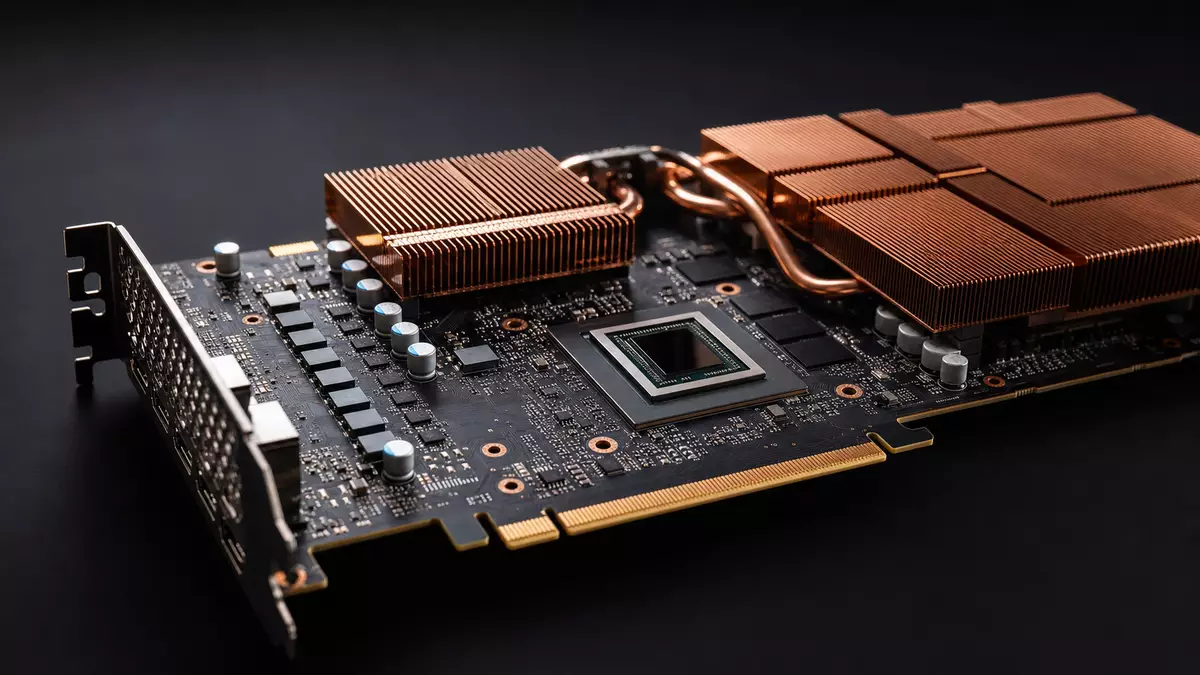
The chipmaker's latest moves read less like a company defending turf and more like one quietly redrawing the boundaries of its empire. Within the span of a week, Nvidia has confirmed a multibillion-dollar acquisition, deepened a pivotal alliance in Asia, and secured marquee partners for a consumer push that lands next month — all while its share price hovers near record territory.
A Consumer Beachhead Takes Shape
Acer and Lenovo will ship the first Windows machines powered by Nvidia's RTX Spark chip in October, carrying the company's AI acceleration technology from the data center floor onto desktops and laptops aimed squarely at everyday buyers. The timing is deliberate: the rollout follows quarterly earnings that beat analyst expectations, with adjusted earnings per share of $2.22 on revenue of $96.2 billion.
The consumer gambit serves a dual purpose. On one hand, it enables AI applications to run locally on devices, bypassing the cloud round-trip entirely. On the other, it hands Nvidia a direct channel into a PC market where rivals have struggled to dent its data-center dominance. Securing Acer and Lenovo as launch partners gives the technology instant distribution heft.
The MediaTek Calculus
That consumer push dovetails with a far larger strategic statement made days earlier. On August 31, Nvidia and MediaTek announced a deepening of their long-standing collaboration, followed a day later by a $3.5 billion investment in MediaTek convertible bonds. The Taiwanese chip designer will adopt Nvidia's NVLink-Fusion platform, offering hyperscalers and cloud providers a pre-validated pathway to building their own XPU chips — all integrated into Nvidia's rack-scale AI factories.
The logic here is counterintuitive but revealing. Rather than resist the rise of custom silicon, Nvidia is choosing to take an equity stake in a potential competitor and bind it more tightly through its own interconnect technology. It is a play for control through capitulation — monetizing the inevitable rather than fighting it.
Should investors sell immediately? Or is it worth buying Nvidia?
Demand Signals Beyond the Horizon
The same week brought fresh evidence that the AI infrastructure boom has legs. Amazon Web Services announced plans to deploy two million additional Blackwell Ultra, Rubin, and Rubin Ultra GPUs across 2027 and 2028 — a commitment that, by AWS's own account, already exceeds the expectations Nvidia laid out at GTC 2026. The order book, in other words, extends well beyond current visibility.
The financial fundamentals support the optimism, though they come with caveats. Nvidia's fiscal second-quarter revenue of $96.2 billion represented 106 percent year-over-year growth at a gross margin of 75.0 percent. The company's third-quarter guidance of $108.0 billion, plus or minus 2 percent, is notable for what it excludes: no data-center revenue from China whatsoever. The market has effectively been zeroed out of the forecast, meaning any thaw in that relationship would represent pure upside that nobody is currently pricing in.
During the first half of the fiscal year, Nvidia bought back 203 million shares for $39.8 billion and raised its quarterly dividend from $0.01 to $0.25 per share — a signal that cash generation now outstrips even the company's voracious appetite for capacity investment.
The Hugging Face Connection
The RTX Spark launch also follows hard on the heels of Nvidia's confirmed acquisition of Hugging Face, a deal valued in the billions. Together with the MediaTek investment and the consumer chip rollout, the pattern is unmistakable: Nvidia is securing access to software ecosystems and endpoint devices while its core data-center hardware business continues to compound. The company is expanding simultaneously across the stack — from cloud infrastructure through developer platforms and into the living room.
Valuation Reality Check
The market has rewarded the flurry of announcements. Shares closed at €198.50, roughly 2 percent below the 52-week high of €202.50, having climbed 5.8 percent over the past week alone. The stock is up 24 percent since the start of the year and 39 percent over twelve months, trading comfortably above its 200-day moving average of €169.62. Market capitalization stands at approximately €4.8 trillion.
Yet the proximity to record highs cuts both ways. With a volatility reading of 42 percent, the buffer for disappointment has thinned considerably. BMO Capital initiated coverage on September 4 with an "Outperform" rating and a $340 price target — a bullish stance, though one that carries the caveat of coming from a house establishing its first opinion on the stock.
Adding a note of caution: General Counsel Timothy Teter sold 30,000 shares in late August at prices between $216.84 and $218.53. Insider sales rarely carry definitive signals — diversification motives abound — but they do occur against a backdrop of a stock trading near its historical peak.
What emerges is a company pursuing growth through strategic embrace rather than exclusion. Nvidia is buying into its would-be disruptors, seeding its technology across consumer devices, and locking in hyperscaler demand years in advance. The opportunity set remains compelling, but with the shares this close to all-time highs, the margin for error has never been thinner.
Ad
Nvidia Stock: New Analysis - 8 September
Fresh Nvidia information released. What's the impact for investors? Our latest independent report examines recent figures and market trends.


