
Nvidia's October Desktop Offensive Caps a Week of Ecosystem-Building Moves
Published on 09/09/2026 at 09:31 | Editorial boerse-global.de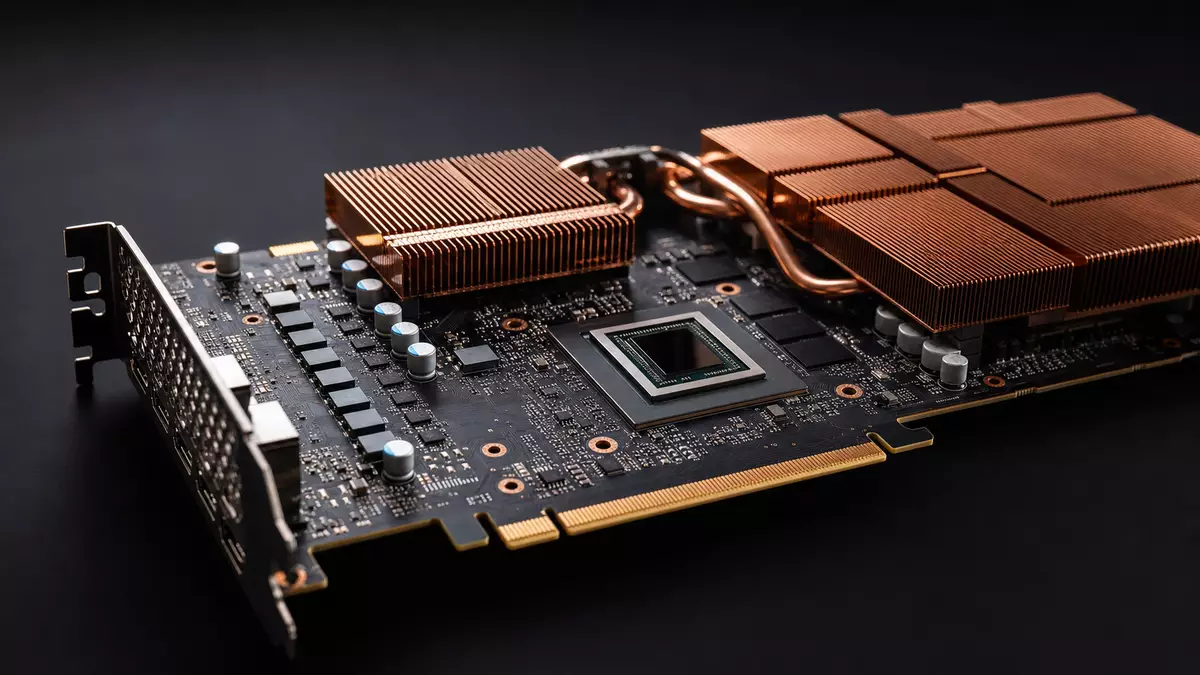
The pace of announcements out of Santa Clara this week has been enough to make even seasoned chip-sector watchers blink twice. Between a blockbuster acquisition, a deepening tie-up with a Taiwanese semiconductor partner, and a fresh revenue forecast that blows past Wall Street's models, Nvidia is sketching out a corporate strategy that extends far beyond the data center racks where it built its fortune.
At the center of that push sits a consumer-facing milestone: Lenovo and Acer will ship the first Windows PCs powered by Nvidia's RTX Spark chip in October. It's a concrete date for a product line that positions on-device AI processing in the hands of everyday users — a step that arguably matters more strategically than the headline-grabbing Hugging Face deal itself.
From Training Clusters to Living Rooms and Dashboards
The RTX Spark rollout dovetails with the expanded collaboration Nvidia announced with MediaTek on Thursday. The two companies are now working together across three distinct arenas: AI infrastructure, on-device AI computing, and automotive silicon. Nvidia is committing $3.5 billion in convertible notes to the Taiwanese firm, while MediaTek will adapt Nvidia's NVLink-Fusion platform for its own processors.
Read the pattern closely and a broader thesis emerges. Nvidia is no longer content to sell training accelerators to hyperscalers and call it a day. The company wants its AI compute embedded in every endpoint — from vehicles to consumer laptops. Its planned presence at IFA 2026, where local AI initiatives are expected to take center stage, reinforces that direction.
The security angle fits the same mold. Nvidia's expanded partnership with CrowdStrike around agent-based cybersecurity marks another step away from its hardware-only roots, positioning the company as an infrastructure partner in domains that historically had little to do with graphics chips.
Should investors sell immediately? Or is it worth buying Nvidia?
The Numbers Behind the Ambition
This diversification rests on a formidable financial foundation. For the second quarter of fiscal 2027, which closed on July 26, Nvidia reported revenue of $96.2 billion — up 106 percent year over year. Gross margin came in at 75 percent on both GAAP and adjusted bases. The company guided third-quarter revenue to $108 billion, give or take 2 percent.
CFO Colette Kress went further on the earnings call, projecting roughly 70 percent revenue growth for the full fiscal year 2028 — well above the 44 percent analysts had penciled in. Her rationale was striking in its matter-of-factness: the forecast is constrained by supply shortages, not by any lack of demand. Notably, the projection assumes zero China revenue in data-center computing, meaning the growth is expected to materialize entirely without the Chinese market.
The acquisition of Hugging Face, announced September 3, adds a software layer to this hardware momentum. At $12.93 billion — structured as roughly $11.9 billion in cash plus up to $1 billion in stock for employee retention — it ranks as Nvidia's second-largest acquisition ever, trailing only the $20 billion Groq deal from December. Owning the platform where developers build and share AI models gives Nvidia control over the tools themselves, not just the silicon underneath.
Insider Selling and the Stock's Trajectory
Against this backdrop of expansion, one insider transaction has drawn attention. Director Mark A. Stevens sold 1,848,501 shares through a trust between August 31 and September 2, at prices ranging from $220 to $226. Context matters here: Stevens still holds more than 26.5 million shares directly and indirectly after the sale, and transactions of this kind are often routine components of long-term wealth planning. A single director's sale hardly qualifies as a reliable sentiment gauge for the stock.
The market's reaction to the news flow has been measured. The shares slipped 2.5 percent on the day to close at €193.90, a pause that looks like consolidation following the late-August rally sparked by the earnings report. Pre-market trading on the following day showed the stock at €194.40, up 0.3 percent from Tuesday's close — hardly euphoric, but hardly dismissive either.
The stock sits roughly 4 percent below its 52-week high of €202.50, reached in mid-May. Year to date, Nvidia is up 21 percent, with a 33 percent gain over the trailing twelve months. That proximity to its record high, despite the unusually large acquisition volume for the sector, suggests investors believe the company can digest the Hugging Face price tag through its own cash generation.
Two Dates to Watch
September 10 brings two events worth monitoring: the dividend record date for the next quarterly payout of $0.25 per share, and Nvidia's appearance at the Goldman Sachs conference. Whether that appearance yields fresh details on the growth strategy could offer clues about how durable the ambitious 2028 forecast really is — and whether the market's recently elevated expectations for AI names continue to hold.
The risks are not hard to enumerate. Integrating Hugging Face at this scale is no small operational feat, and the question of whether all these partnerships translate into tangible results — or remain press-release announcements — is legitimate. But the week's trajectory points toward a company maturing strategically rather than resting on its considerable laurels. The shift from pure chipmaker to broad AI ecosystem provider, with tentacles reaching into consumer hardware, automotive, and cybersecurity, may ultimately make the business model more resilient by reducing its reliance on any single customer segment.
Ad
Nvidia Stock: New Analysis - 9 September
Fresh Nvidia information released. What's the impact for investors? Our latest independent report examines recent figures and market trends.


