Nvidia's Growth Story Rests on Two Separate Bets: Build Speed and Chip Supply
Published on 10/26/2026 at 22:10 | Editorial boerse-global.de
Wall Street's research desks remain overwhelmingly bullish on Nvidia, yet a growing chorus of macroeconomists is questioning whether the spending boom underpinning the stock can outlast the returns it generates. The stock traded at EUR 193.48 on the day, up 2.6%, still about 10% below its 52-week high of EUR 216.10.
Between 95% and 98% of analysts covering the chipmaker carry a buy rating, with the average price target of roughly USD 325 pointing to substantial upside. Bernstein's Stacy Rasgon reaffirmed his buy recommendation and kept his target at USD 400, while Barclays' Thomas O'Malley maintained his buy with a USD 275 target.
Doubts From the Economics Desk
Not everyone shares that confidence. Apollo chief economist Torsten Slok noted that artificial intelligence has yet to deliver measurable financial returns for the bulk of US companies outside the technology sector. Revenue per employee and profit margins have climbed noticeably at the big tech groups while largely stagnating across the rest of the S&P 500. Traditional firms increasingly view ongoing spending on computing power and language models as a drag on margins rather than a lever for new revenue growth.
Goldman Sachs chief economist Jan Hatzius, meanwhile, argued that the economic growth impulse from the first phase of infrastructure construction is likely nearing its peak. He partly attributes rising long-term government bond yields across developed economies to heavier borrowing tied to the technology build-out.
Industry figures have added their own caution. Elon Musk warned that lenders may grow more hesitant toward companies without established standalone business models, while specialized cloud providers come under capital pressure.
Should investors sell immediately? Or is it worth buying Nvidia?
A 14-Day Factory — With Conditions
Nvidia is meanwhile trying to speed up the physical side of the build-out. On Wednesday it unveiled DSX POD, a reference design for complete Vera Rubin AI factories housed in modular containers. According to the company, deployment at a prepared site could shrink from six months to just 14 days.
That caveat matters: the timeline applies to a site that is already prepared, not to every infrastructure project. Worldwide delivery is slated to begin in early 2027, making this a future implementation step rather than completed construction. A faster build-out does not, by itself, translate into a corresponding acceleration in revenue.
Order Books Outrunning Production
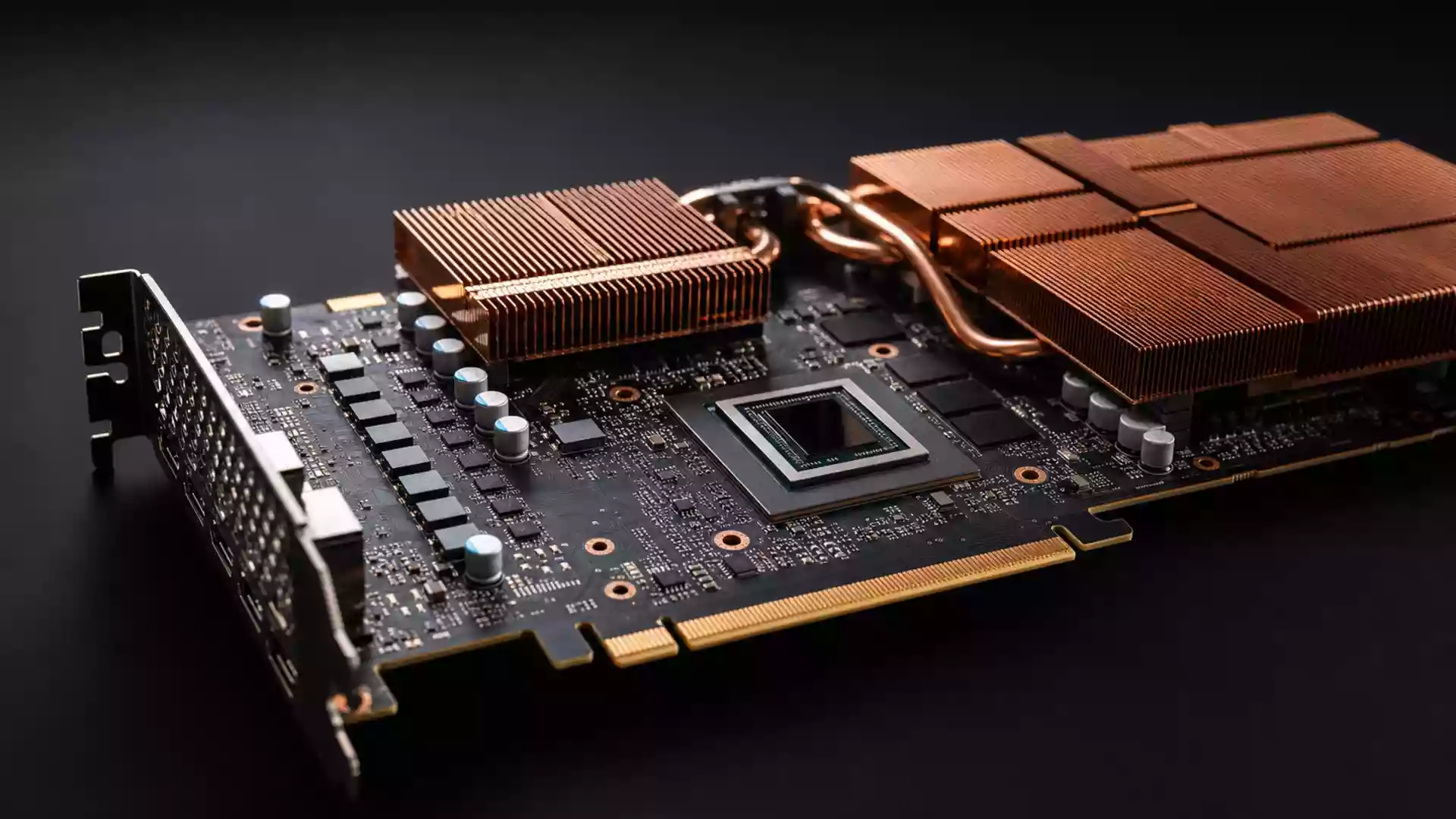
The distinction between build speed and delivery capability is illustrated by a Reuters report from October 20 on Chinese bulk orders. ByteDance, Alibaba and Tencent ordered more than 3 million Nvidia RTX PRO 5500 graphics cards, with a combined list price above USD 35 billion. That figure is not realized revenue. Nvidia told customers it could not guarantee fulfillment, according to Reuters, as Chinese demand outstripped planned production.
Those orders involve different products from the Vera Rubin reference design, so they do not demonstrate a bottleneck for DSX POD. Taken together, though, the two developments show why investors should assess installation speed and hardware availability separately.
The Numbers Behind the Valuation
The rich multiple rests on a narrow customer base. Just five direct customers accounted for 70% of the company's outstanding receivables in the most recent period. Nvidia posted revenue of USD 96.22 billion in the latest quarter with net income of USD 59.69 billion, yet liabilities and advance commitments for components and capacity are mounting.
Management's growth case leans on future product generations. Chief executive Jensen Huang said the Vera Rubin architecture should generate around USD 40 billion in revenue per gigawatt of installed data-center capacity, compared with roughly USD 25 billion for the predecessor Grace Blackwell generation. Huang expects worldwide investment in such data centers to reach a range of USD 3 trillion to USD 4 trillion by 2030.
Upcoming quarterly reports from the leading hyperscalers should reveal whether the capital budgets of major customers can sustain the projected pace — or whether weaker monetization in traditional industries starts to weigh on demand.
Ad
Nvidia Stock: New Analysis - 26 October
Fresh Nvidia information released. What's the impact for investors? Our latest independent report examines recent figures and market trends.