
Nokia Bets on Open Interfaces and Nvidia Chips While Notching a South African Antenna First
Published on 09/30/2026 at 07:40 | Editorial boerse-global.de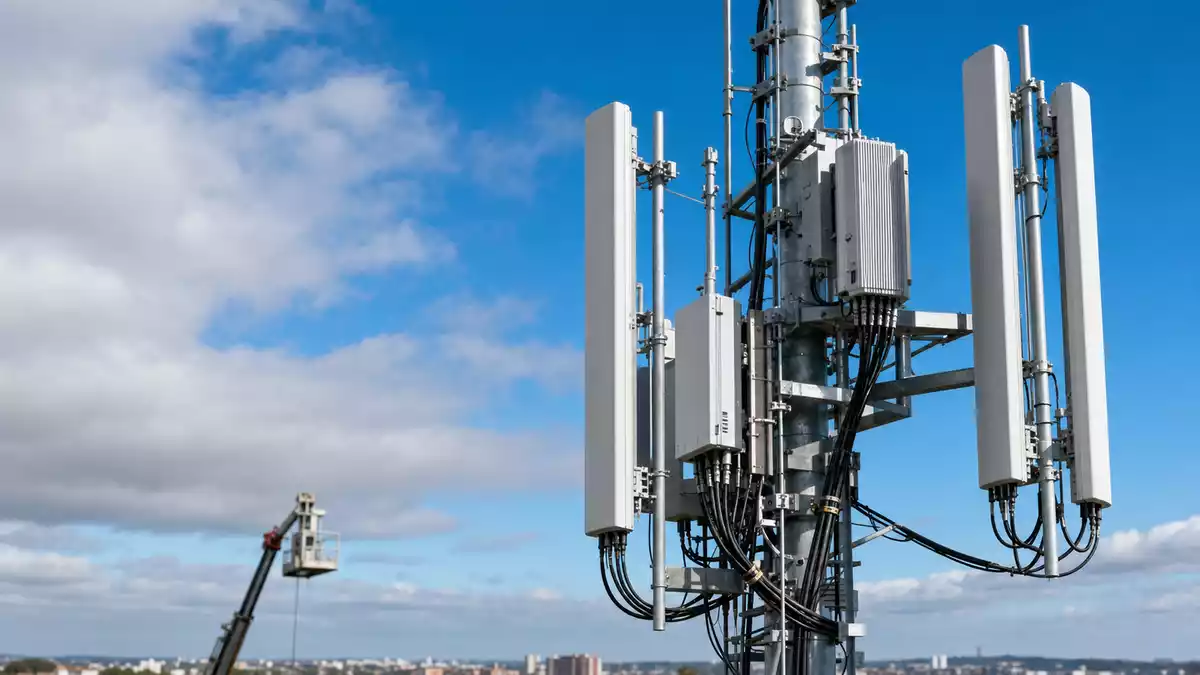
For decades, building mobile networks was a predictable if plodding business: vendors sold closed systems with hardware and software fused together, and operators had little choice but to buy into the same proprietary stack for years. That model is now being pried open, and Nokia is staking its next chapter on being one of the companies doing the prying.
On Wednesday the Finnish equipment maker threw its weight behind the E3 interface for distributed applications within Open RAN and folded Nvidia graphics processors into its 5G radio access strategy. Media reports frame the move as a direct challenge to rivals Ericsson and Samsung, both of which have long defended the bundled architectures that lock customers into their hardware.
A Field Test in South Africa
Nokia's push into open, software-driven networks is not confined to the lab. Together with South African operator Vodacom, the company completed a field trial of an integrated antenna technology in the Western Cape region — a test the partners are calling a world first.
At the heart of the pilot is a compact mobile antenna that pairs passive elements with active Massive-MIMO technology, operating simultaneously on the 2600 MHz and 3500 MHz bands. The goal is to add capacity to 4G and 5G networks without demanding more mounting space, a pressing concern for carriers whose towers and rooftop sites are physically maxed out. Additional equipment often runs into structural limits or regulatory caps, and the joint design aims squarely at that bottleneck.
Vodacom intends to deploy the solution at selected sites where heavy demand collides with limited real estate, expecting faster data rates and steadier throughput in busy urban areas. Neither partner has disclosed specific locations or a firm installation timetable.
Should investors sell immediately? Or is it worth buying Nokia?
Deepfield Goes Live, Microsoft Deal Widens
Evidence that this shift is reaching live networks arrived a day earlier, when Nokia said operator Zain KSA had switched on its Deepfield Cloud Intelligence platform across more than 100 cities in Saudi Arabia. Carriers increasingly want granular visibility into their traffic flows so they can manage loads and allocate capacity on the fly — and for Nokia, the rollout is tangible proof that demand for cloud and analytics tools extends well beyond the traditional radio mast business.
The company broadened its data ambitions on September 17 by expanding its collaboration with Microsoft. The pair are building an agent-based, unified data foundation for network automation that merges the Nokia Data Suite with Microsoft Fabric, tying Nokia's network-specific data to modern cloud and automation tooling.
Under CEO Justin Hotard, Nokia has simultaneously tilted toward linking data centers with artificial intelligence infrastructure. The acquisition of Infinera marked a central step on that path, while platforms such as Deepfield Cloud Intelligence modernize existing networks by giving operators deeper insight into encrypted traffic.
Not everyone is convinced the data-center story is a free ride. Analysts at UBS urged caution on the division, warning that part of the expected growth may already be baked into the valuation and that tighter regulation in regions such as the US or Spain could slow investment.
Analysts Take Notice
The repositioning has not escaped the financial community. On September 17, B. Riley Securities initiated coverage of Nokia with a Buy rating and a $15 price target, according to Bloomberg News — a welcome endorsement that the strategic sharpening toward open systems and data-driven solutions is landing with market watchers.
The stock has responded in kind. Shares closed yesterday at EUR 9.17, up 2.7%, and today added 3.5% to trade at EUR 9.24. Since the start of the year, the equity has climbed roughly 64% to 65%.
Nokia is making clear it no longer wants to be defined as an old-school equipment vendor. Pressure on competitors like Ericsson and Samsung is mounting as the Finns inch toward becoming architects of open, intelligent telecom networks — even as the classic radio access business remains their largest pillar. Whether the transformation sustainably supports profitability will be judged in coming quarters by how quickly operators put the new interfaces and automation tools into everyday service.
Ad
Nokia Stock: New Analysis - 30 September
Fresh Nokia information released. What's the impact for investors? Our latest independent report examines recent figures and market trends.


