
Nepal Floods: Glacier Collapse Death Toll Passes 540 as UK Nationals Among Missing
Published on 08/28/2026 at 17:57 | Editorial boerse-global.de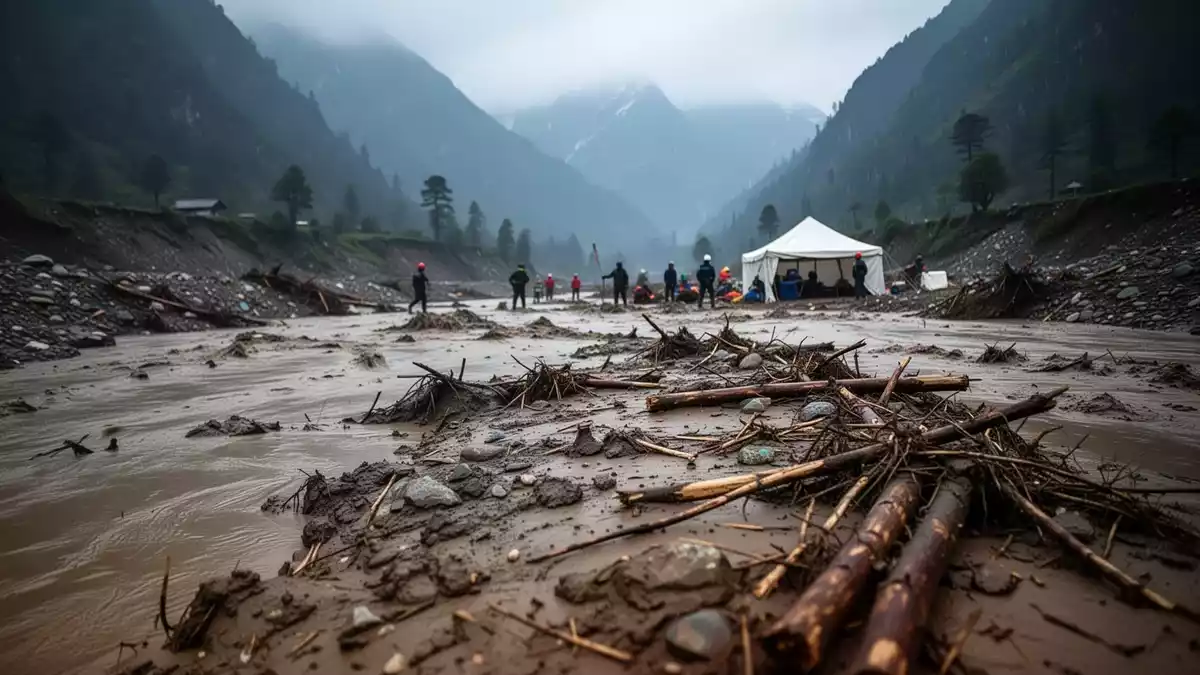
The catastrophic glacier collapse and flash floods that struck Nepal on August 26 have killed at least 547 people, with more than 1,400 still missing — including 33 British nationals — as authorities struggle to identify victims washed hundreds of kilometres downstream. The disaster has overwhelmed local medical infrastructure, prompting officials to set up temporary morgues and deploy DNA testing to manage the scale of the human toll.
Morgues Overwhelmed as Identification Efforts Intensify
The sheer scale of the disaster has pushed Nepal's medical infrastructure beyond its limits. In Pokhara, a morgue holding 93 victims has exceeded its capacity of 88. In the Chitwan district, where 137 bodies have been recovered, authorities have built a temporary facility capable of holding 250 people, using air conditioning and dry ice to preserve remains while forensic teams conduct DNA testing.
Recovery efforts are complicated by the geographic spread of the disaster. Bodies have been recovered across at least eight districts, including Rasuwa, Nuwakot, Dhading, Gorkha, Tanahun, and both East and West Nawalparasi.
Death Toll Climbs as Thousands Remain Missing
The death toll continues to rise as search teams reach previously cut-off areas. At least five people have also been confirmed dead in neighbouring Tibet. More than 1,400 people remain unaccounted for, including approximately 700 foreign nationals.
Missing persons reports include:
- 288 to 290 Indian nationals, including 49 pilgrims from Tamil Nadu
- Approximately 90 United States citizens
- 51 individuals from Malaysia
- 39 Australian nationals
- 33 individuals from the United Kingdom
- 25 Canadian citizens
Prime Minister Balen Shah has deployed 13,295 security personnel to assist in the response. While 1,976 people have been rescued via helicopter and 69 air flights, rescue operations were briefly suspended for three hours recently due to the risk of a barrier lake overflowing.
Infrastructure Damage and New Flood Threat
The flash floods have caused significant damage to Nepal's infrastructure, destroying 19 bridges and 40 kilometres of roadways. In Rasuwa and Nuwakot, the government has dispatched relief funds of NPR 10 million to each district, with NPR 5 million allocated for Dhading.
A new threat has emerged at the Lhende River, where a barrier lake formed upstream. Authorities have warned that the lake, containing an estimated 3 million cubic metres of water, is at risk of breaching. Such an event would trigger a second wave of flooding downstream.
International Aid Pledged
Several nations have pledged financial support to assist with the recovery and humanitarian efforts. The United Arab Emirates has allocated $10 million in aid, while Australia has provided $5 million. The United States has pledged $500,000 in immediate assistance.
Despite the offers of financial aid, the Nepali government has indicated it is currently declining foreign rescue personnel, opting to rely on its own state machinery, which the Prime Minister stated is operating at full capacity.


