Micron's Taichung Expansion Meets a Wall of AI Spending Skepticism
Published on 10/18/2026 at 15:20 | Editorial boerse-global.de
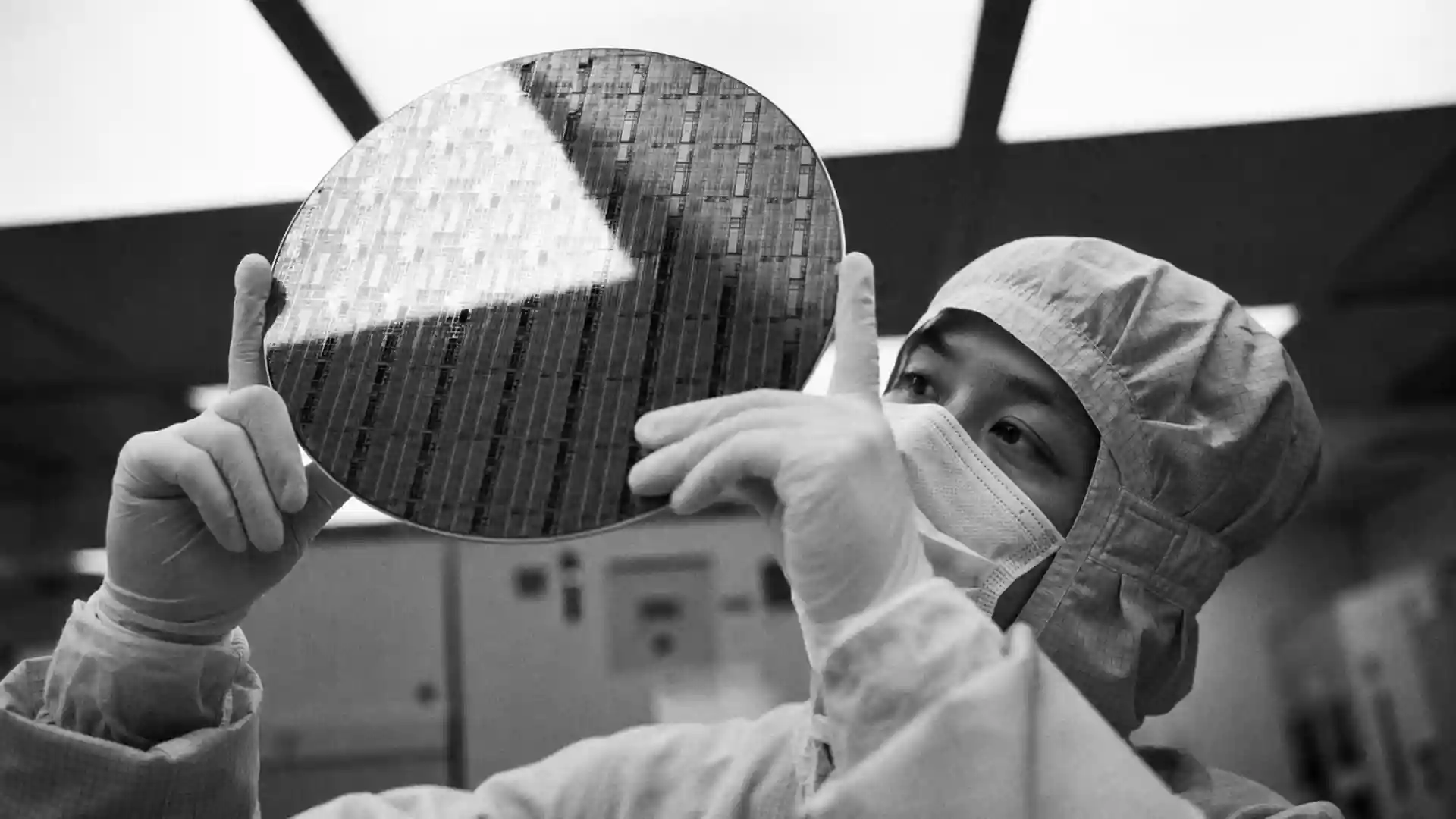
Micron Technology opened its second advanced test and assembly facility in Taichung this week, a concrete bet on sustained demand for high-performance memory. The market's response was rather less enthusiastic: the stock closed Friday at EUR 781.80, down 5.9%, as a broad sell-off swept through the semiconductor sector.
The retreat was not a company-specific stumble. AMD, Broadcom and Intel all came under pressure alongside Micron as investors began asking harder questions about how long the unbridled buildout of artificial intelligence infrastructure can be financed at its current pace — and what the risks look like as that boom leans increasingly on debt.
From Growth Promise to Earnings Proof
For months, the mere promise of exponential growth was enough to justify premium valuations without hesitation. Now, harder-edged doubt is creeping into valuation models. How long can the costly upgrade cycle of data centers be sustained if monetization of the new technologies fails to keep pace with astronomical hardware spending?
Broadcom CEO Hock Tan recently pressed exactly that sore spot, publicly questioning whether many end customers are already drawing measurable returns from their massive AI outlays. When users hesitate, infrastructure suppliers inevitably land in the crosshairs — and Micron sits at a sensitive point in that chain.
Should investors sell immediately? Or is it worth buying Micron Technology?
The expectations placed on the company are enormous. According to media reports highlighted by Axios, Micron — together with Nvidia and Broadcom — is expected to contribute nearly 40% of the entire earnings growth in the S&P 500 for the third quarter. A stock priced for that kind of contribution gets little mercy when customers' willingness to invest shows the slightest dent.
Labor Tensions and a Chinese Challenger
While the operating business keeps delivering evidence of unabated demand for high-performance memory, friction is building on other fronts. In Taiwan, a labor dispute is smoldering: in a union ballot in Taoyuan on October 7, exactly 1,994 employees — 99% of votes cast — authorized a strike. The dispute centers on profit-sharing and bonuses. No concrete strike date has been set, but the threat to production hangs in the air.
Competition is not standing still either. Reports of technological advances at Chinese memory maker ChangXin Memory Technologies in denser DRAM architectures have fueled concern that the lead of Western industry leaders could narrow over the medium term. On Tuesday, CXMT president Cao Kanyu said the company aims to produce its first server DDR5 RDIMM on a 4F² basis by year-end. Details on capacity, clock speeds or production volumes are reportedly still missing, yet markets reacted sensitively to the potential future competition in the server segment.
Not every outside signal pointed the other way. Elon Musk criticized the pricing practices of established memory manufacturers as excessive in general terms, while singling out Micron's approach as distinctly more reasonable — praise from the customer side that carries weight against vague announcements of future rival products whose mass production and scalability remain unproven.
A 210% Run Meets a Demanding Yardstick
Despite the recent cooling, the longer-term scorecard remains striking: the stock is up 210% since the start of the year. That enormous advance is now both blessing and curse. At current valuation levels, faith in the AI megatrend alone no longer cushions setbacks. Investors want clear evidence that the huge spending plans of the big technology groups remain viable against persistently high interest rates and economic question marks — and media reports of stickier US inflation have further dampened the general rate and technology sentiment.
The pullback is best read as a breather after a powerful rally rather than a verdict on the memory maker's fundamental earning power. Extraordinarily high gross margins demonstrate remarkable pricing power, and partnerships with leading technology giants remain intact. Micron supplies indispensable hardware for the next era of computing — but the market is no longer pricing in potential alone. It has started counting the bills.
Ad
Micron Technology Stock: New Analysis - 18 October
Fresh Micron Technology information released. What's the impact for investors? Our latest independent report examines recent figures and market trends.