
Micron's Dual Track: A Server Memory Launch, a Taiwan Labor Standoff, and the Ford Card Nobody's Watching
Published on 09/16/2026 at 09:01 | Editorial boerse-global.de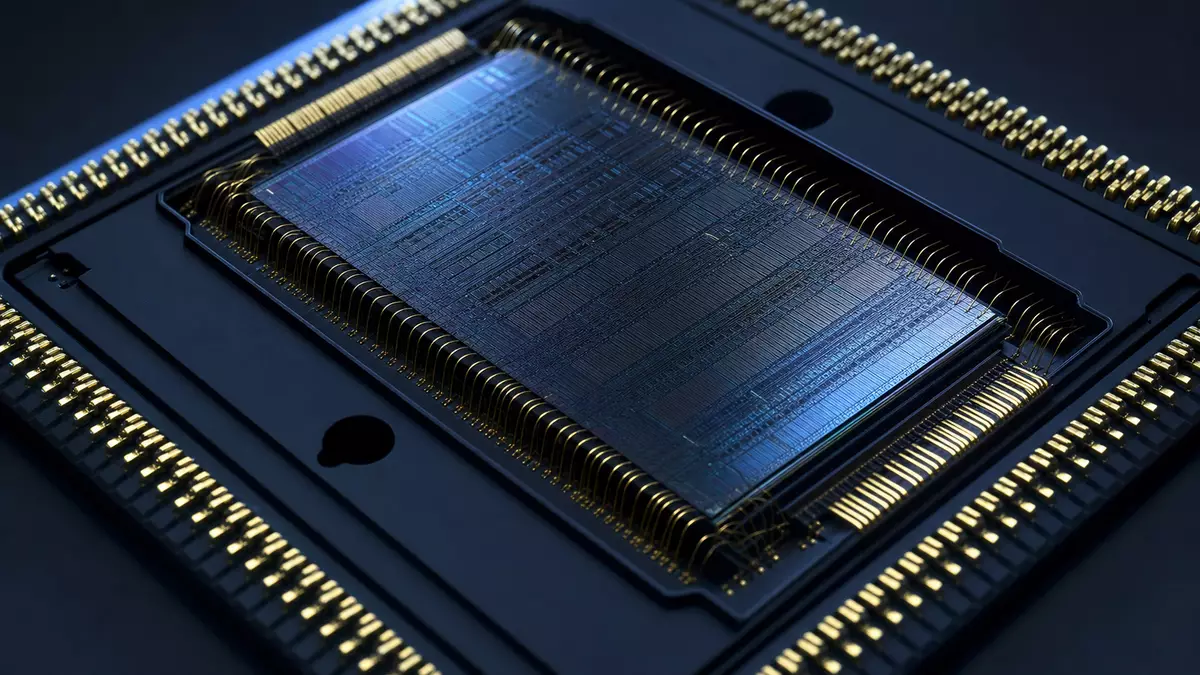
Micron Technology finds itself pulled in two directions at once. On one side sits a genuine technological milestone; on the other, a labor dispute at the company's most important manufacturing hub that could disrupt the very output underpinning that milestone. Between them lies a September 30 earnings date that will force management to address both.
A Product Win Lands in an Awkward Moment
The chipmaker announced yesterday that it has brought the world's first ultra-dense memory module for next-generation servers to market — hardware aimed squarely at data center operators willing to pay a premium for maximum performance density per rack. It's the kind of product that reinforces Micron's claim to technological leadership in high-density server memory.
The timing, though, is complicated. At Micron's key production site in Taiwan, the union representing the company's workers is threatening to move toward a strike if management refuses to agree to a permanent profit-sharing model, according to a Reuters report published yesterday. Taiwan serves as the backbone of Micron's memory chip manufacturing, which makes the standoff more than a routine labor negotiation.
What the Market Is Actually Pricing
Shares were steady at EUR 812.00 in pre-market trading, a modest gain of 1.1%. That calm surface masks a rougher stretch: the stock sits roughly 26% below its 52-week high of EUR 1,103.80, and over the past 30 days it has shed 8.4%. The current price hovers near its 50-day moving average of EUR 805.21 — the signature of a consolidation following an extraordinary twelve-month run that saw the stock multiply by 497%.
That divergence — a battered recent chart against a spectacular annual performance — explains why the market reacts so sharply to any headline touching AI demand. But reading the pullback as evidence of fundamental deterioration may be a mistake.
Should investors sell immediately? Or is it worth buying Micron Technology?
The Ford Agreement and the Diversification Story
Largely lost in the noise around strike threats and executive changes is a strategic customer deal from the summer. In early July, Micron and Ford Motor Company announced a long-term Strategic Customer Agreement securing memory supply for Ford's next vehicle generation, backed by investments in Micron's Manassas fab in Virginia, where the company is expanding DRAM production for automotive customers. The Ford partnership was just one of 16 customer agreements discussed alongside Micron's third-quarter fiscal 2026 results.
Automotive clients typically sign multi-year supply contracts, which gives Micron planning certainty for capacity decisions — precisely the kind of reliability the memory market has historically lacked when boom-and-bust cycles in data center demand rattled the entire industry. In effect, Micron is building a second leg to stand on beyond volatile AI server demand.
Leadership Changes and Insider Sales in Perspective
The leadership transition completed roughly three weeks ago — Manish Bhatia as President and Chief Operating Officer, Scott DeBoer as President and Chief Technology and Products Officer — has barely moved the stock, which is down 0.6% since. The muted reaction suggests investors are weighing strategic continuity more heavily than personnel shifts at the top.
Separately, CEO Sanjay Mehrotra sold 40,000 shares in late August through an automated trading plan at prices between USD 959.14 and USD 975.75. Given the scale of the company, that transaction reads more like portfolio management than a signal about confidence in the business.
The September 30 Verdict
Everything now converges on one date. On September 30, 2026, Micron reports results for the fourth quarter of fiscal 2026 — and the guidance already on the table leaves little room for disappointment: revenue of USD 50.0 billion plus or minus USD 1.0 billion, a gross margin around 86%, and adjusted earnings per share of USD 31.00 plus or minus USD 1.00.
Those are ambitious targets, and they reveal how thoroughly the market has come to price Micron as a growth company rather than a classic cyclical. The bull case rests on the company proving pricing power in high-density server memory while quickly resolving the Taiwan dispute without extended production interruptions. A convincing outlook for the coming fiscal year, paired with reassurances on the supply chain, could set the stage for a sustained upward move.
The bear case is more concrete. A strike at the Taiwan site would hit global output immediately — modern semiconductor supply chains carry almost no buffer, so even days of downtime would jeopardize deliveries to key customers and drive up logistics costs. And a permanent profit-sharing agreement carries its own risk: structurally higher fixed costs that could squeeze operating margins if the industry enters a downturn. Should either pressure show up in the numbers or the guidance on September 30, the stock's already-significant correction could deepen.
For now, the direction hinges on signals from Asia. If negotiators defuse the strike threat at the table and keep the lines running, the structural growth story stays intact and the new memory module provides a credible basis for breaking out of the consolidation. If talks tip into an actual work stoppage, operational disruption will overshadow the technological wins — at least for a while.
Ad
Micron Technology Stock: New Analysis - 16 September
Fresh Micron Technology information released. What's the impact for investors? Our latest independent report examines recent figures and market trends.


