
Micron's 512GB Module Lands as Management Reshuffle Meets a Taiwan Labor Deadline
Published on 09/17/2026 at 09:31 | Editorial boerse-global.de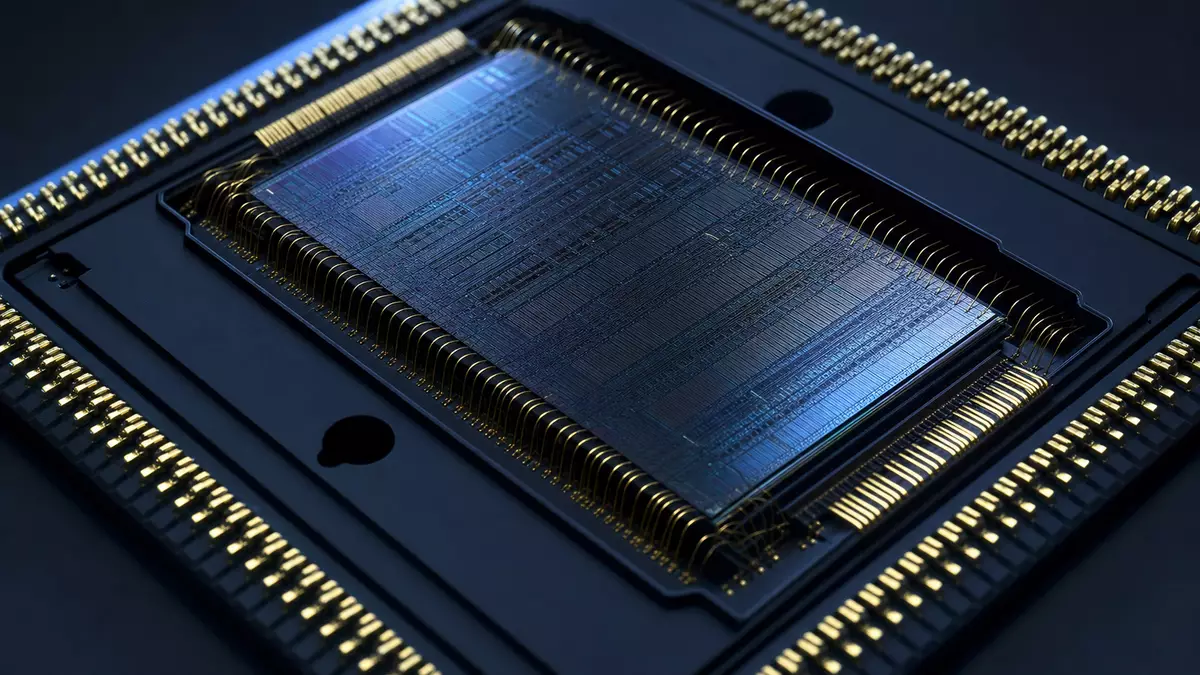
Micron Technology pulled back the curtain Tuesday on what it calls the world's first 512-gigabyte DDR5 memory module, demonstrating the part across multiple server platforms. The unveiling arrives as data centers bump against physical limits, and as the appetite for memory capacity keeps climbing without pause.
The technical showcase is not an isolated event. It follows a September announcement in which management laid out plans to double high-bandwidth memory production capacity year over year, a move aimed squarely at sustained demand from data centers and artificial intelligence workloads. For a chipmaker, the shift signals a strategic recalibration: away from pure volume plays and toward highly specialized platform components built for the most demanding enterprise applications.
A Leadership Bench Built for the Long Game
Micron is simultaneously reshaping its executive ranks to tighten the link between development and operational execution. On Tuesday the company named Deirdre Hanford corporate vice president and president of Micron Research Labs, tasking her with steering long-term research strategy and pushing future technologies toward commercial readiness.
That appointment sits atop groundwork laid on August 26, when Manish Bhatia rose to president and chief operating officer, and Dr. Scott DeBoer took the role of president and chief technology and products officer. The chain running from fabrication through product development to technology research now sits in clearly defined hands.
Whether Micron can convert this technological edge into high-margin supply contracts quickly is another matter. The bar is set high, because market expectations have shifted fundamentally after the stock's enormous run over recent months.
Should investors sell immediately? Or is it worth buying Micron Technology?
Valuation Leaves Little Room for Error
In pre-market trading the shares changed hands at EUR 813.10, following a prior close of EUR 806.60. With a gain of 223% since the start of the year, the semiconductor name has logged a remarkable rally. Even so, a 26% discount to its 52-week high — and a current level roughly 27% below that peak — shows investors turning more cautious in the face of an ambitious valuation.
The real test of the current setup is imminent. On Wednesday, September 30, management will present results for the fourth quarter of fiscal 2026. Only that report will reveal how quickly laboratory breakthroughs and demonstration successes translate into hard revenue. Until then, the technological leadership claim stands supported, while the financial proof remains outstanding.
Scaling Is the Variable That Matters
The decisive factor for the stock's path ahead is the speed at which Micron can execute the announced doubling of high-performance memory capacity. The market demands enormous unit volumes for complex computing architectures, and demonstrating technical feasibility alone no longer satisfies institutional investors.
At the same time, the transition to new module generations requires substantial upfront investment. Success hinges on whether manufacturing yields reach profitable levels quickly. If Micron can ramp its production lines on schedule, it cements its position against the major competitors in the DRAM market. Should scaling slip, market share losses loom in a narrow window.
On the optimistic side of the ledger, the new module addresses precisely the bottlenecks that arise under demanding workloads in modern IT infrastructure. Successful qualification on partner server platforms could bring follow-on orders in short order. Add a smooth doubling of high-performance memory output, and Micron should be able to expand shipment volumes noticeably, with sustained server-operator demand locking in stable selling prices.
A Labor Standoff in Taiwan Cuts the Other Way
Against that hopeful picture stand concrete operational risks. According to Reuters, Micron faces a potential escalation of conflict with its workforce in Taiwan. A union there has warned it will move toward strike action if the company does not agree to a permanent profit-sharing system.
Micron Technology at a turning point? This analysis reveals what investors need to know now.
The dispute simmers despite special payments already pledged. As part of the ongoing standoff, Micron offered employees in Taiwan bonuses for fiscal 2026 amounting to 35 to 68 months' pay, with a minimum payout of T$1.7 million. Should work stoppages nonetheless occur, they could trigger painful disruptions at the local fabrication sites.
Such interruptions would directly weigh on planned capacity expansions and put delivery schedules at risk. The resulting uncertainty is already visible in the share price, with the stock sitting 27% below its 52-week high.
What the September 30 Report Must Settle
Operational stability and cost discipline now need to work in tandem. As long as Micron can ramp production in Asia without meaningful disruption and serve data-center demand continuously, the fundamental foundation holds. If the Taiwan situation tips into an actual strike and capacity-expansion timelines wobble, margin worries and delivery delays are likely to take the upper hand.
The next concrete catalyst for a reassessment comes on September 30, 2026, when Micron reports fourth-quarter fiscal 2026 results after the market close. The analyst and investor call that follows should clarify how management views its manufacturing plans and cost trajectory.
Ad
Micron Technology Stock: New Analysis - 17 September
Fresh Micron Technology information released. What's the impact for investors? Our latest independent report examines recent figures and market trends.


