Micron's 5.9% Slide Exposes a Gap Between Factory Floors and Roadmaps
Published on 10/30/2026 at 10:40 | Editorial boerse-global.de
Micron Technology shares fell 5.9% in a single session, and the immediate trigger came from outside the company. According to media reports, weaker-than-expected capital spending figures from Microsoft and Alphabet, combined with disappointing Samsung numbers, dragged the entire memory complex lower. No Micron press release drove the move.
That distinction matters more than the headline number. Samsung Electronics reported quarterly net profit below analyst expectations — even as it posted record earnings. Reuters attributed the broader weakness in technology stocks to Alphabet's softer-than-anticipated quarterly results. The combination of record profits and disappointed expectations is instructive: on Wall Street, a good result is not automatically good enough when investors had priced in something better.
Reading capex language carefully
There is a further precision problem in how the selloff is being interpreted. Spending that comes in below expectations does not necessarily mean companies are actually cutting back. Anyone who reads an immediate demand collapse for Micron into those figures skips a crucial evidentiary step. What happened yesterday, in this reading, is that expectations were marked down — not that Micron's own business outlook deteriorated in lockstep.
None of which is harmless. When investors rethink their assumptions about the buildout of AI infrastructure, companies that issued no news of their own can still come under pressure. The sector connection explains the price reaction. It does not replace a company-specific assessment.
A concrete dispute in Taoyuan
For a more tangible Micron-specific test, look to the unresolved labor conflict in Taoyuan. Media reports indicate that a 24-hour warning strike there ended on October 23, with nearly 70% of union members rejecting the company's new bonus offer. The dispute remains open.
Should investors sell immediately? Or is it worth buying Micron Technology?
That is a firmer checkpoint than extrapolating other companies' quarterly results onto Micron — provided it is not overstated. The completed warning strike does not imply an ongoing work stoppage, nor does it allow any specific financial damage to be inferred. What is relevant, for now, is that the offer failed to produce an agreement.
The contrast with Taichung shows why nuance is required. There, the union reached an agreement with management on October 21 and exited the mediation process. The deal provides for quarterly profit bonuses beginning in fiscal 2027. The union subsequently withdrew from a scheduled mediation session.
That settlement does not resolve the separate Taoyuan dispute. It does argue against painting the situation as one uniformly deadlocked confrontation. For investors, the relevant fact is the state of each negotiation — not the broadest possible crisis label.
Bonuses, capex and the same trade-off
How tightly profit and investment are intertwined at Micron is illustrated by the global bonus program announced on October 22. According to Reuters, the quarterly employee participation scheme is set to begin in fiscal 2027, using fiscal 2026 as the baseline.
The calculation is the notable part. Per Reuters, the bonus pool is determined by net profit after tax minus planned capital expenditure for the following quarter. The compensation model thus embeds the very trade-off investors must watch: earned profit and funds for further expansion are not the same thing.
The announcement followed union pressure in Taiwan. On October 21, Micron Memory Taiwan and the Taichung union reached their agreement and left the mediation process. On October 22, by contrast, eleven officials of the separate Taoyuan union began a one-day strike, protesting the absence of a concrete profit-sharing proposal and the Taichung deal. The new program therefore belongs to a real distributional conflict — it should not be read as proof that all disputes are settled.
Micron Technology at a turning point? This analysis reveals what investors need to know now.
Roadmaps are not yet valuation arguments
Micron's development pipeline is substantial. The company is working on vertical memory solutions for high bandwidth and on memory integrated directly above processors for local AI applications, according to media reports. Later generations envision High-NA EUV lithography. The G11 NAND generation, unveiled roughly a week ago, targets more than 400 layers and approximately double the bit density of its predecessor, with mass production slated for the second half of 2027.
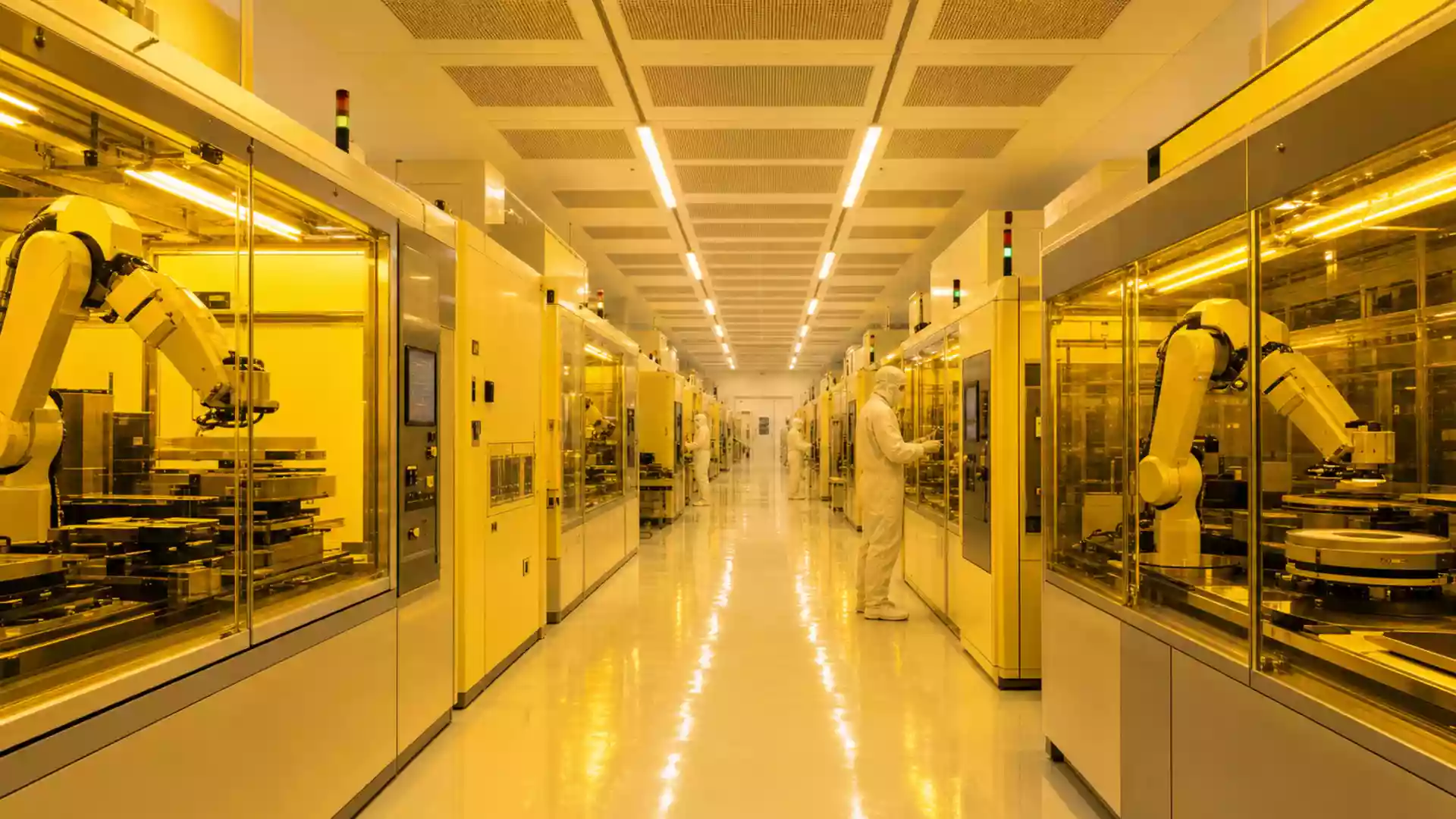
Those are concrete development directions, not completed commercial successes. The same holds for operations: on October 15, Micron opened its second advanced assembly and test facility in Taichung, AATT2, expanding capacity for sophisticated packaging technology and testing to support demand for HBM and AI applications. An opened plant sits alongside longer-term plans — and the market can still react to a Samsung disappointment. That does not render Micron's own news meaningless. It shows that company-level progress does not lift the sector's collective valuation.
The central question is whether investors are already equating technical possibility with economic success. Micron is expanding capacity, developing new memory processes and explicitly tying employee participation to profit and planned investment. Those steps describe a company in buildout mode. The Samsung reaction is a reminder that the stock also hangs on expectations formed outside the company. A sound assessment must credit development progress without mistaking it for insulation against sector disappointment. Caution toward inflated AI expectations is warranted; equating a sector-wide letdown with a company crisis would fall short.
Ad
Micron Technology Stock: New Analysis - 30 October
Fresh Micron Technology information released. What's the impact for investors? Our latest independent report examines recent figures and market trends.