
McDonald's Stakes Its 2030 Margin Ambitions on Kitchen Automation and a $8.5 Billion Franchise Bet
Published on 09/24/2026 at 17:12 | Editorial boerse-global.de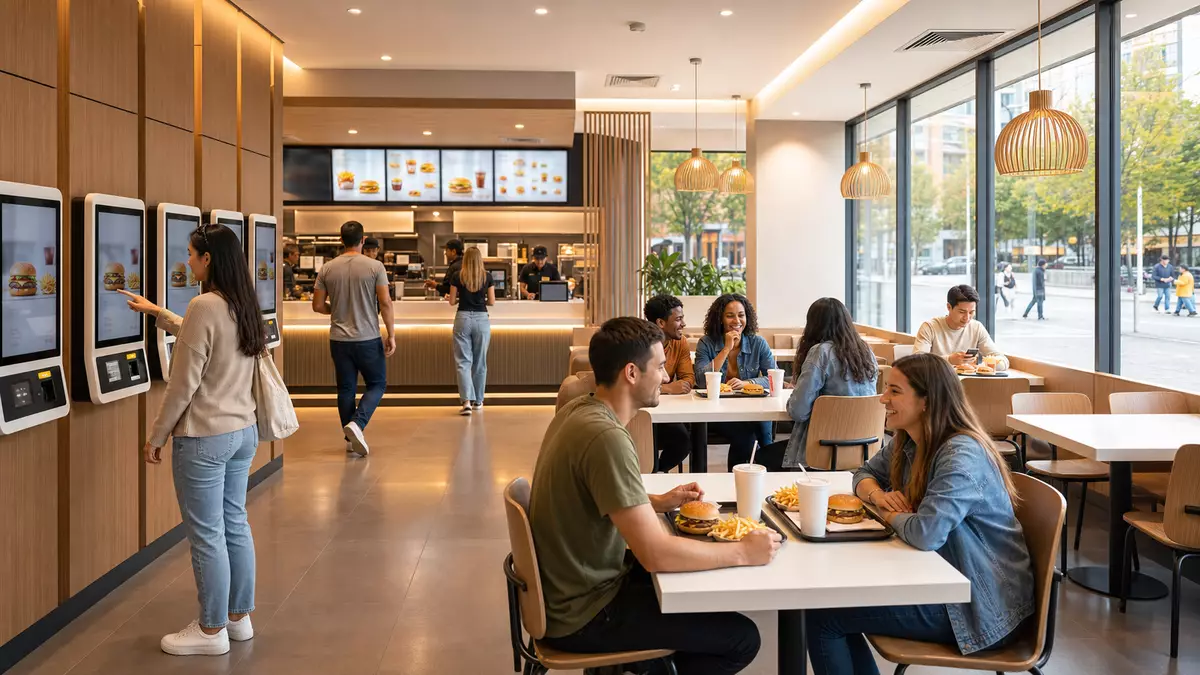
McDonald's is asking investors to look past a bruising stretch in which its shares have shed a fifth of their value since the start of the year, and instead focus on a decade-long overhaul that hinges on whether efficiency gains can outrun stubbornly weak customer traffic. The stock closed at EUR 209.30 on Tuesday, hovering just above its 52-week low of EUR 205.80 — a valuation that leaves little room for execution missteps.
At the heart of the plan sits a single metric: the operating margin. Management has set a target in the low-to-mid 50% range by 2030, a goal that depends on roughly 250 basis points of gross efficiency improvements at the restaurant level. The company also aims to expand its worldwide market share in chicken and beverages by 1.5 percentage points in each category.
Automation Takes Center Stage
The operational centerpiece is a sweeping digitalization of kitchens and drive-thru lanes. Working alongside Google, McDonald's is rolling out ArchIQ, an AI-driven system whose voice assistant, Archy, handles orders in both English and Spanish. Finance chief Ian Borden estimates the technology can save at least 50 labor hours per week per restaurant — though he was explicit that no headcount reductions are planned.
The menu is shifting as well. According to Skye Anderson, president of McDonald's USA, roughly 30 million Americans are now using GLP-1 medications, prompting the chain to lean harder into protein-rich offerings such as breaded chicken pieces and grilled chicken sandwiches.
Should investors sell immediately? Or is it worth buying McDonald's?
Funding for the broader makeover comes through a support package worth about $8.5 billion over ten years. Roughly $5 billion of that is earmarked for rent abatements and capital assistance flowing directly into the store network through 2030. The multi-year "Make It Golden" initiative, aimed at improving food quality and hospitality, is meant to reinforce the chain's competitive standing. For an average US location, management expects the modernization outlay to pay for itself in roughly four years — though franchisees must still commit substantial capital of their own.
Inflation Keeps Diners at Home
The backdrop remains unforgiving. CEO Chris Kempczinski has cautioned that inflation is proving persistent and that restaurant traffic is flat. Beef costs in key markets have nearly doubled over five years, and with consumers holding back, price increases can only be pushed through cautiously. Reuters reported that management warned guest counts in core markets are likely to stagnate as long as inflation stays elevated — meaning the projected margin expansion rests entirely on whether internal savings and product initiatives deliver.
That tension defines the bear case: if the billions in support merely prop up struggling franchisees rather than reignite growth, the parent company's earnings power could be weighed down for years. Rent relief would function as a defensive measure to prevent partner closures, not as a growth engine. Should the 250 basis points of gross efficiency gains fall short of covering weak traffic and rent subsidies, the 2030 margin target slips out of reach and the call on capital tightens.
Legal Overhang Eases, Analyst Caution Persists
One source of pressure has eased. On Tuesday, a US judge sharply narrowed a discrimination lawsuit brought by 48 Black franchisees. Sweeping claims of systemic bias and retaliation were dismissed, while claims concerning unequal benefits remain before the court. The ruling trims near-term litigation risk, even if the ongoing negotiations could still force additional concessions.
Analysts are not yet convinced the turnaround will arrive soon. Seaport Global initiated coverage with a Neutral rating, projecting no meaningful improvement before mid-2027. UBS cut its price target to USD 320. Citigroup, by contrast, reaffirmed its Buy rating on September 17, though it trimmed its target from USD 345 to USD 310. That same day, McDonald's underscored its payout policy by raising the quarterly dividend 4% to USD 1.93 per share — a signal of dependable cash generation even amid heavy reinvestment.
The next hard date on the calendar is October 5, when a company-wide training program kicks off across stores. For shareholders, the dividend offers a nearer anchor: the record date for the increased payout is December 1, 2026, with distribution set for December 15, 2026. Whether the franchise support program bears operational fruit by then will go a long way toward determining if the stock's re-rating runs downward or finally turns.
Ad
McDonald's Stock: New Analysis - 24 September
Fresh McDonald's information released. What's the impact for investors? Our latest independent report examines recent figures and market trends.


