
McDonald's Bets $8.5 Billion That Automation Can Outrun Its Traffic Slump
Published on 09/25/2026 at 06:51 | Editorial boerse-global.de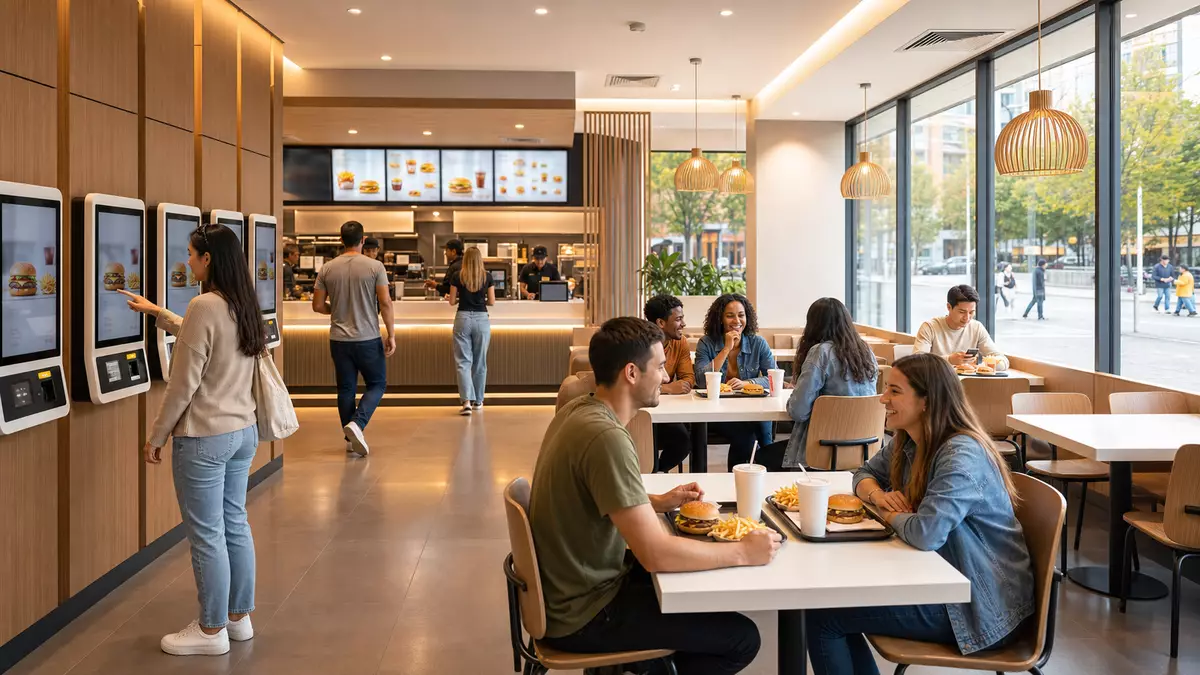
McDonald's has handed investors a puzzle with two very different faces. On one side sits a dividend record matched by only a handful of US corporations; on the other, a share price drifting toward its yearly low as the company's most important market loses steam.
The stock closed at EUR 208.30 on Thursday, leaving it just 1.2% above its 52-week trough, with losses since January totaling 21%. A separate reading put the shares at EUR 210.60 in German trading, down 20% year-to-date — both snapshots paint the same picture of a market that has yet to be convinced by the turnaround story unveiled at the company's investor day on Wednesday.
What unsettled the Street was not the scale of the plan but the admission that came with it. Chief executive Chris Kempczinski told CNBC that inflation is likely to stay stubborn for years and that customer traffic across the entire restaurant industry remains flat. His finance chief, Ian Borden, went further: US comparable sales turned slightly negative in July, and the current quarter is tracking toward a similar soft reading.
From 2.1% to 0.8%: The Number That Now Matters Most
That deceleration is stark. US same-store sales growth slowed from 2.1% in 2025 to just 0.8% in the second quarter of 2026. Historically, McDonald's has expanded US sales on comparable floor space by 3% to 4% annually — a pace TD Cowen analyst Andrew Charles considers the minimum required for any bullish case. He cut his price target to $270. Without a rebound in footfall, even the most ambitious technology spending risks evaporating, since price increases have run into resistance among inflation-weary diners.
The response is a capital program worth $8.5 billion through 2036, channeled into restaurant remodels, kitchen equipment and automation. Franchisees, who generate more than 60% of global sales, are to be cushioned through rent relief and financing support. Roughly $5 billion of the total is already earmarked for operators through 2030, delivered as a mix of rent abatements and direct capital aid — a reversal of the usual flow, in which the parent collects fixed rent and licensing fees from its partners.
Should investors sell immediately? Or is it worth buying McDonald's?
Archy, ArchIQ and the 50-Hour Week
Management's efficiency math is concrete. A partnership with Google underpins ArchIQ, an AI system designed to sharpen shift scheduling, inventory management and order accuracy. The automated drive-thru platform Archy already handles English and Spanish with a 90% hit rate. According to Borden, the technology could free up at least 50 labor hours per week per restaurant. Combined with improved kitchen layouts, the company is targeting efficiency gains of 2.5%, translating into roughly $100,000 in additional annual cash flow per US location.
The menu is being reworked in parallel. Skye Anderson, who took over as Executive Vice President and President of McDonald's USA on August 4, points to about 30 million Americans using GLP-1 weight-loss medications and 60 million consumers actively seeking high-protein meals. Protein bowls, egg bites and grilled chicken wraps are aimed squarely at that shift. A newly unveiled in-house media network, selling ad space across the app and digital kiosks, is expected to add up to $1 billion in revenue over the long run.
The Bill Franchisees — and Shareholders — Must Foot
Against those promises stands a hefty price tag. Beyond standard required investments of up to $450,000 per decade, modernizing a location demands roughly $800,000 in incremental spending per restaurant. BTIG analyst Peter Saleh openly questioned after the investor day whether the targeted 250 basis points of restaurant-level efficiency gains are realistic, and trimmed his earnings estimates for 2026 and 2027. The company has already pushed back its goal of operating 50,000 restaurants worldwide by a year, to 2028.
Pressure on lower-income customers, whose visit frequency is weakening across the sector, compounds the problem. Should GLP-1 medications permanently dampen fast-food consumption, the spending on larger kitchens and remodels could dilute returns on capital rather than enhance them.
Not everyone is retreating. UBS's Dennis Geiger lowered his target from $340.00 to $320.00 on September 20 while keeping a "Buy" rating. Three days earlier, Citigroup trimmed its target from $345.00 to $310.00 but likewise reaffirmed its buy recommendation. Both houses believe the balance sheet can absorb the financial burden.
A Dividend Streak That Still Commands Respect
The counterweight to all this gloom arrived on September 17, when McDonald's raised its quarterly dividend by 4% to $1.93 per share — a 50th consecutive annual increase. For income-focused investors, that milestone is a rare anchor of stability, and the company's long distribution history guarantees a dependable flow of capital back to shareholders.
McDonald's at a turning point? This analysis reveals what investors need to know now.
Yet the bear case flows directly from management's own warnings. If guests stay away, the billions in support for operators largely go to waste. Persistent inflation would keep cost-conscious consumers away even from traditionally cheap fast-food outlets. Flat traffic paired with rising operating costs would erode franchisee margins — and in the worst case, the company might need to inject further funds after 2030, squeezing buybacks and the room for future dividend hikes.
What the Third Quarter Must Prove
Technically, the picture offers a floor as long as the stock holds above its recent low of EUR 205.80, with the depressed valuation providing a base for stabilization. The decisive variable, though, is whether US comparable sales stay positive and the rent concessions remain within the planned $5 billion through 2030 — conditions under which the current price looks like a solid entry point for long-term dividend investors.
Should growth in the home market tip deeper into negative territory, a downward revaluation becomes the risk. The next hard test comes with third-quarter 2026 results, when investors will get the first verifiable evidence of how much the July decline weighed on the quarter — and whether Anderson's menu adjustments can steady customer traffic or whether the brand can still defend its pricing power.
Ad
McDonald's Stock: New Analysis - 25 September
Fresh McDonald's information released. What's the impact for investors? Our latest independent report examines recent figures and market trends.


