Infineon's Qualcomm Win Is a Blueprint, Not a Balance Sheet
Published on 11/03/2026 at 20:01 | Editorial boerse-global.de
Infineon Technologies has spent the past fortnight stacking up announcements — an automotive tie-up with Qualcomm Technologies, a power-silicon supply deal with Enphase Energy, and a billion-euro fabrication project in Villach. What the stock has not yet delivered is proof that any of it converts into earnings. That gap between technical positioning and commercial reality is the crux of the investment case, and it is why the November 10 results date matters more than any single headline.
The shares rose on the day the Qualcomm agreement surfaced, with the sources putting the advance at either 2.9% or 3.9%. Infineon did not attribute the move to any specific corporate news. On the same day it also rolled out OptiMOS-7 power transistors aimed at AI servers, data centres and telecoms infrastructure — a separate product line that may or may not have fed the sentiment. A single trading session tells investors little; the longer-term business trajectory tells them far more.
What the Qualcomm deal actually covers
Under the arrangement announced yesterday, the two companies will develop a microcontroller-based subsystem for Qualcomm's Snapdragon Ride reference platforms. The target is central vehicle computers for software-defined cars, with applications extending to driver assistance and automated driving. Infineon's contribution is not a single component: it brings AURIX microcontrollers alongside power supply, connectivity and memory solutions. That breadth is what makes the partnership notable — the German chipmaker is embedded across several technical functions within the planned platform rather than supplying one part.
A reference platform, though, is a design approach, not a revenue stream. The economic value only becomes measurable as implementation proceeds. Investors must decide whether to treat the agreement as an early signal of future growth or as a strategic option that still has to clear a higher bar. The second reading demands progress beyond the announcement itself.
Should investors sell immediately? Or is it worth buying Infineon?
Enphase shows the same pattern
The October 26 disclosure involving Enphase Energy follows an identical arc. Infineon is supplying monolithic 900V GaN bidirectional switches for solid-state transformer power modules, with AI data centres among the intended applications. The components have been tested and are being folded into product development. Production qualification, however, is still outstanding. The engineering is tangible; the route to qualified manufacturing is not yet complete — which is precisely why cautious optimism fits better than pricing in a finished business.
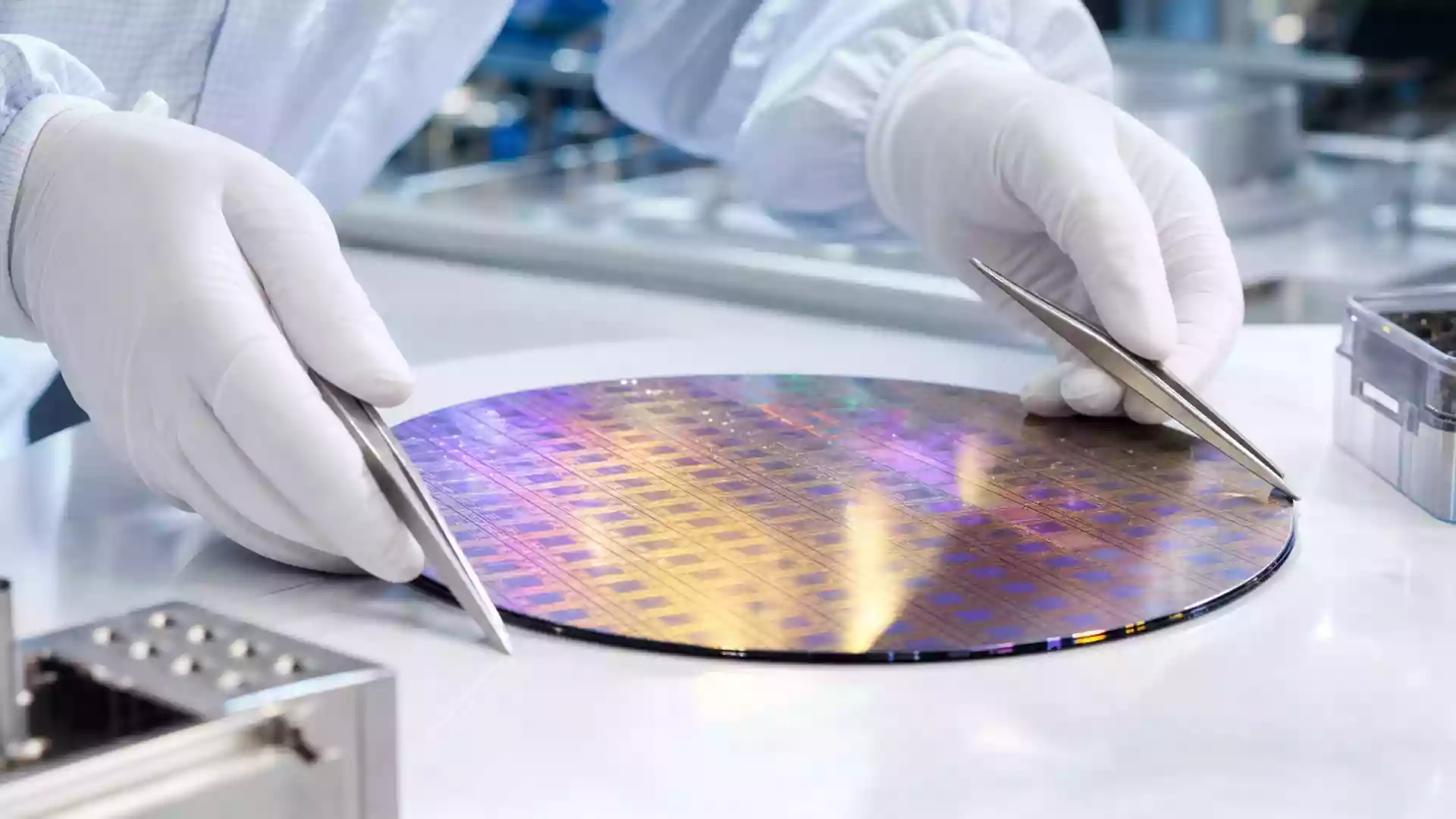
The Villach expansion, flagged just over a week ago, carries the same character. Infineon plans to invest roughly EUR 1.1 billion there through 2034 to build a GaN power semiconductor fab on 300mm wafers, with production slated to start by the end of 2027. A EUR 319 million subsidy has been named under the European Chips Act. The funding helps the economics of the project; it does not substitute for the operational test that lies ahead. What matters is how convincingly Infineon manages the handover from technology development to industrial-scale output.
Jefferies backs the sector, not the thesis
Jefferies kept Infineon at "Buy" with a EUR 96 price target yesterday, pointing to cloud and data-centre infrastructure spending and encouraging signals from other semiconductor firms. That view supports the optimistic reading of the industry backdrop. It is not evidence that the Qualcomm collaboration will pay off. The two arguments should be kept apart: the automotive cooperation concerns one specific technical approach, while the analyst note describes tailwinds from entirely different demand pockets. Together they could widen the outlook — provided each opportunity actually turns into business.
The bear case is substantive. Technical possibilities can move a valuation earlier than they move the operating result. If the automotive rollout lags expectations, its contribution to the investment case weakens, and a bright industry forecast would not automatically close that gap. In the adverse scenario, lofty expectations for new technologies would meet slower commercial progress. The problem then would not be strategic direction but the distance in time between investment, engineering and revenue.
November 10 is the real catalyst
Results for the fourth quarter and for fiscal 2026 are scheduled for November 10, a date the financial calendar still lists as provisional. That release, not the deal flow, will show how durable the confidence really is. On the manufacturing side, the Villach start-up by the end of 2027 offers a concrete milestone to track; for the Qualcomm partnership, the trigger is confirmed implementation steps. Only those would weld strategic intent to commercial prospect.
The question for investors, then, is not whether the announcements are interesting. It is how much future success the current valuation already discounts — and whether the numbers can carry it.
Ad
Infineon Stock: New Analysis - 3 November
Fresh Infineon information released. What's the impact for investors? Our latest independent report examines recent figures and market trends.