Infineon's Expansion Offensive Collides With a Wall of Analyst Doubt
Published on 09/11/2026 at 17:10 | Editorial boerse-global.de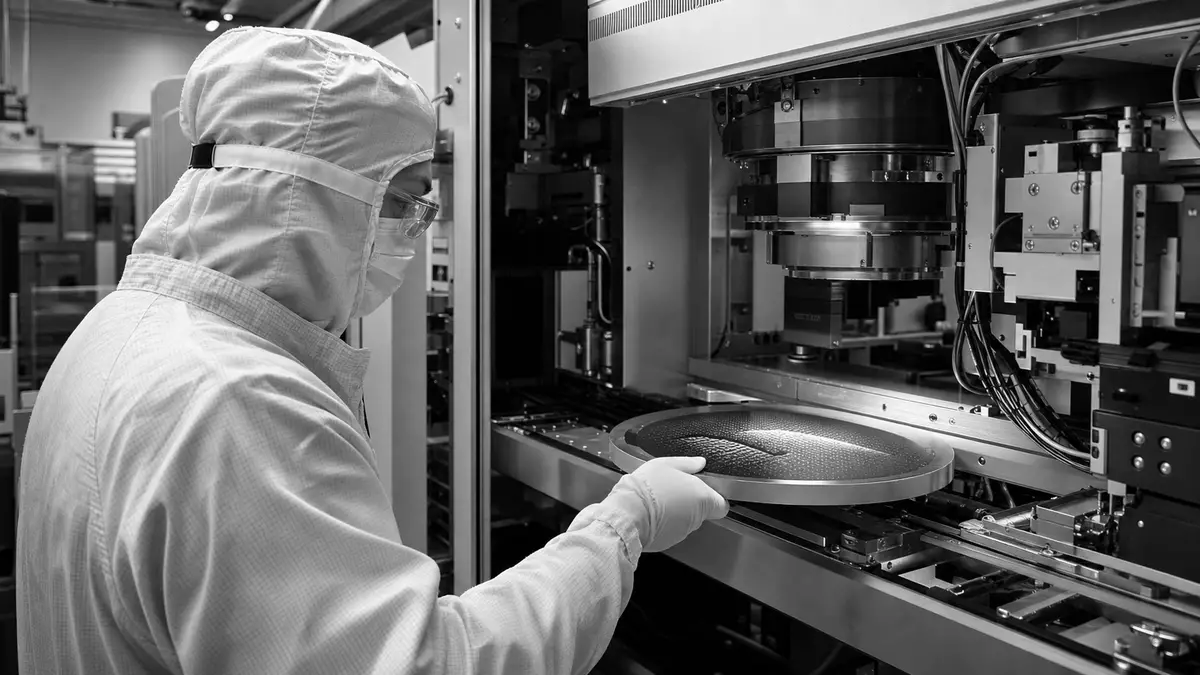
Infineon is spending, buying and partnering at a pace rarely seen in its corporate history — and the stock is going nowhere. That gap between operational momentum and market indifference is the real story of the week, not any single announcement.
Shares changed hands at 56.58 euros on the day, up 1.6 percent, yet the monthly picture shows a 10 percent decline and a gap of 8.2 percent below the 50-day moving average. The stock remains far beneath its 52-week high of 89.67 euros. Read the chart alone and you see a company in correction mode. Read the news flow and you see a business expanding like few others in European semiconductors.
Dresden, Bangalore, and a Portfolio Being Rebuilt
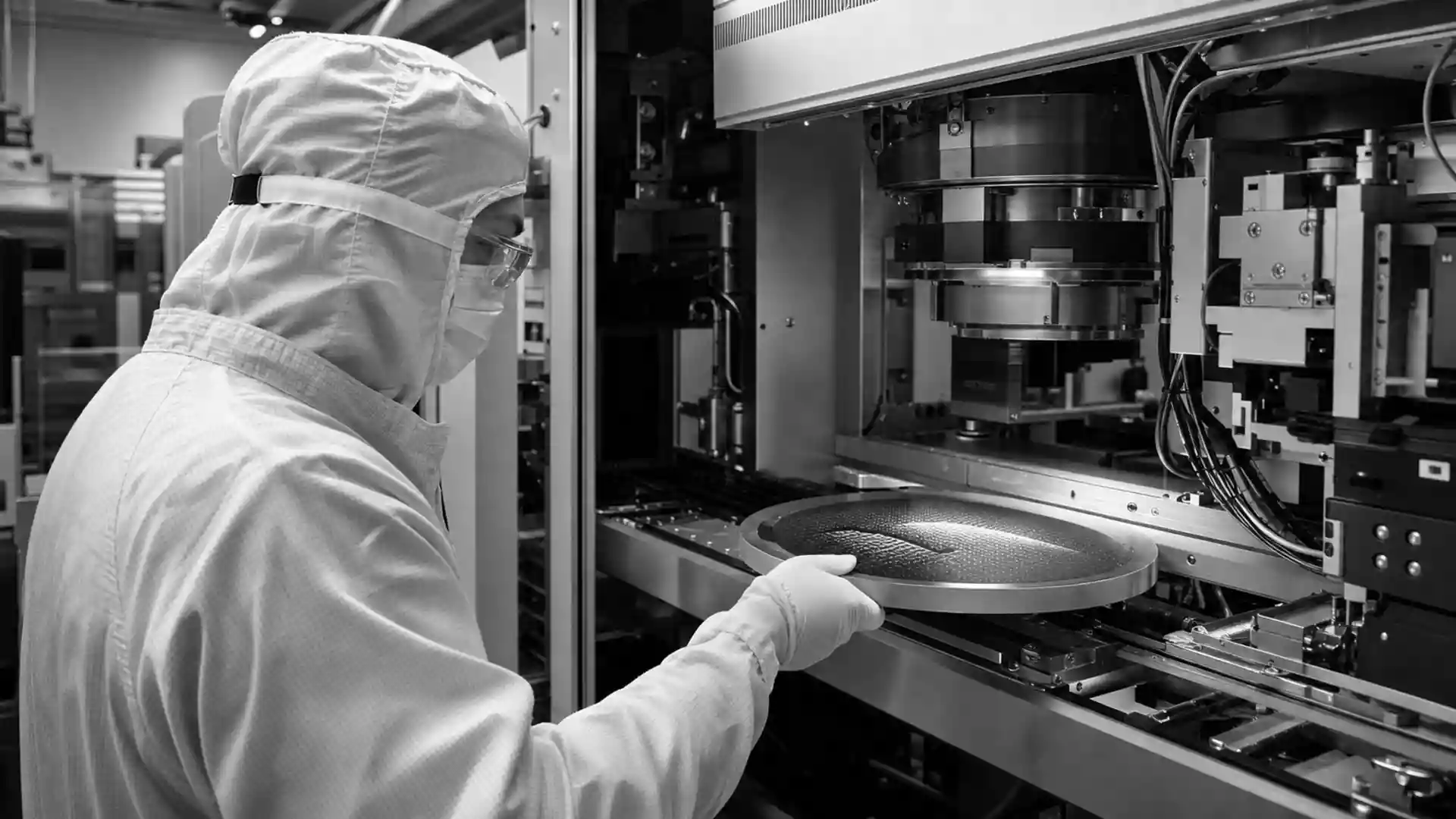
The clearest evidence of that expansion landed in early July, when Infineon opened its Smart Power Fab in Dresden — months ahead of schedule, backed by a 5 billion euro investment the company describes as the largest single outlay in its history. At full utilization, the plant is expected to generate up to 5 billion euros in annual revenue and create roughly 1,000 highly skilled jobs. This is not a short-term signal but a structural wager on power semiconductors for AI data centers, electric vehicles and renewable energy.
The dealmaking has continued since. At the end of August, Infineon announced the acquisition of Bangalore-based C2i Semiconductors, a specialist in software-defined multiphase controllers for AI data centers, with completion targeted for the third quarter of 2026. Early September brought a memorandum of understanding with Skeleton Technologies covering solid-state transformers that combine Infineon's CoolSiC semiconductors with supercapacitor technology. Add to that the July closing of the acquisition of ams OSRAM's analog/mixed-signal sensor portfolio, which management says should contribute around 230 million euros in revenue this calendar year. Taken together, it reads like a group systematically building its position in AI infrastructure rather than merely reacting to it.
Should investors sell immediately? Or is it worth buying Infineon?
The Analyst Split as a Stress Test
And yet the sell-side is anything but united. On September 8, Morgan Stanley downgraded Infineon from "Overweight" to "Equal-weight" and cut its price target from 81 to 65 euros. The dpa-afx news agency placed the move in a broader context: the bank is becoming more selective across the sector, trimming targets for ASML and BE Semiconductor as well despite a fundamentally positive view, citing a DRAM market close to its cycle peak. That is not an Infineon-specific warning but a precaution aimed at the semiconductor cycle as a whole.
Just two days later, on September 10, Warburg Research countered with an upgrade from "Hold" to "Buy" at an unchanged 84 euro target. Analyst Malte Schaumann tied the reassessment explicitly to the recent share price correction — for him a buying opportunity, not a red flag. The same day, Bernstein Research reaffirmed "Outperform" with a 102 euro target and Berenberg stuck with "Buy" at 100 euros. Three houses therefore see substantial upside from current levels, while a fourth expects considerably less room.
The spread — from 65 to 102 euros — is unusually wide and illustrates how differently the market weighs cycle risks against the structural growth story. What makes the divergence notable is that it does not rest on different sets of numbers but on conflicting views of future demand. Morgan Stanley appears to see valuation risk, while Bernstein and Warburg are betting on a structural recovery in automotive chip demand.
A Buyback That Isn't About the Share Price
One item that frequently gets lumped into the bull case deserves a cooler look. Infineon launched a limited share buyback program at the end of August, but its purpose is not classic capital management aimed at supporting the stock. The repurchases serve to meet obligations under existing employee participation programs, which makes the buyback a minor factor in any valuation debate.
The most recent voice in the debate came from private bank Berenberg, which on Wednesday reiterated its buy recommendation with a 100 euro target. The analysts expect the investment cycle in semiconductors to run beyond 2028 — a markedly more optimistic assessment than Morgan Stanley's recent move. That call matters because it reaches past the near-term outlook: if the cycle truly extends over several years, it would support the thesis that the current weakness is consolidation rather than a fundamental turn.
Infineon at a turning point? This analysis reveals what investors need to know now.
What the Fundamentals Actually Say
On the operational side, the case is hard to dismiss. A record quarter, an order backlog of nearly 30 billion euros at the end of the third fiscal quarter and a raised full-year guidance of around 16.3 billion euros in revenue point to a company actively seizing its growth opportunities rather than waiting on the cycle. Against that backdrop, Morgan Stanley's downgrade looks more like a sector reflex than a fundamental re-rating of Infineon itself, and the share price weakness of recent weeks more like a digestion pause after the past year's record rally than the start of a structural de-rating.
None of which resolves the core question. Between Morgan Stanley's skepticism and the bullish targets from Bernstein and Berenberg, investors must decide for themselves which scenario prevails over the coming quarters — and whether the current skepticism is a question of price or of substance.
Ad
Infineon Stock: New Analysis - 11 September
Fresh Infineon information released. What's the impact for investors? Our latest independent report examines recent figures and market trends.