
Infineon's Earthbound Woes vs. Space-Age Credentials: A Semiconductor Stock in Two Worlds
Published on 09/01/2026 at 17:21 | Editorial boerse-global.de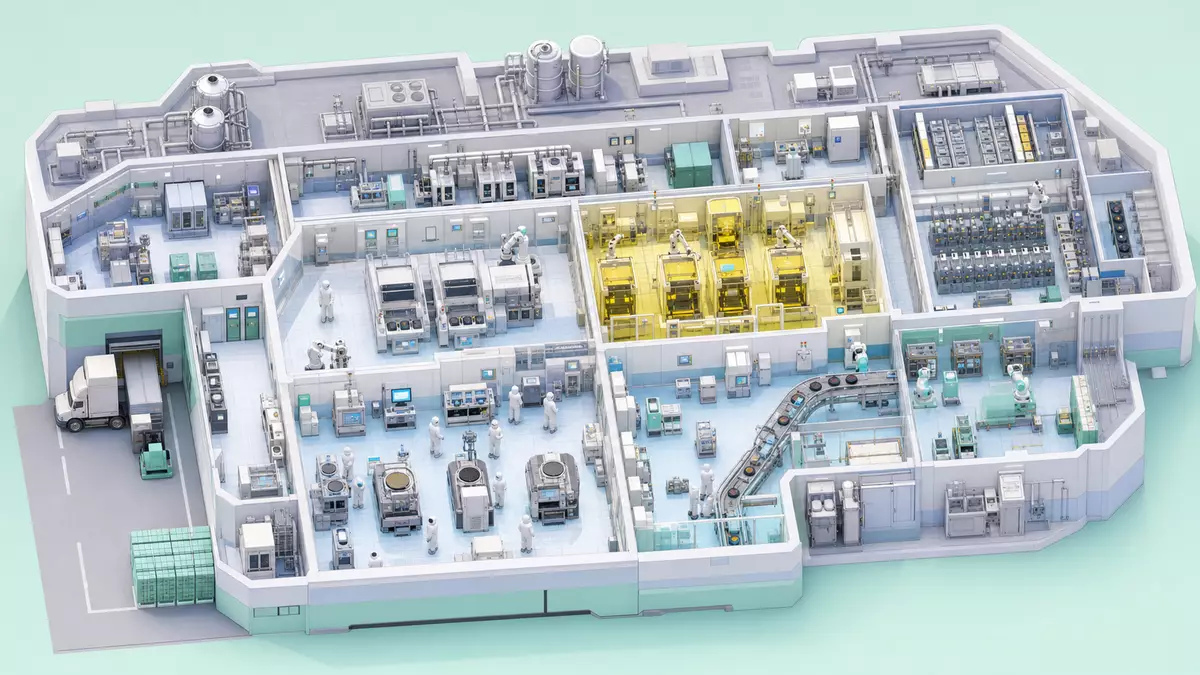
The gap between what Infineon is achieving and what its share price is doing has rarely looked wider. On the same day the company celebrated a small but symbolic victory in orbit, its stock was sliding toward fresh lows, caught in a sector-wide downdraft triggered by Washington's threatened semiconductor tariffs.
At the center of the tension is a Reuters report from August 27 indicating the US government is weighing a fresh round of levies on chip imports. For European semiconductor makers, and Infineon in particular, such a move would land as a heavy blow. The market has already begun pricing in that risk: on Tuesday, shares fell another 2.5 percent to €54.76, extending a slide that has now erased 12 percent of the stock's value over the past month.
A Space Milestone Overshadowed
The sell-off has been remarkably persistent, shrugging off what would normally be considered positive catalysts. Even the opening of the company's new Smart Power Fab over a month ago failed to arrest the decline — the stock has dropped roughly 30 percent since that facility came online. More recently, the completion of a share buyback program last Friday did little to steady nerves, with the shares giving up another 3.3 percent in the sessions that followed.
Yet the operational news flow tells a different story. On Monday, Infineon announced that its radiation-hardened HiRel power semiconductors are aboard NASA's Nancy Grace Roman space telescope, which the agency successfully launched. These components are engineered for the brutal conditions of space — intense radiation, extreme temperature swings, and the demand for flawless performance over years of operation. While the space business remains a sliver of Infineon's overall revenue, such reference projects burnish the company's credentials as a leader in high-reliability power electronics, expertise that carries weight in its core automotive and industrial markets.
The timing of the announcement was telling. It arrived as the stock closed Monday at €56.15, having shed nearly 10 percent in 30 days, and now trading roughly 15 percent below its 50-day moving average of €65.68 — a technical signal that investors remain unconvinced despite the steady drumbeat of strategic progress.
Should investors sell immediately? Or is it worth buying Infineon?
Strategic Moves Beyond the Headlines
Infineon has not been idle on the corporate front. Days before the space announcement, the company revealed its acquisition of C2i Semiconductors, a Bangalore-based specialist in software-defined multiphase controllers and smart power stages designed for AI data centers. The deal is expected to close in the third quarter of 2026.
Capital management has also been active. The company's 2026/02 buyback program concluded on August 20, with Infineon having repurchased three million of its own shares at an average price of €58.45.
Analysts Hold the Line
Amid the turbulence, the DZ Bank has maintained its "Buy" rating on the stock with a fair value of €77, a call first made on August 27 and reaffirmed at the end of the month. That target implies substantial upside from current levels — assuming the tariff threat recedes and the broader sector weakness abates.
The disconnect between analyst optimism and market reality is stark. In early August, following the company's third-quarter fiscal 2026 results, several houses had issued considerably higher targets, including Bernstein at €102 and Berenberg at €100. Those calls are now four weeks old and arguably no longer reflect the risk landscape shaped by the potential US tariffs.
The Fundamentals Beneath the Noise
Operationally, Infineon's foundation remains solid. The company posted record revenue of €4.172 billion for the third quarter of fiscal 2026, underpinned by a backlog that has swelled to €30 billion. Those figures are nearly a month old now, but they continue to shape the fundamental picture that keeps many analysts constructive.
For investors, the situation is a study in contrasts. The company's operational substance earns analyst respect, while geopolitical risk and a weak semiconductor sector weigh heavily on the share price in the near term. On a 12-month basis, the stock still shows a gain of 49 percent — a reminder that the current weakness follows a substantial run-up. Whether the shares can reconcile their earthly troubles with their orbital ambitions will likely hinge on how concrete Washington's tariff plans actually become.
Ad
Infineon Stock: New Analysis - 1 September
Fresh Infineon information released. What's the impact for investors? Our latest independent report examines recent figures and market trends.


