Infineon's Dresden Bet: Record Output, a Five-Billion-Euro Fab, and a 37-Euro Gap Between Bulls and Bears
Published on 09/11/2026 at 19:10 | Editorial boerse-global.de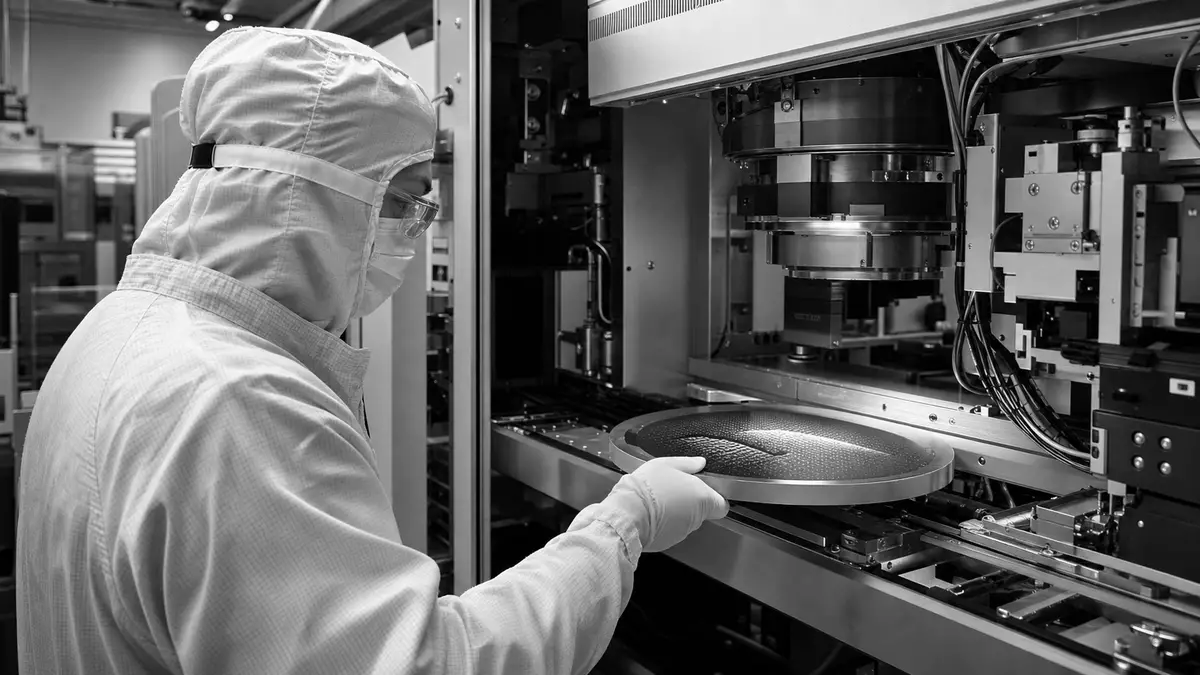
Infineon finds itself in the peculiar position of being punished for doing too much right. The chipmaker has just posted its strongest quarter on record, opened its largest-ever factory ahead of schedule, and strung together a series of acquisitions and partnerships aimed squarely at the AI infrastructure boom. Yet its share price tells a different story — one of digestion, doubt, and a market still nursing scars from the semiconductor cycle's last downturn.
The stock changed hands at 58.30 euros on Friday, a 4.7 percent jump from the prior day's close of 55.68 euros. That single-session surge flatters a rougher month: over the past four weeks, the equity has shed roughly 10 percent, sitting 8.2 percent below its 50-day moving average. The shares remain a long way from their 52-week peak of 89.67 euros — about 35 percent below it — even as they carry a 55 percent gain across the year.
A Quarter That Rewrote the Record Books
The trigger for Friday's rally was unmistakably operational. Revenue for the third fiscal quarter of 2026 climbed 13 percent year-on-year to a record 4.17 billion euros. The power solutions unit serving AI data centers did much of the heavy lifting, pushing the operating margin above 19 percent. Management now expects full-year sales of approximately 16.3 billion euros, and the order backlog stood at just under 30 billion euros at the close of the quarter.
That combination — record revenue, expanding margins, a fat order book, and raised guidance — would ordinarily be enough to keep momentum intact. It hasn't been, at least not on a monthly view, and the reason lies less in Infineon's operations than in how the wider market is pricing semiconductor risk.
Should investors sell immediately? Or is it worth buying Infineon?
Dresden, Bangalore, and a Portfolio Built for the Next Cycle
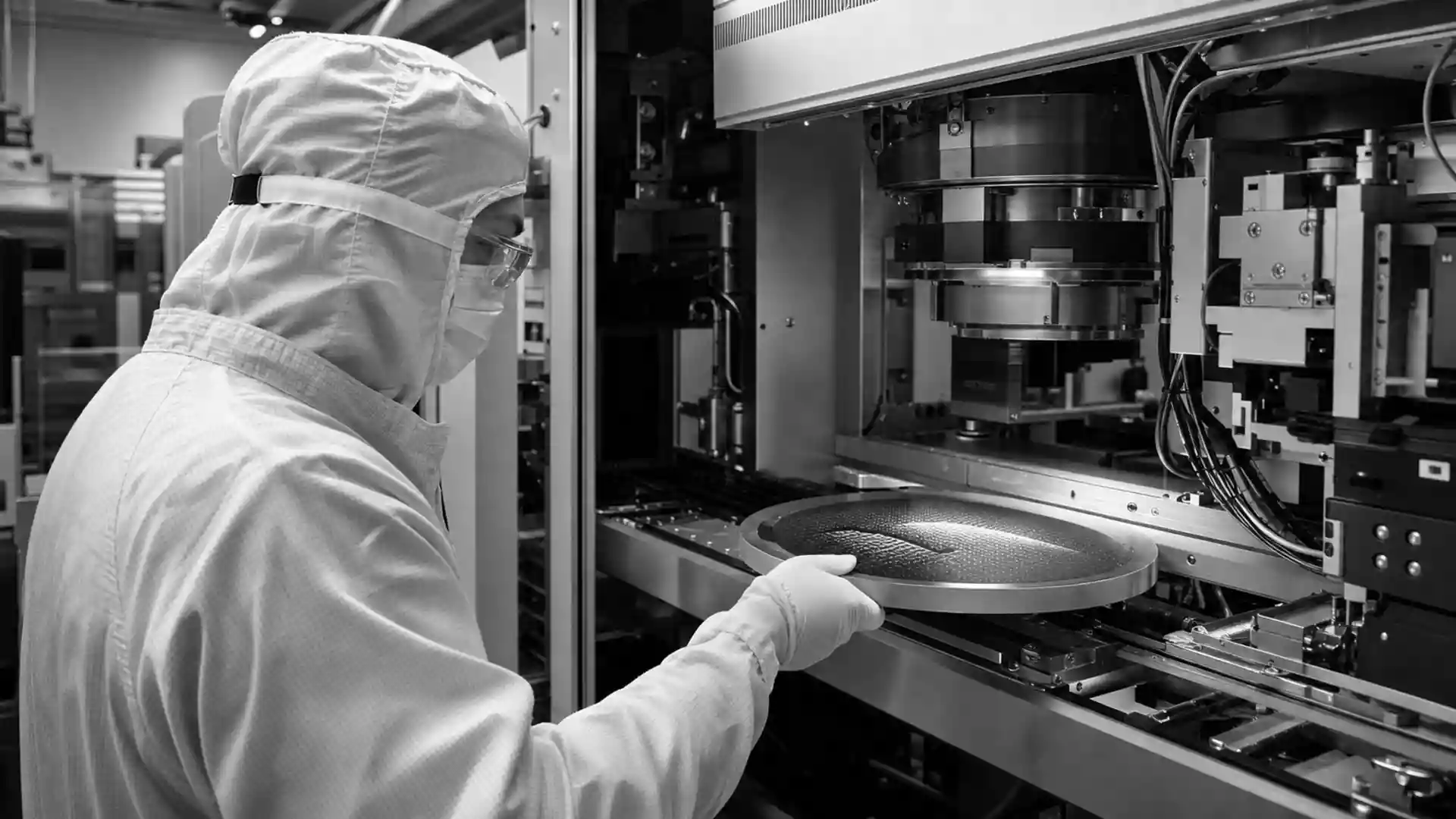
The company's expansion offensive has been relentless. Its Smart Power Fab in Dresden came online in early July, several months ahead of schedule, representing a 5-billion-euro commitment that management describes as the single largest investment in its history. At full utilization, the plant is expected to generate up to 5 billion euros in annual revenue and employ around 1,000 highly skilled workers. This is not a quarterly signal but a structural wager on power semiconductors for AI data centers, electric vehicles, and renewable energy.
The dealmaking has kept pace. In late August, Infineon announced the acquisition of Bangalore-based C2i Semiconductors, a specialist in software-defined multiphase controllers for AI data centers, with completion targeted for the third quarter of 2026. Early September brought a memorandum of understanding with Skeleton Technologies covering solid-state transformers that would pair Infineon's CoolSiC semiconductors with supercapacitor technology. Add to that the July closing of the ams OSRAM analog and mixed-signal sensor portfolio purchase, which is expected to contribute roughly 230 million euros in revenue this calendar year, and the pattern is clear: a company methodically deepening its position in AI infrastructure rather than merely reacting to demand.
The Analyst Chasm: 65 Euros to 102 Euros
Where the story turns genuinely unusual is in the research community's response. On September 8, Morgan Stanley downgraded Infineon from "Overweight" to "Equal-weight" and cut its price target from 81 to 65 euros. The dpa-afx news agency placed the move in a broader context — the bank was turning more selective across the sector, trimming targets for ASML and BE Semiconductor as well despite broadly positive views, citing a DRAM market approaching its cycle peak. The downgrade, in other words, reads as a sector-wide precaution rather than a verdict on Infineon specifically.
Two days later, Warburg Research pushed back with an upgrade from "Hold" to "Buy," holding its 84-euro target steady. Analyst Malte Schaumann tied the reassessment directly to the recent price correction — for him, a buying opportunity rather than a warning. That same day, Bernstein Research reaffirmed its "Outperform" rating with a 102-euro target, and Berenberg reiterated "Buy" at 100 euros.
The resulting spread — from 65 to 102 euros — is remarkably wide, a 37-euro gap that captures just how differently the market weighs cyclical risk against the structural growth narrative. Berenberg points to a semiconductor investment cycle it believes will run beyond 2028, while Bernstein flags early recovery signals in automotive chips.
What the Bears Are Really Saying
Morgan Stanley's caution deserves to be read carefully rather than dismissed. The concern is not that Infineon is executing poorly — the evidence points the other way — but that the broader chip cycle may be closer to a peak than the bulls assume. A DRAM market near its high-water mark has historically been a reliable signal that semiconductor demand is entering a softer phase, and a stock that has already rallied 55 percent over twelve months has limited room to absorb disappointment.
Infineon at a turning point? This analysis reveals what investors need to know now.
For the bulls, the counterargument is straightforward: the Dresden fab, the C2i acquisition, the Skeleton partnership, and the ams OSRAM portfolio all point to a company building revenue streams that did not exist a year ago. The order backlog near 30 billion euros provides visibility that pure cycle plays rarely enjoy.
The Verdict Hinges on Patience
What makes Infineon's situation instructive is the gap between what the company is doing and what its share price is reflecting. The operational story — record quarter, accelerated fab timeline, systematic expansion into AI power infrastructure — is intact. The valuation debate is not about whether that story is real, but about how much of it is already priced in and how much cyclical air remains beneath the stock.
For investors, the question is less about the next quarter's numbers than about which side of the 65-to-102-euro divide the market ultimately settles on. The company has spent the past several months making its case in concrete and silicon. Whether Wall Street rewards that patience is a separate matter entirely.
Ad
Infineon Stock: New Analysis - 11 September
Fresh Infineon information released. What's the impact for investors? Our latest independent report examines recent figures and market trends.