Infineon's AI Order Book Meets Washington's New Math
Published on 11/04/2026 at 11:21 | Editorial boerse-global.de
A political shift in Washington has handed Infineon investors a fresh variable to price in, just as the chipmaker's multi-year AI capacity deals were beginning to look like a durable growth engine.
The Democratic sweep in the US midterms has revived fears of tighter rules on data centers, according to Reuters, and that prospect cuts straight to the heart of the Infineon bull case. The company supplies power semiconductors that manage electricity delivery and efficiency in AI data centers, giving it a tangible foothold in infrastructure spending. What that access does not do is insulate Infineon from delays in its customers' build-out schedules.
Aidan Yao, a strategist at Amundi, flagged the broad uncertainty that AI restrictions could create for the economy, inflation and monetary policy. No concrete restriction has been enacted. The risk is subtler: tougher guidelines or political wrangling could slow data-center construction, leaving an attractive long-term demand picture without a matching near-term revenue trajectory.
Reservations: Signed, Sealed — or Still Talking?
The variable that matters most is how binding Infineon's capacity reservations actually are. Multi-year agreements with leading AI customers have been signed or are still under negotiation, together covering a cumulative revenue volume in the high single-digit billions of euros. That figure describes the opportunity, not revenue already locked in.
The distinction carries real weight for valuation. Closed reservations say something different from ongoing talks, and a volume spread across several years should not be read as a sudden top-line jump. Investors would do better to track how negotiations convert into firm commitments than to fixate on the headline number.
Should investors sell immediately? Or is it worth buying Infineon?
Management has supplied a yardstick for the demand story: roughly EUR 16.3 billion in revenue and a segment result margin of about 20% for fiscal 2026. That margin is the test of whether business opportunities translate into actual earning power.
Jefferies Sticks With Buy, but Sector Cheer Has Limits
Sentiment got a lift when Jefferies analyst Janardan Menon reaffirmed a "Buy" rating and a EUR 96 price target on Tuesday, the day after the stock advanced 2.6%. Menon pointed to upbeat commentary from KLA, SK Hynix and ASM as tailwinds, with Monolithic Power adding higher growth expectations to the mix.
That is a reasonable case for optimism — positive signals elsewhere in semiconductors deserve attention when Infineon is being valued. The caveat is plain: other companies' statements are not Infineon's results. Leaping from sector mood to a forecast for Infineon's own business skips a step in the evidence chain. The price target reflects a positive analyst view; it does not substitute for operational proof.
Villach: A EUR 1.1 Billion Bet With a Timeline
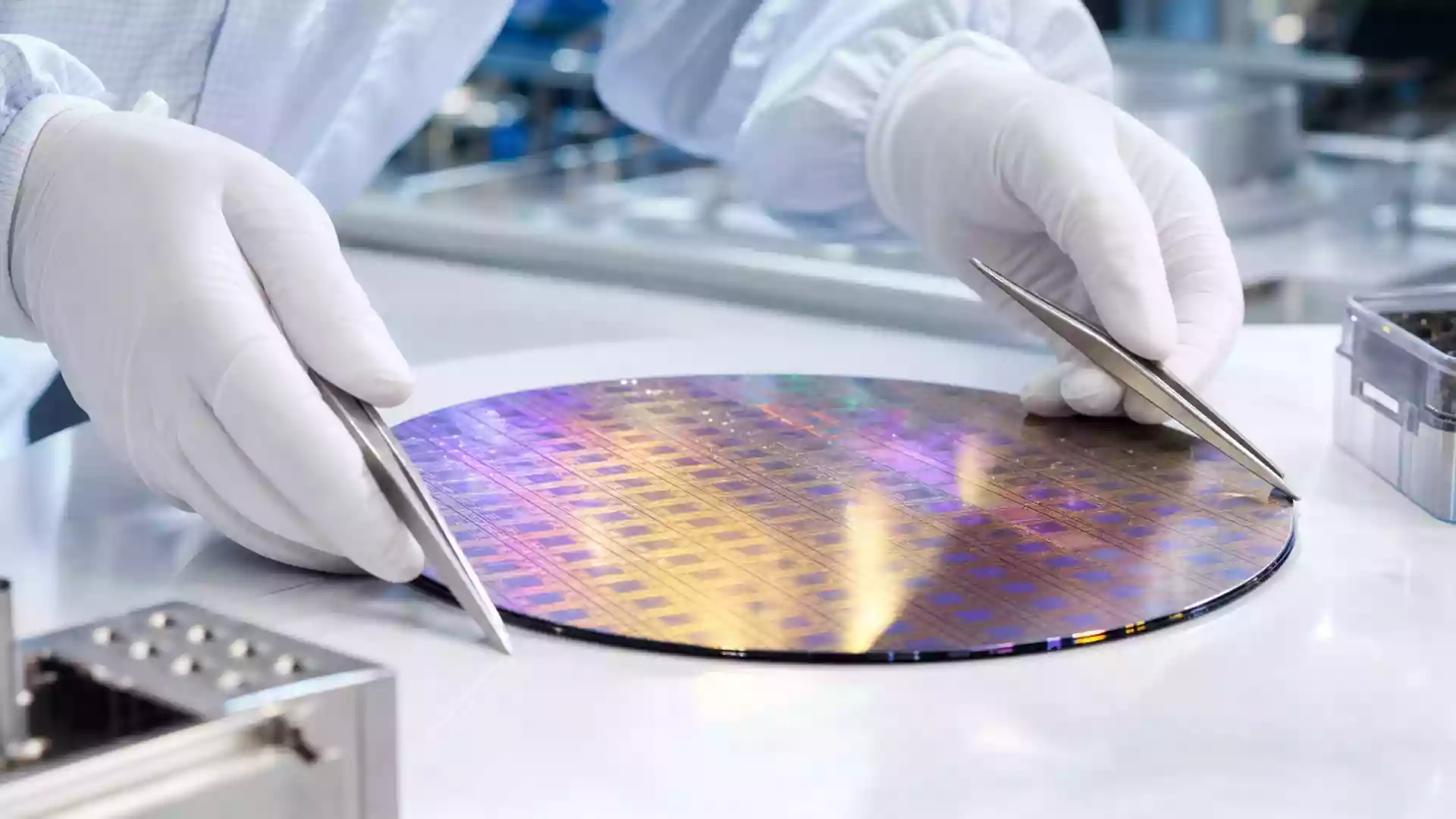
A firmer anchor for the long view comes from the investment plan for Villach. On 27 October, Infineon announced it would invest around EUR 1.1 billion there through 2034, building high-volume production of gallium nitride power semiconductors on 300-millimeter wafers. Output is scheduled to begin at the end of 2027, backed by EUR 319 million in funding under the European Chips Act.
The subsidy is a key framework condition, not a guarantee of commercial success. Equally important is the gap between announcement and execution: the build-out is planned, not finished. That argues against snap conclusions in either direction. The investment is neither banked profit nor a burden to be dismissed on size alone — it opens a long-term perspective and sets a benchmark against which delivery will later be judged.
The Quarter That Already Landed
There is already a concrete operational marker to work from. In the third quarter of fiscal 2026, Infineon posted a segment result of just under EUR 800 million at a 19.1% segment result margin. That gives investors a real earnings figure against which the coming development can be measured.
The bullish scenario does not require unbridled AI euphoria. It would gain substance simply if more negotiations turned into signed reservations, making long-term demand easier to gauge — more meaningful to investors than a generic growth forecast for the data-center market. Should customers push ahead with expansion plans despite the political noise, Infineon's position in power supply and energy efficiency would reinforce the growth case. The most convincing version pairs rising customer commitment with a resilient margin, turning the AI narrative into verifiable operating progress.
Infineon at a turning point? This analysis reveals what investors need to know now.
What Could Break the Thesis
The serious counterargument sits with the customers. If stricter rules or political disputes delay data-center construction, an attractive long-term demand picture would not automatically bring an equally favorable short-term business trend. That matters most for the portion of reservations still under negotiation: more cautious planning could stretch out deal closings or make revenue timing expectations too optimistic. Even signed reservations are not realized revenue. In the bear case, valuation would have to account for a longer wait.
Political uncertainty alone does not disprove the growth thesis. It does raise the bar for operational confirmation. If key customers' expansion plans stall or talks bog down, the large potential revenue volume loses persuasive force.
10 November: The Reckoning
Infineon has scheduled publication of fourth-quarter and full-year fiscal 2026 results for 10 November 2026, a date that is provisional. That is a far more immediate test than the Villach production ramp, and it should carry more weight: the numbers concern Infineon directly and can sharpen a picture so far shaped mainly by analyst opinion and investment planning.
For investors, the question on the day is whether commentary on customer reservations and earnings development fit together. The stronger evidence would not be a bigger AI outlook on its own, but a traceable path from reserved capacity to profitable business. The constructive reading of Infineon holds up — provided the operating picture agrees. The share-price gain is welcome; the confirmation that counts has to come from the company itself.
Ad
Infineon Stock: New Analysis - 4 November
Fresh Infineon information released. What's the impact for investors? Our latest independent report examines recent figures and market trends.