

Infineon's 200mm Silicon Carbide Gamble Meets a Bruising Week on the Tape
Published on 10/17/2026 at 03:40 | Editorial boerse-global.de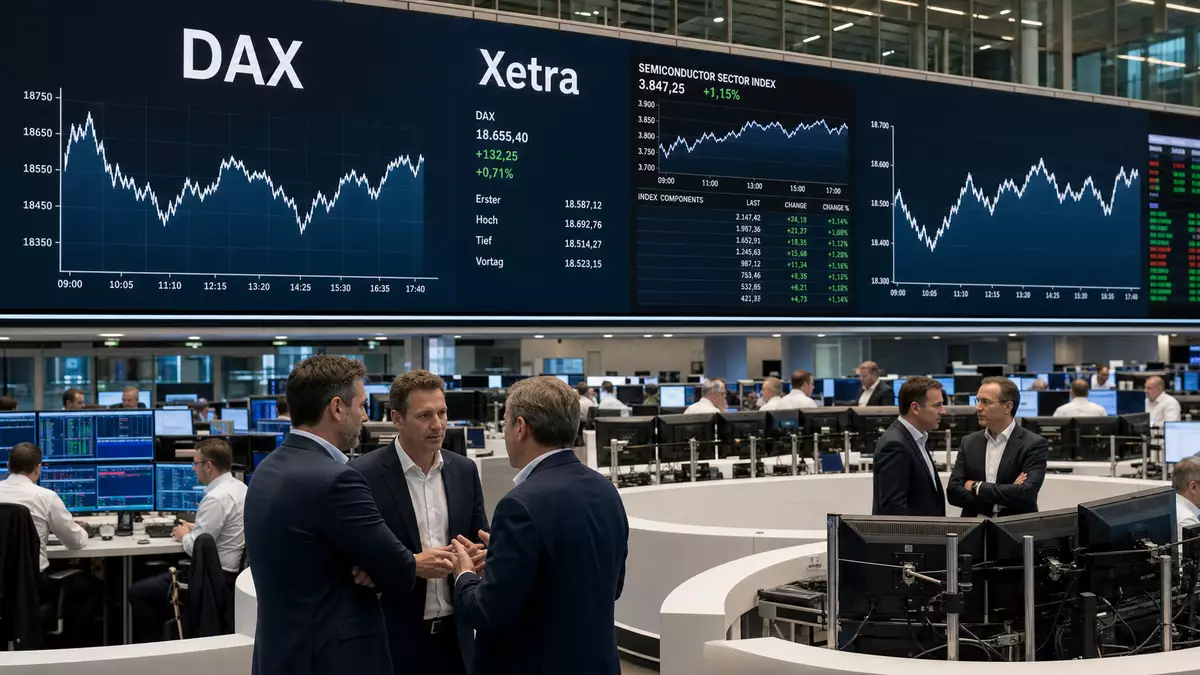
Infineon is pushing ahead with the industrial shift from 150-millimeter to 200-millimeter silicon carbide substrates, a transition the Munich chipmaker sees as its primary lever for lifting manufacturing efficiency and locking in long-term scale advantages. The move comes as demand for energy-efficient components in industrial systems and electric mobility keeps climbing structurally, putting cost discipline at the center of the competitive race among leading suppliers.
The economics behind the larger format are straightforward. A 200mm wafer offers roughly 78 percent more usable area than its 150mm counterpart, which in theory allows a markedly higher number of viable chips per run and can bring down substrate cost per unit. In practice, those area gains place heavy demands on process control—real savings only materialize once yields on the new format reach the required level.
Kulim at the Center of the Ramp
Infineon is aligning its global production network squarely around that benchmark, with its own 200mm SiC fab in Kulim, Malaysia, playing the pivotal role. To underwrite the ramp there, the company is leaning on a multi-source strategy for raw materials. That framework includes a partnership with Wolfspeed stretching back more than 20 years, which under an expanded agreement is being converted from supplying 150mm substrates to the 200mm format—giving Infineon added flexibility and diversified procurement channels in a demanding sourcing environment.
The strategic groundwork is being laid against substantial growth expectations for the sector as a whole. According to projections from research house Yole Group, the global market for silicon carbide power semiconductors is set to expand from 3.4 billion US dollars in 2024 to 11.1 billion US dollars by 2031. A market that more than triples in size demands considerable upfront investment in capacity and supply chains.
Should investors sell immediately? Or is it worth buying Infineon?
A Rough Stretch for Chip Stocks
Shareholders, meanwhile, have had a turbulent few sessions. Media reports attributed a broad selloff in technology names to worries over unexpectedly high US inflation, the financing costs of the massive AI buildout, and competitive pressure from China—a wave that spilled over from US and Asian exchanges into European trading. Infineon stock slipped 1.4 percent in the latest session to 52.35 euros, bringing its weekly decline to 11 percent.
Despite that recent weakness, the shares have shown resilience over the course of the year, posting a gain of 39 percent since January. The picture is complicated by the fact that the stock closed at 51.54 euros on Friday, and the company's market capitalization stands at 76.54 billion euros.
Physical AI Takes the Stage in November
Operationally, Infineon is steering attention toward artificial intelligence as a future growth field. The company said it will present concrete applications and semiconductor innovations at the electronica 2026 trade fair in Munich, running from November 10 to 13, with a focus on the concept of "Physical AI." Under that banner, Infineon bundles technologies that embed artificial intelligence directly into physical systems, and it plans to showcase customer examples and system solutions for mobile systems, robotics, and edge devices. A further core element of the appearance will be semiconductor technology for power supply and power management in modern AI data centers.
Infineon intends to demonstrate how its components enable the interplay between software-based computing power and real-world industrial and mobility applications. The November trade fair week also marks a key date on the financial calendar: results for the fourth quarter and the full 2026 fiscal year are scheduled for November 10. Investors are looking to those figures for reliable insight into how strongly demand from AI infrastructure markets is underpinning earnings power.
A Shift in the Shareholder Base
Alongside the operational preparations, the ownership structure has seen a change. A correction brought the stake in pure voting rights just below the 3 percent reporting threshold. When financial instruments are included, the Norwegian investor's total position amounts to 3.11 percent.
Market watchers now have their sights set on the double appointment on November 10, when the balance-sheet picture and the technological innovations will both have to prove themselves. For the longer-term success in the silicon carbide segment, much will depend on how smoothly the 200mm lines ramp up at Infineon and its suppliers—and whether the projected scale benefits actually materialize.
Ad
Infineon Stock: New Analysis - 17 October
Fresh Infineon information released. What's the impact for investors? Our latest independent report examines recent figures and market trends.


