India Orders Mass Evacuations After Fatal Building Collapse
Published on 08/02/2026 at 12:27 | Redaktion boerse-global.de
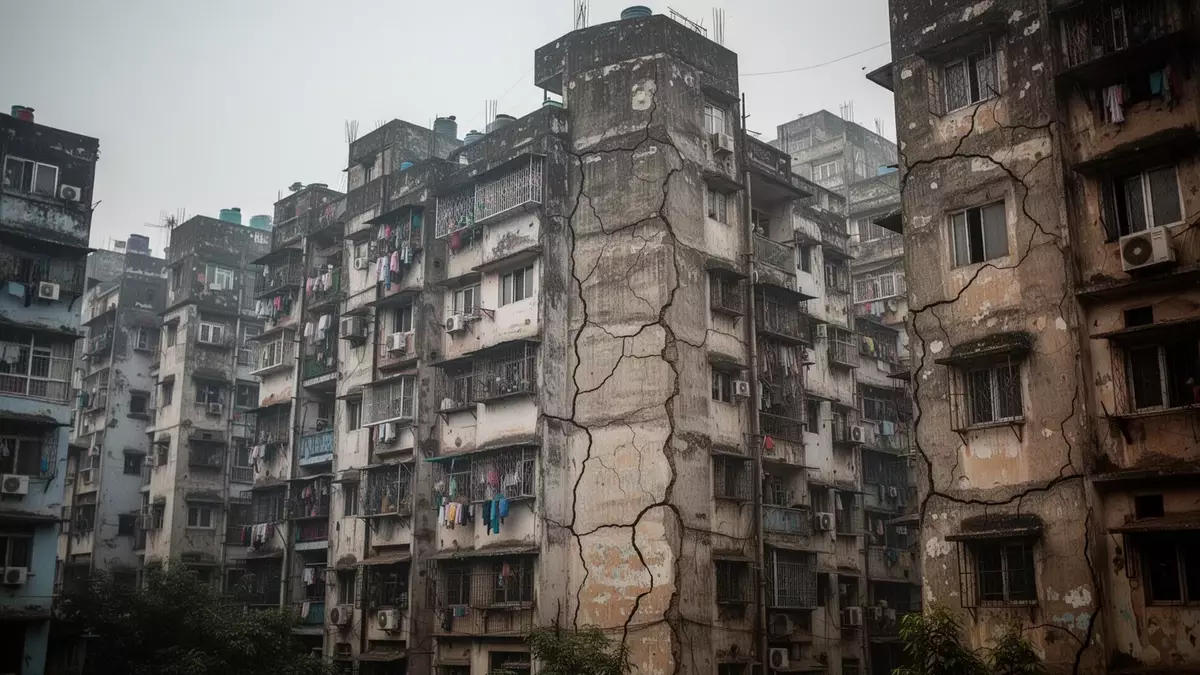
Municipal authorities in India have launched a major safety operation, ordering the evacuation of more than 1,000 buildings after a fatal structural collapse in Bhiwandi killed 10 people. The crackdown comes as building safety faces heightened scrutiny worldwide, following recent structural failures in the United States, Japan, and Myanmar.
Emergency Measures in Bhiwandi and Thane
On August 1, 2026, Bhiwandi Mayor Narayan Ratan Chaudhary directed officials to cut electricity and water supplies to all residential structures classified as highly dangerous. The order follows the collapse of the B-wing of the Kohinoor Apartment complex between the late evening of July 30 and the afternoon of July 31, which resulted in 10 deaths and three injuries.
The Bhiwandi Nizampur City Municipal Corporation has identified 238 buildings as C1 category—meaning they are extremely dangerous and require immediate demolition—and another 836 as C2A category, which requires significant repairs and temporary evacuation. Local authorities confirmed they are conducting surprise inspections and providing temporary shelter in municipal buildings for displaced residents.
Police investigations into the Kohinoor collapse suggest poor construction quality and unauthorized repairs to load-bearing pillars were the primary causes. A First Information Report has been filed against the building's owner, who is believed to be abroad, and the contractor, who is feared to be among the deceased.
Structural failures like this underscore how critical thorough risk assessment is for any building or workplace. Many employers underestimate the gaps in their safety documentation until it's too late. A free toolkit with 41 ready-to-use checklists helps you identify and document hazards properly before they become life-threatening. Download the free Risk Assessment Toolkit
Evacuations in Mumbra and Regional Crackdowns
The safety sweep extended to nearby Mumbra, where the Thane Municipal Corporation (TMC) ordered the immediate evacuation of the Dhoom Apartment complex on August 1. Approximately 170 residents were forced to leave after plaster fell from ceilings and structural cracks appeared in the support columns of the 20-year-old building.
TMC Commissioner Saurabh Rao has directed technical teams to accelerate inspections across Thane. Under the new directives, buildings classified as C1 will receive formal notices for immediate vacation. Where residents refuse to leave, municipal teams have been authorized to cut utility services to ensure compliance with safety protocols.
International Structural Incidents and Enforcement
The crisis in India follows several other high-profile structural safety incidents globally. In Japan, rescue operations in Kumamoto Prefecture concluded on August 1 following a magnitude 7.1 earthquake. Authorities confirmed that seven workers died in an explosion at an Aeon shopping center in Kashima after a second-floor collapse. The earthquake damaged over 3,400 homes and destroyed 181 structures across the region.
In Myanmar, the Ministry of Construction recently took punitive action against several firms following the collapse of the Sky Villa condo in Mandalay. On June 19, three companies—NTL Construction, Depawaddy Construction, and CES Construction Engineering Services—were blacklisted after an earthquake-triggered collapse led to fatalities and injuries.
In the United States, structural concerns reached midtown Manhattan earlier this summer. On July 8, emergency crews evacuated several high-rises and closed streets around the former Pfizer headquarters at 235 East 42nd Street. Inspectors discovered two severely bent support pillars on the 21st and 22nd floors, causing several stories to sink. The 37-story building was in the process of being converted into 1,600 luxury rental units by developer Metro Loft.
When disaster strikes, the difference between a controlled response and chaos often comes down to preparation. Over 37,000 UK businesses protect their teams with a free Health & Safety Toolkit that includes risk assessments, checklists, and toolbox talks covering key regulations like COSHH and PUWER. Don't wait for an inspection or an incident to reveal your gaps. Get the free Health & Safety Toolkit
Legislative Push for Construction Standards
As structural failures continue to cause fatalities, policymakers are advocating for updated safety regulations. In the Philippines, Senator Bong Go recently called for the adoption of a new Building Code to replace standards that have remained largely unchanged since 1977.
The proposed legislation aims to modernize construction standards, implement stricter enforcement against the use of substandard materials, and mandate regular inspections for older structures in high-risk zones. Local authorities in various jurisdictions are echoing these calls, emphasizing that rigorous structural assessments are essential to prevent further loss of life in aging urban environments.
Disclaimer regarding our articles: No investment advice, no buy or sell recommendation. Information on prices, companies, and markets is provided without guarantee; changes are possible at any time. Stock market transactions can lead to substantial losses. Our articles are created and reviewed in whole or in part automatically with the support of AI.