Gold's Split Personality: Central Banks Hoard While Investors Retreat
Published on 08/01/2026 at 07:45 | Redaktion boerse-global.de
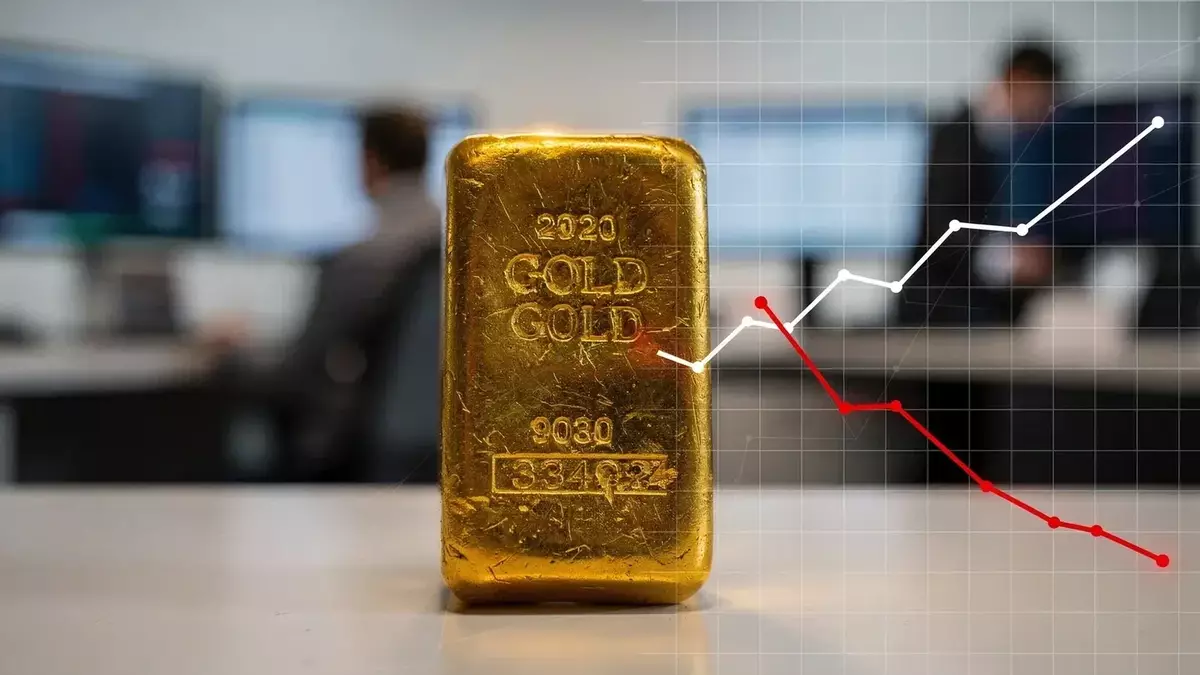
The gold market is telling two completely different stories at once. On one side, official institutions are accumulating the metal at a record-breaking pace. On the other, price action keeps sliding, with the yellow metal closing Friday at $4,098.60 per troy ounce, down 1.54 percent on the day. That leaves bullion 5.41 percent in the red since the start of the year, extending a correction that began after January's all-time high.
The disconnect between institutional conviction and market performance has rarely been this stark. Central banks purchased 289 tonnes of gold in the second quarter — a 62 percent jump year-on-year and the strongest Q2 on record, according to the World Gold Council. Yet that buying spree has done little to arrest the metal's decline, as higher-for-longer interest rate expectations continue to sap investor enthusiasm.
A Tale of Two Demand Curves
Global gold demand held steady at 1,269 tonnes in the second quarter, with first-half volumes reaching 2,522 tonnes — up 2 percent and worth a record $380 billion. But beneath those headline numbers lies a market bifurcated between official buyers and private investors.
Jewelry consumption, traditionally the demand engine, collapsed 17 percent to its lowest level since the pandemic began. India, typically one of the largest markets, saw volumes drop 6 percent to 131.4 tonnes for the quarter, even though the value of that demand surged 50 percent on the back of elevated prices. Exchange-traded funds hemorrhaged a net 45 tonnes during the period.
Should investors sell immediately? Or is it worth buying Gold?
The average gold price in Q2 stood at $4,506.3 per ounce, roughly 8 percent below the first quarter's level — a decline that evidently tempted bargain-hunting central banks while deterring discretionary buyers.
The Quiet Revolution in Reserve Management
Perhaps the most consequential development is structural rather than cyclical. Gold now accounts for 27 percent of global currency reserves, overtaking US Treasuries at 22 percent for the first time. Central banks collectively hold more than 36,000 tonnes of the metal, with Poland (over 100 tonnes), China, India, Turkey, Kazakhstan, and Brazil among the most active purchasers.
The motivations are clear: geopolitical risk, diversification away from dollar exposure, and mounting concerns about Western sovereign debt levels. Even Tether, the stablecoin issuer, has joined the fray, adding 14 tonnes in Q2 to reach 146 tonnes worth $18.8 billion — making it the largest known gold holder outside banks and governments.
One caveat deserves attention. The World Gold Council revised its Q1 central bank purchase figures sharply downward, from an initially reported 244 tonnes to just 57 tonnes — an adjustment the Council itself described as "significant." That revision raises questions about the reliability of quarterly official-sector data, even as the long-term accumulation trend remains intact.
The Fed's Shadow Looms Large
Monetary policy continues to exert the dominant influence on short-term price direction. The Federal Reserve held its benchmark rate at 3.50 to 3.75 percent this week, with a 9-to-3 vote — three dissenters favoring a 25-basis-point hike. Inflation data offered only lukewarm support for the cautious stance: core PCE ran at 3.3 percent in June, with the headline index at 3.7 percent.
Economic momentum is cooling, with Q2 GDP growth of 1.5 percent lagging Q1's 2.1 percent pace. Market pricing for a September hike has retreated from over 80 percent to roughly 63-65 percent, according to the CME FedWatch tool. The dollar added about 0.5 percent on Friday after losing 2.4 percent the previous day — a rebound that added further pressure to gold. Other precious metals felt the strain too, with silver, platinum, and palladium all posting low-double-digit percentage losses on the same session.
Technicals Point to a Critical Juncture
The chart picture remains fragile. Gold trades 9.75 percent below its 200-day moving average of $4,541.41, a clear sign of persistent weakness. The zone between $4,028 and $3,995 is viewed as the next key support, while a break above $4,101 would signal renewed strength.
Gold at a turning point? This analysis reveals what investors need to know now.
Veteran observer Fred Hickey interprets the current consolidation as potential bottom-building rather than the start of a sustained downtrend, pointing to continued strong demand from China and slowing ETF outflows. The metal remains far from its 52-week high of $5,626.80, reached in late January, yet sits relatively close to its October low.
The weekly picture offers modest encouragement — a 1.06 percent gain — even as the monthly and yearly trends remain negative. With the price below both its 50-day and 200-day moving averages, the path of least resistance appears lower until either the Fed signals a definitive pivot or support around $3,900-4,000 gives way.
For now, gold embodies a paradox: the strongest institutional demand on record coexisting with persistent investor caution. Which force ultimately prevails will likely hinge on the Fed's next move and whether the dollar's recent rebound proves durable.
Ad
Gold Stock: New Analysis - 1 August
Fresh Gold information released. What's the impact for investors? Our latest independent report examines recent figures and market trends.
Disclaimer regarding our articles: No investment advice, no buy or sell recommendation. Information on prices, companies, and markets is provided without guarantee; changes are possible at any time. Stock market transactions can lead to substantial losses. Our articles are created and reviewed in whole or in part automatically with the support of AI.