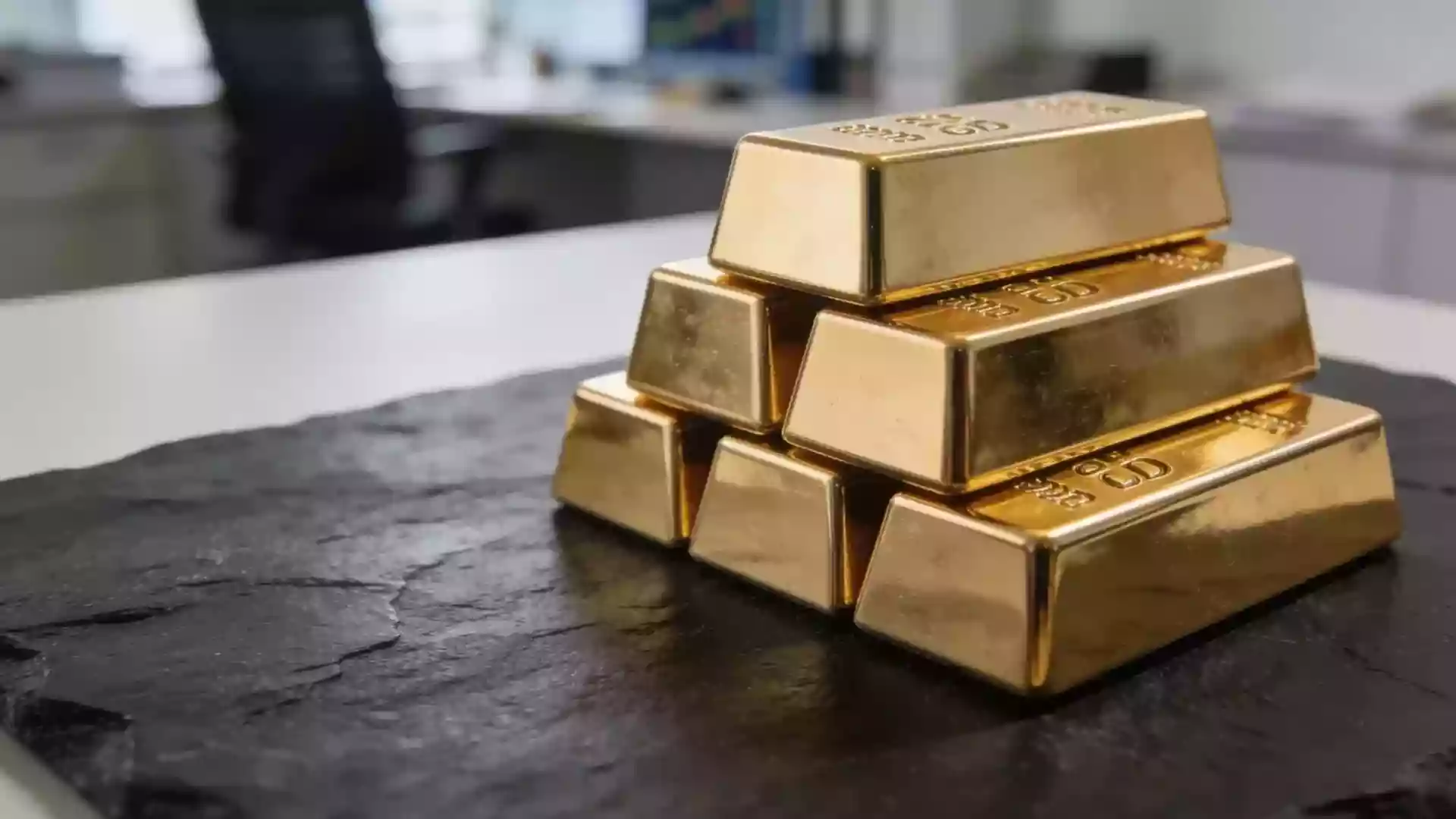
Gold's 13% August Surge Masks a Washington Power Struggle Over the Bond Market
Published on 08/26/2026 at 19:52 | Editorial boerse-global.de
Gold is catching its breath after a blistering 30-day run that has left the metal up 13 percent, but beneath the surface of the latest pullback lies a deepening institutional clash between the US Treasury and the Federal Reserve over how to manage the country's ballooning debt burden.
Spot gold slipped 0.8 percent to $4,618.03 an ounce on Wednesday after US inflation data came in line with expectations, according to Reuters. The modest retreat — the second consecutive daily decline after Tuesday's close at $4,658.41 — has done little to dent what could become the strongest August for bullion since 1999, according to several market observers.
The consolidation phase follows a remarkable ascent that saw gold touch $4,641.27 on Monday, its highest level in more than three months, buoyed by a softer dollar and anticipation of a speech by Fed Chair Kevin Warsh. Tuesday brought another milestone when the metal marked its best level since May 14 before profit-taking and a firmer greenback intervened ahead of the inflation release.
The Treasury's $4 Billion Gambit
At the heart of the rally is a policy shift that has injected fresh momentum into the gold trade: the US Treasury's decision to double the size of its bond buyback operations to a minimum of $4 billion per operation starting September 9, up from $2 billion previously. Market participants have interpreted the move as a veiled signal of looser monetary policy to come, prompting a rush into hard assets.
The maneuver places Treasury Secretary Scott Bessent on what several market watchers describe as a collision course with the Fed. Warsh has rejected direct interventions in the bond market and remains committed to shrinking the central bank's balance sheet. The tension has drawn sharp criticism from prominent investors, with Stanley Druckenmiller branding the buybacks as price manipulation and a policy error, while Mohamed El-Erian warns of collateral damage reminiscent of an "Operation Twist" scenario. Defenders of the approach counter that opposing the Treasury would be a mistake.
Should investors sell immediately? Or is it worth buying Gold?
The backdrop to this debate is sobering: US debt has crossed the $40 trillion threshold for the first time, and 30-year Treasury yields recently touched roughly 5.3 percent — the highest level in 19 years — before easing slightly following the buyback announcement. That combination of record indebtedness and active intervention in the bond market has revived fears of creeping currency debasement, a classic catalyst for gold accumulation.
A Market Torn Between Two Forces
The whipsaw price action of the past two weeks illustrates just how sensitive bullion has become to every nuance in the US rate debate. On August 21, gold reached $4,623.94 an ounce, its best level since mid-May, after the Treasury's buyback plan weighed on the dollar and pushed prices above the 200-day moving average. Just a day earlier, the metal had dipped to $4,450.08 as higher real yields and rising energy prices stoked inflation concerns.
The most pronounced setback came on August 18, when spot gold lost 1.1 percent to fall to $4,364.90 after US Treasury yields hit multi-year highs. This volatility underscores the opposing forces at work: the prospect of lower interest rates, which supports gold, versus the risk of climbing yields, which diminishes the appeal of the non-yielding metal.
Reuters has characterized the broader trend as the beginning of a new gold upcycle, driven by sustained central bank purchases and widening investor demand. The price has climbed roughly $400, or about 10 percent, since the start of August — a pace that signals the return of safe-haven appetite. Deutsche Börse has similarly noted that weak US labor data and diminishing pressure for higher rates propelled gold toward the $4,450 level, with the CME FedWatch tool at one point pricing just a 40 percent chance of a September rate hike.
Institutional Demand Confirms the Trend
The demand side reinforces the bullish narrative. Gold ETFs recorded net inflows of 46.7 tonnes last week, worth approximately $6.4 billion — the strongest weekly inflow in ten months, driven primarily by North American and European investors.
Central banks continue to expand their reserves in parallel. China's central bank has increased its gold holdings for 21 consecutive months, according to available data, and now ranks sixth globally among official gold holders.
Gold at a turning point? This analysis reveals what investors need to know now.
Analyst expectations have shifted markedly higher. Natixis has raised its end-2026 target from $4,600 to $5,000, explicitly citing the combination of rate repricing and US debt concerns. Deutsche Bank sees $4,800 for the year, while Goldman Sachs, UBS and Citigroup have projections for the next 12 to 24 months that in several cases sit well above the $5,000 mark. Citi, however, sounds a cautionary note with a short-term target of $4,300, warning of pullback risk.
What Comes Next
For the immediate term, traders are focused on the PCE inflation data due out of the US and Warsh's remarks at the Jackson Hole symposium. Both events could determine whether the Fed moves toward a rate cut in September or maintains its more restrictive stance.
Wednesday's pullback, with gold currently trading near $4,594.43, looks less like a trend reversal and more like a pause after a powerful rally. The 30-day gain of 13 percent suggests underlying demand remains intact despite daily fluctuations. As long as expectations of a more moderate monetary policy prevail, dips like today's are likely to be viewed by investors as buying opportunities rather than exit signals.
The feud between the Treasury and the central bank over bond policy, however, is unlikely to resolve quickly — and it may keep the gold market on edge regardless of how the rate debate plays out.
Ad
Gold Stock: New Analysis - 26 August
Fresh Gold information released. What's the impact for investors? Our latest independent report examines recent figures and market trends.