
Global Courts and Regulators Tighten the Screws on Workplace Safety
Published on 08/31/2026 at 23:47 | Editorial boerse-global.de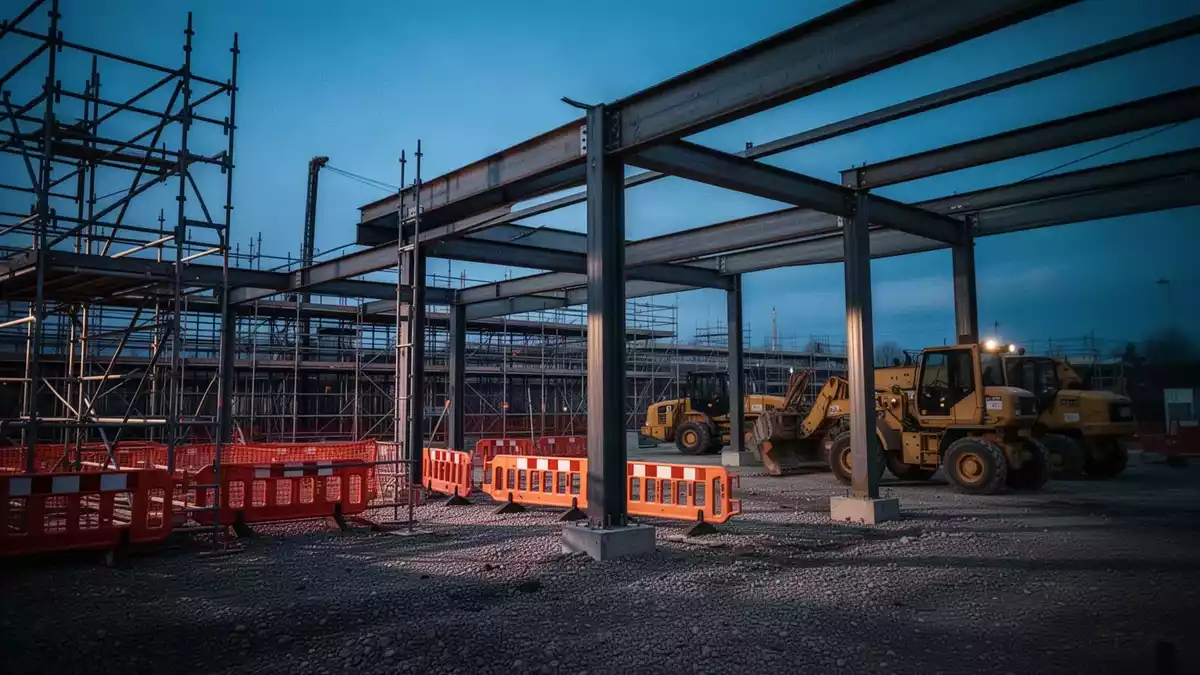
Courts and regulators across the UK, North America, and Australia are handing down record fines and compensation awards for workplace injuries, putting pressure on employers to tighten their safety practices. With insurance premiums climbing and a backlog of liability claims building in construction, emergency services, and food processing, the financial consequences of safety failures have never been sharper.
UK Police Forces Pay the Price for Rising Injury Claims
Norfolk Police has paid out £2.2 million to 139 injured officers during the 2025/26 period. The force reports that one in nine officers is currently on sick leave due to mental health issues — a figure that has doubled since 2016. Physical violence against officers has also surged, with attacks rising from 600 in 2019/20 to 840 more recently.
Over the past six years, the force's total compensation bill has reached £11.6 million, including six payouts for injuries classified as very serious. The trend reflects a wider strain on emergency services, where staff wellbeing and physical safety are increasingly becoming liability concerns for employers.
Construction Fines Mount as Falls Remain the Top Killer
In the construction sector, North Tyneside Magistrates' Court imposed a £20,000 fine on Len Smith & Son Building Contractors after a 24-year-old bricklayer fell two metres through a roof. The Health and Safety Executive (HSE) found that the employer had failed to carry out a risk assessment or put basic safety precautions in place.
The case echoes national figures from the HSE, which identifies falls from height as the leading cause of workplace fatalities in the UK, accounting for 31 deaths in the last year alone. The regulator has repeatedly stressed that simple measures — such as edge protection and proper scaffolding — could prevent most of these incidents.
In a separate case, a Bangor court sentenced an employer following the death of 18-year-old apprentice Chloe Bidwell, who was struck by a stack of plasterboard. The HSE described safety management at Varcity Living as "chaotic". Meanwhile, Little Dreams Nursery in Aberdeen was fined £7,500 after a 10-month-old boy was scalded by bleach and boiling water in late 2021.
US Verdicts Signal Growing Legal Exposure for Big Employers
Across the Atlantic, a Massachusetts jury awarded $56 million in July 2026 against Amazon and one of its delivery service contractors following a truck accident — the largest single-plaintiff verdict in the state's history. The case underscores the legal challenges facing Amazon's delivery programme, which involves approximately 390,000 drivers. Prior verdicts in similar cases include a $42 million award in South Carolina and a $16.2 million award in Georgia.
Regulators have also stepped up scrutiny of produce suppliers and food processors. A review of Taylor Farms found the company failed to submit required injury logs for several facilities between 2021 and 2025. The company has faced roughly $1.8 million in Occupational Safety and Health Administration (OSHA) citations since 2021, including a $1 million fine following a worker fatality at a New Jersey plant.
In Canada, Maple Lodge Farms was fined $500,000 after a carbon dioxide leak in March 2024 left a worker critically injured. The Ontario-based company lacked the necessary CO2 sensors when a hose ruptured, releasing over 16,000 pounds of the gas.
Construction Faces a Perfect Storm of Costs and Labour Shortages
The construction industry is grappling with a widening gap between property investment and casualty insurance costs. While US construction spending reached an annualised $2.17 trillion in April 2026, firms are struggling with a significant labour shortage. Industry projections suggest a need for 349,000 new workers in 2026 and a further 456,000 in 2027.
This shortage is colliding with rising litigation costs. Construction defect claims that previously averaged $500,000 have climbed to between $1.5 million and $3 million, and excess liability premiums have risen by 5% to 30%. For residential builders, the picture is equally challenging. Market leader D.R. Horton reported that its reserves for legal claims rose 57% to $1.1 billion by the end of fiscal year 2025, while Lennar increased its self-insurance reserves by 21% to $336.9 million.
General liability rates for residential properties are now two to five times higher than those for commercial risks, with awards exceeding $10 million rising by 52% between 2023 and 2024.
Australia and the Push for Stronger Safety Standards
In Australia, the ACT Supreme Court awarded a worker $752,487 on August 31, 2026, following a 2023 fall through an uncovered skylight at the Australian Defence Force Academy. The employer, ACT Height Safety Pty Ltd, is currently in liquidation and uninsured, leaving a default fund to cover the payout — a stark reminder of what happens when safety failures coincide with inadequate insurance cover.
Regulators are also redrawing the boundaries of workplace liability. Cal/OSHA proposed amendments on August 31, 2026, to strengthen heat illness prevention standards. The new rules would eliminate industry-specific exemptions for high-heat procedures and mandate new 14-day acclimatisation protocols for workers.
Courts Clarify Liability in Complex Claims
The legal landscape is shifting in favour of policyholders. The Tenth Circuit ruled on August 31, 2026, in a case involving the Church of Jesus Christ of Latter-day Saints and National Union Fire Insurance Co. that policy language regarding an "occurrence" was ambiguous. The ruling suggested that multiple claims stemming from a common harmful condition could be construed as a single occurrence — a decision that could significantly affect how complex liability cases are handled.
Meanwhile, the sports industry faces its own disclosure challenges. More than 1,000 rugby players are involved in group actions alleging brain damage, and a court recently noted widespread failures in the disclosure of medical records, with roughly 90% of claims currently involving incomplete documentation.


