
Firefighters Tackle Major Blaze at Haverhill Waste Facility
Published on 08/30/2026 at 20:27 | Editorial boerse-global.de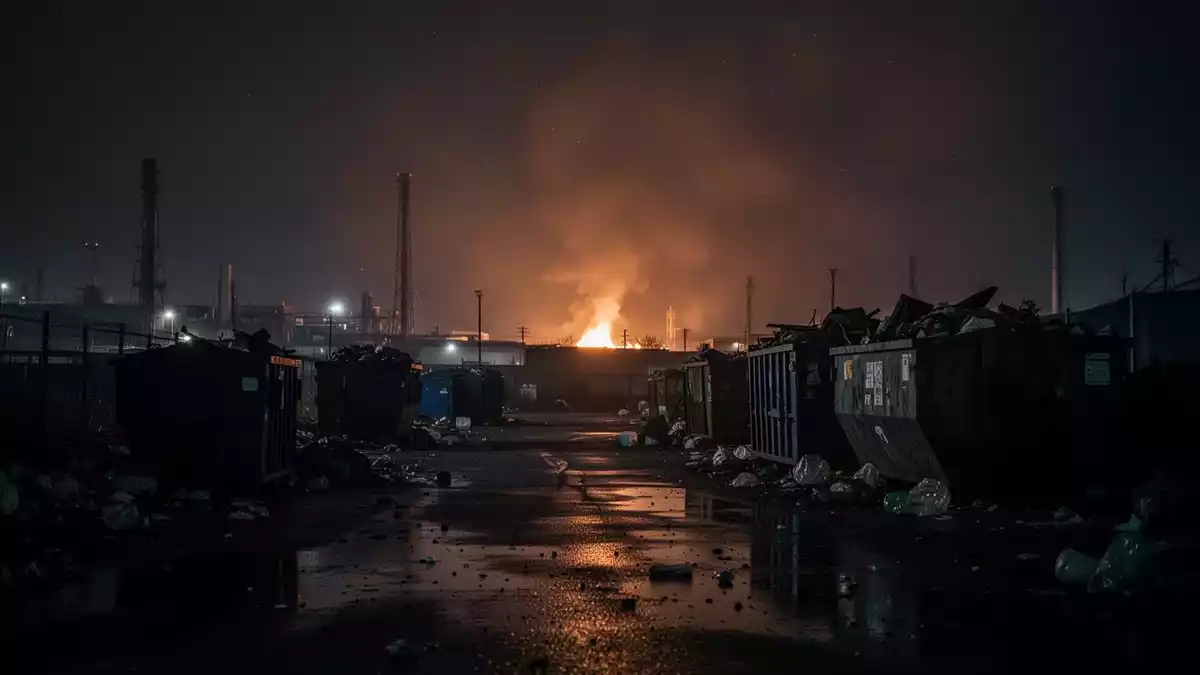
More than a dozen fire crews from three counties were called to an industrial site in Haverhill on the night of August 29, 2026, after a fire broke out involving around 400 tonnes of building waste. The incident at a recycling and processing centre on Falconer Road prompted a large-scale, cross-border emergency response that continued into the following morning, serving as a reminder of the safety risks facing the UK's waste sector.
Cross-Border Response to Falconer Road Fire
Emergency services were first alerted to the blaze at 9:46 p.m. Suffolk Fire and Rescue Service dispatched crews from Haverhill, Clare, Bury St Edmunds, Long Melford, Wickhambrook, Newmarket, and Ixworth. Due to the scale of the incident, neighbouring Essex and Cambridgeshire units were called in to provide additional support.
Essex County Fire and Rescue Service sent crews from Saffron Walden, Halstead, and Sible Hedingham, along with a water bowser unit. The combined operation deployed six fire engines, an aerial ladder, and two water carriers to tackle the burning waste. Firefighters made significant progress overnight by using machinery to move the material and suppress the flames.
The Haverhill blaze is a stark reminder that fire risks can escalate quickly at industrial sites. Many businesses underestimate how prepared they are until an emergency strikes. A free Fire Safety Toolkit provides a comprehensive package including risk assessments, evacuation plans, and fire extinguisher training documents to help you meet UK regulations. Download the free Fire Safety Toolkit
Residents across the Haverhill area were advised to keep doors and windows closed as smoke drifted over the town throughout the night. The Essex crews from Saffron Walden returned to their home station at approximately 3:30 a.m. on August 30, at which point they were immediately redirected to a local medical incident.
A Weekend of Industrial Incidents
The Haverhill response came amid a series of industrial fires and infrastructure challenges across the region. On August 30, Essex County Fire and Rescue Service was contacted about another blaze at an industrial site on Perry Road in Harlow. Reports indicated a large plume of smoke rising from a facility, which was unconfirmed but suspected to be a scrap metal site.
Further afield, emergency services in Denmark were engaged in a similar operation at Køge harbour over the same weekend. A scrap metal pile at a site operated by NCC Industry A/S caught fire on August 29, with officials expecting the blaze to burn until the following morning.
Transport in Essex also faced significant disruption on August 30, though for a different reason. Signalling cables were stolen between Colchester and London Liverpool Street, forcing trains to run at reduced speeds. The theft affected multiple routes, including those serving Norwich, Ipswich, Harwich International, and Clacton-on-Sea, with several services terminating at Witham. Network operators estimated that disruption would continue until at least 3 p.m. on Sunday.
Waste Sector Safety Under Scrutiny
The fire in Haverhill highlights ongoing safety challenges within the waste processing industry. Recent incidents at similar facilities illustrate the frequent nature of thermal events in recycling environments.
With thermal events becoming increasingly common in recycling environments, having robust safety documentation is no longer optional. A free Health & Safety Toolkit offers ready-to-use risk assessments and checklists covering key regulations like the Health & Safety at Work Act 1974 and COSHH, helping you protect employees and visitors alike. Get the free Health & Safety Toolkit
The SWEEEP Kuusakoski plant in Sittingbourne, which processes 3,500 tonnes of waste monthly, reported a fire as recently as June 4, 2026, caused by a lithium-ion battery. Industry records indicate that such plants can experience dozens of thermal runaway incidents annually due to the volatile nature of processed materials like batteries and pressurised containers.


