CATL's Profit Squeeze Meets a Swapping-Station Land Grab
Published on 10/21/2026 at 16:41 | Editorial boerse-global.de
CATL is discovering that selling more batteries is not the same as keeping more of the money. The world's largest cellmaker posted revenue growth of 58.58% year on year in its latest quarter, yet profit attributable to shareholders advanced just 14.54% — and slipped 5.77% from the prior three months. That gap between the top line and the bottom line has become the central question for investors, and it drew a swift response from Wall Street on Thursday.
Citi cut its price target on the stock to RMB 479 from RMB 500, citing a gross margin that came in below expectations, higher expenses and larger impairment charges. The brokerage also trimmed its earnings forecasts for the coming years, a move that goes beyond a simple re-rating of the shares and touches the expected trajectory of the business itself. CATL's stock fell 12% on the day.
The downgrade follows JPMorgan's decision a day earlier to move its rating on the Hong Kong-listed shares to Neutral from Overweight, with the target lowered to HK$500 from HK$725. JPMorgan pointed to profitability in the battery sector fading faster than anticipated. Reuters added that intensifying competition in the battery market and slower growth in Chinese car sales are weighing on earnings. Both analyst moves train attention on the quality of CATL's profit rather than the pace of its sales.
A Capacity Story That Outruns the Profit Line
Against that backdrop, CATL is pushing hard on a business it believes can open fresh demand: battery swapping for heavy electric trucks. The company aims to more than double its swapping network to 2,000 stations by 2027, according to MT Newswires, with 900 sites in China targeted by the end of this year. Longer term, CATL and its partners have set their sights on a nationwide network of 10,000 stations.
Should investors sell immediately? Or is it worth buying CATL?
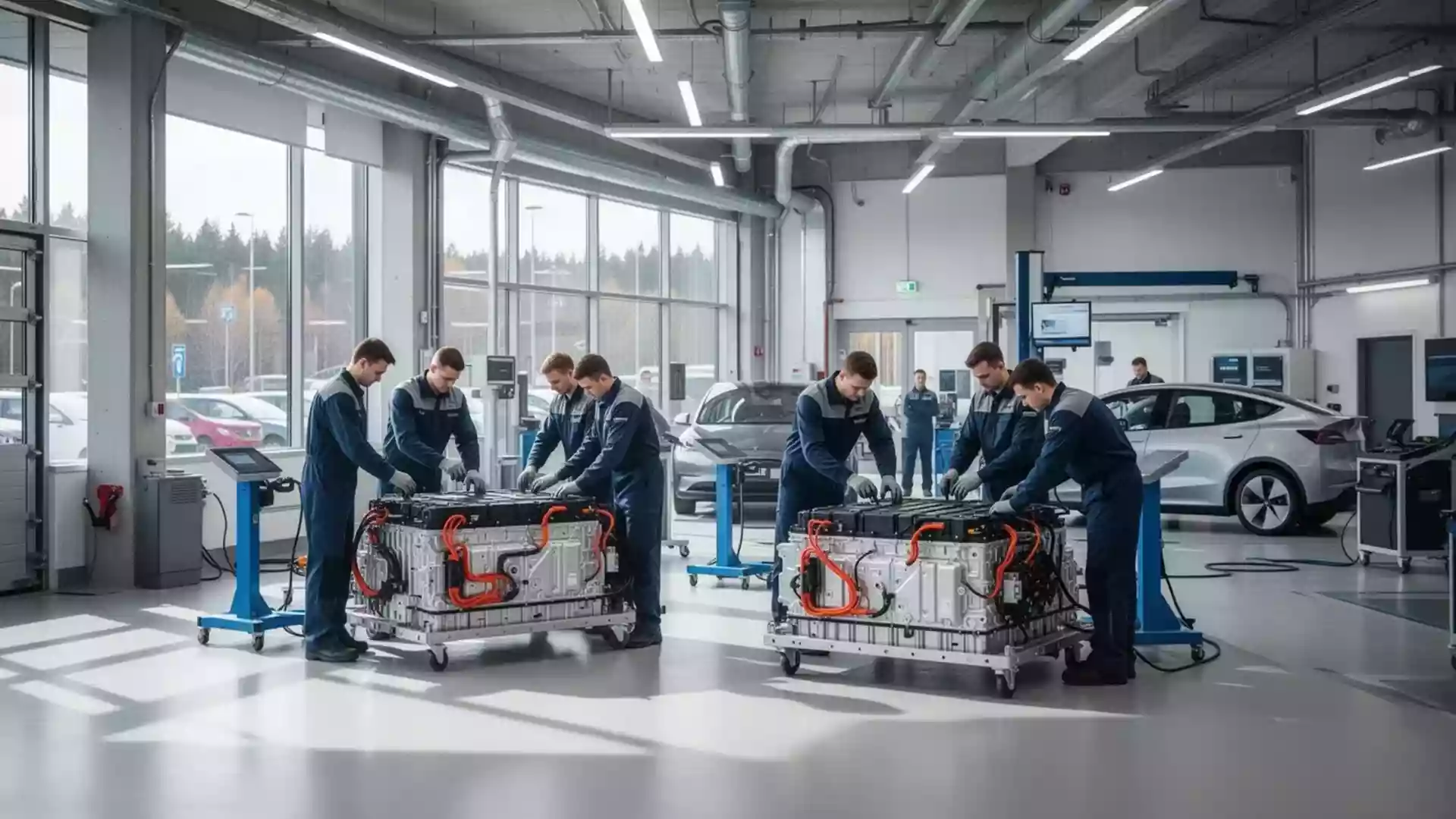
The hardware behind the push is the QIJI swapping system unveiled on Wednesday, which pairs a standardised swappable pack with an additional reserve battery. CATL says the exchange can be completed within five minutes, and 13,000 units were signed under agreements at the launch event. The combination is designed to raise the usable capacity of the main battery, while a rental model — rather than an outright purchase of the pack — changes how customers pay for power. CATL reckons rental costs per kilowatt-hour can come out as much as 20% lower on base tariffs.
Those figures carry different weight. Signed agreements are a firmer commitment than long-range build-out targets, and the network plan is no proof of how heavily customers will use the stations once they open. The cost saving, meanwhile, is explicitly framed as a potential reduction on base tariffs.
Truck Platform, Vehicle Partners and a Demand Bet
The swapping drive sits alongside the Tianxing II heavy-duty truck battery platform, also presented on Wednesday, which Reuters reported on. CATL is working to tie swapping more closely to vehicle makers as well. DIGITIMES reported on an agreement between Huawei-linked Yinwang Intelligent Technology, CATL and its battery-swapping subsidiary — a partnership that broadens the infrastructure build-out with another vehicle-technology ally. CATL says swapping is gaining recognition among automakers and partners and views the technology as one of the future main forms of vehicle energy supply. No quantified earnings contribution has been attached to the arrangement.
CATL at a turning point? This analysis reveals what investors need to know now.
Underpinning the expansion is CATL's expectation of further growth in worldwide demand for powertrain and storage batteries in 2027, helped by electrification of commercial vehicles and rising demand for energy storage both inside China and abroad. The company believes the market may hold up better than feared, with utilisation staying relatively high. The truck-swapping build-out fits that view, though it remains an investment in demand that has yet to arrive.
On the earnings call, CATL said it is discussing with customers how to share the impact of tax changes, and plans to ease margin pressure through new technologies and products. No relief has yet been agreed from those talks. For investors, the measure that matters is not the station count alone but whether CATL can turn the combination of battery technology, rental pricing and partnerships into a network busy enough to justify the outlay — and, just as importantly, whether it can convert its rapid growth into steadier profitability. The analyst cuts make clear that strong revenue on its own will not be enough.
Ad
CATL Stock: New Analysis - 21 October
Fresh CATL information released. What's the impact for investors? Our latest independent report examines recent figures and market trends.