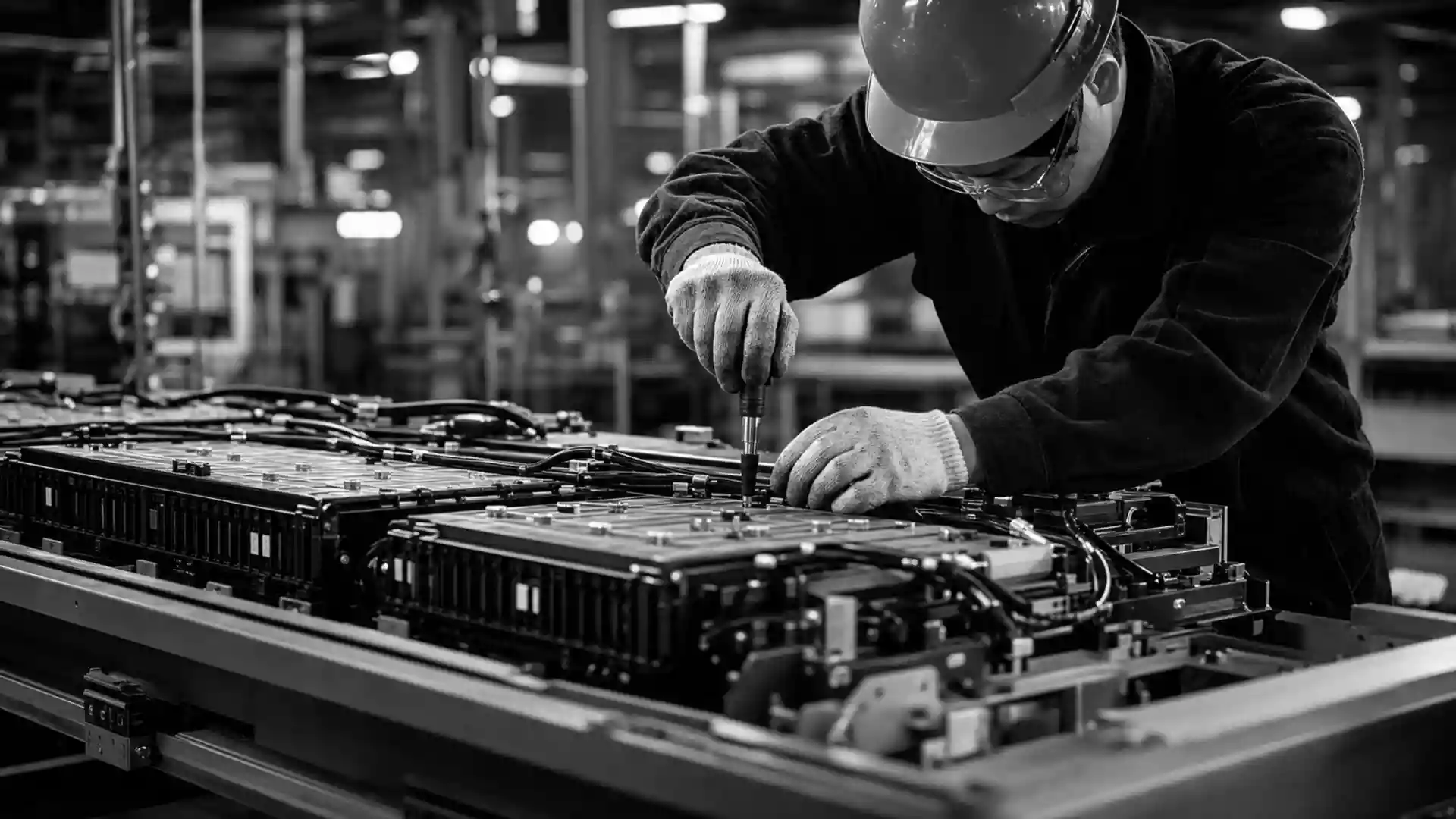
BYD's Indonesian Plant Comes Online as Beijing Tightens the Screws on Its Export Engine
Published on 09/02/2026 at 19:01 | Editorial boerse-global.de
The timing could hardly be more awkward. On the very day BYD switches on its new factory in Subang, Indonesia — a facility built to churn out up to 150,000 vehicles a year — regulators in Beijing are publishing fresh rules that could slow the overseas expansion the plant represents.
The new guidelines, issued Tuesday, oblige Chinese automakers to tighten compliance across foreign investments, cross-border operations, antitrust matters, anti-corruption protocols and social responsibility. Reuters framed the move explicitly against the backdrop of the rapid global push led by BYD, China's dominant new-energy vehicle maker.
A Growth Story With Two Divergent Halves
The regulatory cloud arrives just as BYD's export business has become its most important growth engine. In August, total vehicle sales climbed 17.8 percent to 440,293 units, with overseas deliveries surging 134.5 percent to 189,466 vehicles. That marked the fourth consecutive month of rising global sales, according to Reuters, and the export momentum has been cushioning what remains a soft domestic market in China.
The first half of 2026 tells the same story in starker terms. Overseas revenue hit 181.3 billion yuan, surpassing Greater China sales for the first time and accounting for 53 percent of total revenue, as Bloomberg reported. Meanwhile, cumulative NEV sales fell 15.72 percent to roughly 1.8085 million units in the same period, even as exports jumped 67.8 percent to 792,000 units.
The profit picture, however, is more complicated. BYD's second-quarter net income rose 30 percent to 8.2 billion yuan, snapping a streak of four consecutive quarterly declines. But that figure fell well short of the roughly 48 percent average gain that several banks had penciled in, and revenue slipped 3.2 percent to 194.6 billion yuan. Reuters noted that the overseas business helped support gross margins even as domestic demand flagged.
Should investors sell immediately? Or is it worth buying BYD?
The half-year numbers were less flattering still: net profit dropped 20.54 percent to 12.32 billion yuan, with revenue down 7.13 percent to about 344.815 billion yuan.
What the Share Price Is Saying
Investors have yet to reward the operational stabilisation. The stock trades at around 9.45 to 9.50 euros — it slipped 1.4 percent on the day the new rules were announced — and sits roughly 24 percent below its 52-week high of 12.49 euros, reached on October 2 last year. Over the past 30 days, the shares have lost between 9.1 and 9.5 percent depending on the trading day, and they are down about 12 percent since the start of the year.
Technical indicators paint a similarly cautious picture. The relative strength index stands at 39.6, suggesting weak market sentiment, while the share price is 8.8 percent below its 200-day moving average and 2.1 percent under the 50-day average — a configuration that points to a continuing downtrend unless sentiment shifts.
The market's mood was not helped by a fresh round of model-related headlines over the weekend. The launch campaign around the Sealion 08, BYD's upcoming Ocean-series flagship priced between 230,000 and 280,000 yuan and slated for market debut on September 2, was followed by a further 4.1 percent drop in the share price. Investors increasingly wonder whether operational progress abroad can translate into share-price gains at all.
The Regulatory Wildcard
The central question for the months ahead is whether overseas growth can do more than merely offset domestic weakness — and whether it can survive closer scrutiny from Beijing.
The new compliance guidelines have not yet hardened into concrete restrictions. But they signal that regulators intend to watch the industry's foreign expansion more closely, which could affect the pace and flexibility of future plant projects. For BYD, whose export engine has been compensating for a sluggish home market, that is precisely the part of the business now under the microscope.
BYD at a turning point? This analysis reveals what investors need to know now.
There are other open items on the risk list. Bloomberg has reported on a possible bid by BYD for a Stellantis plant in Canada, but the approach remains unconfirmed and no deal is assured.
What Happens Next
The Indonesian facility in Subang — backed by an investment of around 11.7 trillion rupiah — is not an isolated move but part of a broader wave of overseas commitments BYD has been making while domestic demand falters. If the plant ramps up as planned, it could cement BYD's position in Southeast Asia and reduce its exposure to the brutal price competition at home.
The near-term catalysts are concrete: utilisation rates at Subang over the coming months, followed by sales figures for the Sealion 08 after its September 2 launch. Third-quarter results will ultimately show whether the export boom is translating into sustainable profitability.
For now, the market appears to be treating China's domestic weakness as bridgeable as long as export growth stays in double digits and quarterly operating results hold steady. Should the regulatory environment harden into actual restrictions — or should margins deteriorate again in the third quarter — the downward drift of recent weeks could well extend. The stock's fate, like the company's, now hinges on how freely BYD can keep building cars beyond China's borders.
Ad
BYD Stock: New Analysis - 2 September
Fresh BYD information released. What's the impact for investors? Our latest independent report examines recent figures and market trends.