
BYD's Dual-Pronged Bet: Can Charging Stations and New Markets Close the Home-Market Gap?
Published on 08/29/2026 at 16:12 | Editorial boerse-global.de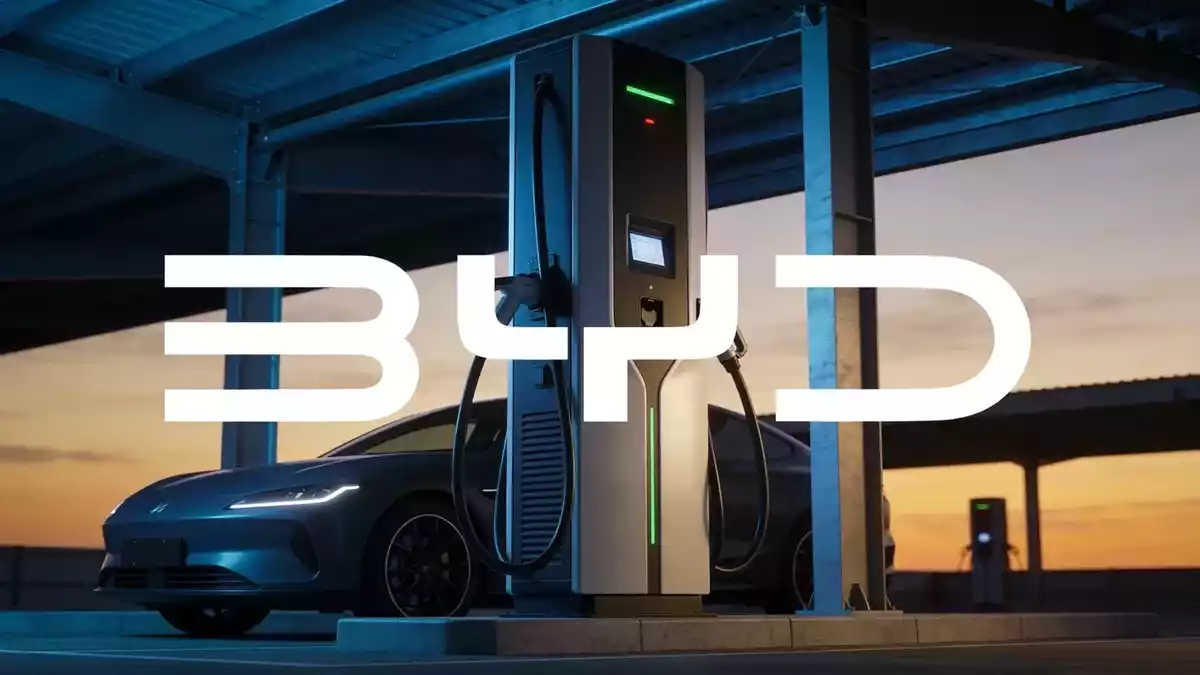
The arithmetic facing BYD is brutally simple, and investors know it. Overseas shipments jumped 67.8 percent to 792,000 units in the first half of 2026, according to the Chinese automobile manufacturers' association, while domestic deliveries collapsed 39.6 percent over the same stretch. The company's international business now contributes 53 percent of group revenue and carries a healthier 22 percent gross margin than the home market — yet the stock still trades roughly 24 percent below its 52-week high of EUR 12.99, reached on August 29, 2025.
That gap between operational momentum and market skepticism is the crux of the BYD investment case right now. The shares closed Friday at EUR 9.92, down 0.4 percent on the day and 2.2 percent on the week, leaving the equity hovering near its 50-day moving average of EUR 9.65 but well beneath the 200-day line at EUR 10.44. Year to date, the paper is off 21 percent.
Management's answer to the doubters is a two-pronged strategy: flood the home market with premium metal while scattering new export beachheads across the globe. The company just switched on its 10,000th flash-charging station in Shenzhen Longhua, part of a network that now spans 325 cities and counts more than 1.83 million registered users. The infrastructure push is deliberately timed to coincide with a wave of new models — the third-generation Tang SUV, which debuted at the Chengdu Auto Show and reaches showrooms in the fourth quarter of 2026, and the flagship Da Han sedan, which is already taking pre-orders. Denza, the premium sub-brand, is also joining the offensive with the N8, which according to registration documents carries the second-generation Blade battery with fast-charging capability.
The charging network is more than a convenience play. It lowers the barrier to entry for first-time EV buyers and deepens loyalty in the premium segments where Denza and the Da Han are positioned — precisely the territory where BYD has historically been weakest and where margins are fattest.
On the export front, the expansion is broadening beyond the established European push. BYD's Canadian website now carries a "Coming Soon" notice, and the company is advertising eleven management positions in Toronto and Vancouver, with a reported annual quota of 49,000 vehicles governing the market entry. The past few days also brought a technology licensing agreement with Runner Automobiles in Bangladesh, the launch of the ATTO 8 in Jamaica, and a memorandum of understanding with Ulaanbaatar covering electric mobility and fast-charging infrastructure in the Mongolian capital. In India, a cheaper variant of the Sealion 7 Dynamic has just been introduced.
Should investors sell immediately? Or is it worth buying BYD?
Morgan Stanley reaffirmed its "Overweight" rating on August 25, counting BYD among its three preferred Chinese auto stocks despite the domestic headwinds.
The bear case, however, is not hard to construct. The first-half numbers released Thursday showed revenue down 7.13 percent to 344.82 billion yuan with net profit off 20.54 percent — evidence that the export surge only partially offsets the domestic erosion. Reuters attributed the second-quarter operational turnaround to the export push, which compensated for weak home demand, but the underlying picture shows revenue falling 3.2 percent in the quarter while profit advanced 29.8 percent, a divergence that points to price pressure only partly neutralized by cost cuts.
BYD chairman Wang Chuanfu warned earlier this year that China's EV market has entered a "brutal knockout phase," and the competitive intensity shows no sign of abating. The regulatory environment adds another layer of uncertainty: in a 2025 inspection, the MIIT flagged BYD among manufacturers with documentation discrepancies regarding production consistency of new-energy vehicles, a reputational issue whose consequences remain unresolved.
The Canada plans, meanwhile, are inferred from job postings and website hints rather than official confirmation — no binding launch date has been announced. And while Berkshire Hathaway's exit from its former BYD stake was completed about a year ago, the memory of that divestment lingers as a psychological overhang for prospective investors.
The bull thesis rests on a simple continuation argument: as long as exports keep growing faster than the domestic market shrinks, the first-half profit decline can be framed as a transitional phase rather than a structural downturn. Production capacity in Hungary and Turkey, combined with the model offensive at home, could create a self-reinforcing loop — particularly if the charging infrastructure helps convert new customers in the premium segment.
The near-term catalysts are concrete. The third-generation Tang's market launch in the fourth quarter of 2026, alongside the ramp-up of Da Han pre-orders, will test whether the product push can actually close the visible gap between domestic and international performance. BYD also aims to have 20,000 charging stations nationwide in China by the end of 2026. And the Canadian entry, whenever it is formally confirmed, will serve as a bellwether for whether the export machine can keep clearing new hurdles — tariffs, logistics costs, and regulatory friction included.
For now, the stock sits 4.9 percent below its 200-day average, a technical signal that the market has yet to be convinced the medium-term trajectory has turned. The next few months will determine whether that caution is warranted or whether BYD's twin engines — infrastructure at home, expansion abroad — can finally outrun the drag from a shrinking domestic market.
Ad
BYD Stock: New Analysis - 29 August
Fresh BYD information released. What's the impact for investors? Our latest independent report examines recent figures and market trends.


