
BrainChip's Platform Pivot Wins Recognition, But the Income Statement Tells a Harder Story
Published on 08/29/2026 at 16:33 | Editorial boerse-global.de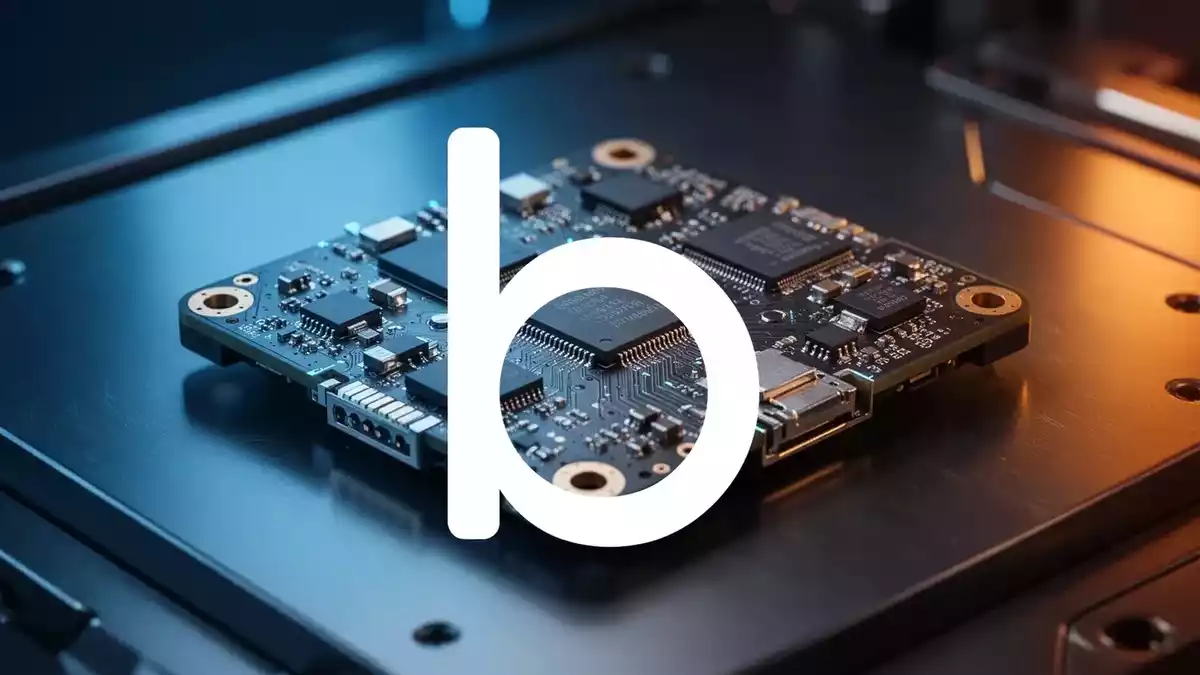
The award arrived with a strategic message attached. When BrainChip's AkidaTag reference platform collected a Global AI Award, the Australian semiconductor firm framed the honour as validation of a broader corporate reinvention — one that moves the company beyond selling individual neuromorphic processors toward delivering complete, integrated system solutions.
It is a repositioning that carries real weight for a business long dependent on discrete chip sales and partner agreements. AkidaTag is designed to demonstrate that BrainChip's technology functions not merely in controlled laboratory settings but can be embedded into finished products. The company's ambition is to become a platform provider, bundling hardware, software and reference designs into a single commercial offering. Whether that transition translates into paying customers remains the pivotal question for shareholders.
A Widening Gap Between Ambition and Operations
The strategic narrative, however, runs ahead of the financial reality. First-half 2026 revenue climbed 19 percent to $1.22 million — a respectable growth rate on its own — but the net loss simultaneously expanded to $12.0 million. The arithmetic is unforgiving: costs are outpacing the top line, not the other way around.
Management attributes the increased spending to investments in research, commercialisation efforts and development of the next-generation AKD2500 chip. One financial chapter has at least reached a clean conclusion: the funding facility with LDA Capital has expired, with all obligations under the agreement substantially fulfilled during the reporting period. That closure removes one source of balance-sheet uncertainty, even as the broader question of how BrainChip will finance its next growth phase lingers, given the persistent operating losses.
The Market's Measured Response
Investors have responded with neither euphoria nor capitulation. The share price closed Friday at €0.0860, up 1.2 percent on the day and 7.5 percent higher over the past 30 days. That short-term recovery follows a dip roughly two weeks ago when the operational details first landed, with the stock having since clawed back 4.0 percent. A strategic partnership with a US-based provider, announced around the same time, provided additional support.
Should investors sell immediately? Or is it worth buying BrainChip?
Yet the longer-term picture remains clouded. The stock sits just below its 50-day moving average of €0.0873, but trades 8.4 percent beneath its 200-day average of €0.0939 — a technical signal that the recent bounce has yet to break the prevailing downtrend. Since the start of the year, the shares have shed 19 percent, and over a twelve-month horizon the decline stands at 22 percent. With a market capitalisation of roughly €208.91 million and 30-day volatility of 55 percent, the market is clearly pricing this growth story with substantial uncertainty.
Milestones That Will Define the Year
The coming months carry the weight of expectation. BrainChip continues to target a key development milestone for the AKD2500 chip by the end of 2026, and internal demonstrations of its GenAI platform are slated to take place before year-end. Both are considered central pillars of the commercialisation strategy aimed at steering the company out of its loss-making territory.
Should those deadlines be met, they would offer concrete evidence that announcements are maturing into actual products. Should they slip without tangible results, investor patience — already tested — is likely to erode further.
Management has also flagged additional product shipments, ecosystem partnerships and customer integrations in the pipeline. The AkidaTag award could serve as a door-opener in that effort, lending credibility to the platform's maturity when courting prospective partners. Earlier this year, in May and June, BrainChip expanded its software partner network with additions including MulticoreWare, P-Product and BeEmotion.ai, and struck a collaboration with MicroIP to accelerate AI systems for the Taiwanese and global electronics markets.
The Core Tension
The fundamental dilemma facing BrainChip — and neuromorphic chip companies generally — is the distance between technological promise and commercial proof. The benefits of the technology, such as lower energy consumption and more efficient edge-based AI processing, are widely acknowledged. But bridging the gap between that efficiency story and the efficiency metrics of the company's own income statement remains the central challenge.
The strategic pivot toward platforms, the industry recognition and the expanding partner ecosystem all point in a constructive direction. Whether they ultimately translate into sustainable revenue growth is the question that will determine whether BrainChip's reinvention becomes a case study in successful transformation or another chapter in the long, difficult journey of bringing neuromorphic computing to the mainstream.
Ad
BrainChip Stock: New Analysis - 29 August
Fresh BrainChip information released. What's the impact for investors? Our latest independent report examines recent figures and market trends.


