
BMW's Munich Assembly Line Fires Up the i3, But the Real Test Is Whether Cost Cuts Can Outrun China's Slide
Published on 08/20/2026 at 02:42 | Redaktion boerse-global.de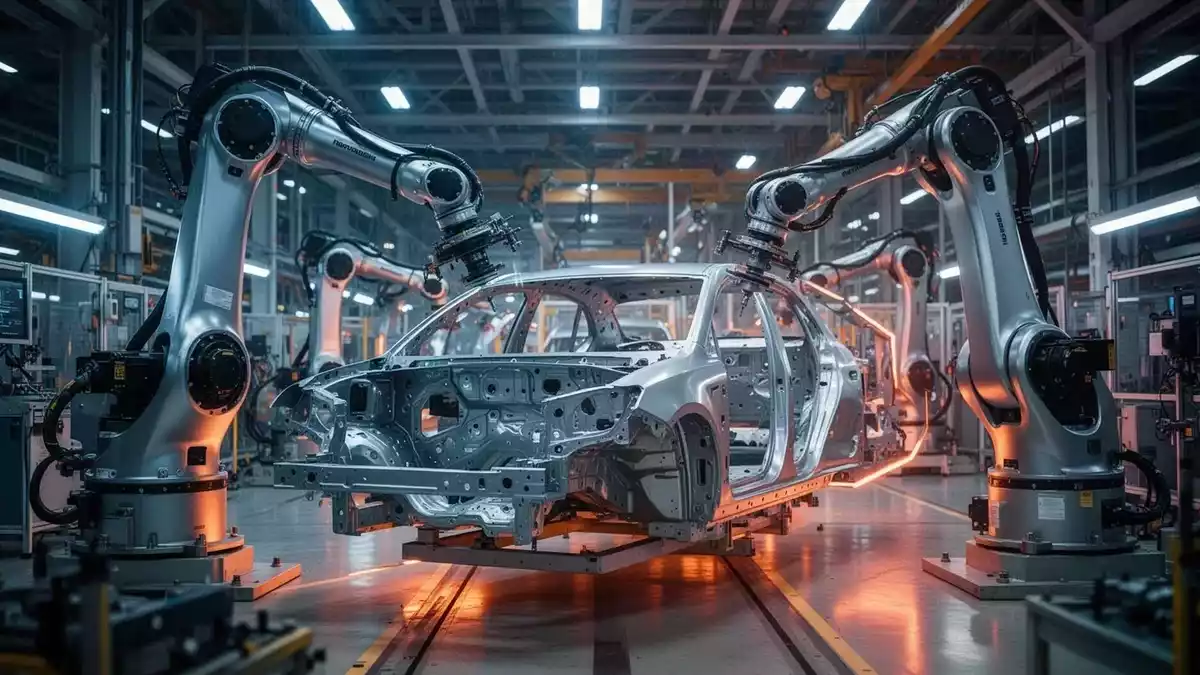
The first Neue Klasse model to roll off a German production line is now a reality, with BMW having commenced series assembly of the all-electric i3 at its Munich headquarters plant. The milestone shifts the conversation from PowerPoint promises to physical output, yet the timing could hardly be more awkward: the company is simultaneously navigating its steepest profit decline in years, a collapsing Chinese order book, and a share price hovering barely three percent above its 52-week low.
Management has touted the i3's manufacturing economics as a genuine step-change, with production costs running roughly 10 percent below those of a comparable combustion-engined model. That efficiency gain is the linchpin of a broader narrative—one in which the Neue Klasse platform is supposed to rescue margins just as the traditional profit engine sputters.
China: The Elephant in the Showroom
The production launch lands squarely in the middle of a pivotal week for BMW's most important market. The company used the Chengdu Motor Show to parade the i3, the iX3, and assorted other models before a Chinese audience, and Friday marks the official start of iX3 pre-orders in the country. The urgency is palpable, and for good reason.
China is where the numbers turn ugly. Second-quarter deliveries there collapsed by 30.2 percent year-on-year, and the first-half deficit stands at 20.4 percent. That demand shock is the primary driver behind an operating profit in the automotive segment that plunged more than 60 percent to €629 million in Q2, dragging group net profit down to €1.2 billion. The core EBIT margin has been cut in half, from 5.4 percent to just 2.3 percent—a figure that now sits uncomfortably close to the company's own full-year guidance of 1 to 3 percent.
A Cost-Cutting Counterweight
In response, BMW has announced plans to shed roughly 8,000 positions by 2027, setting aside around €1 billion to fund the restructuring. CFO Walter Mertl has framed this as an acceleration of efficiency measures, building on the €2.5 billion in savings already banked last year. The buyback program for 2025/2027, meanwhile, continues without interruption—between August 10 and 16 alone, BMW repurchased nearly 525,000 of its own shares.
Should investors sell immediately? Or is it worth buying BMW?
There is a bull case buried in these moves. If the cost reductions land without the disruption of compulsory redundancies, and if the Munich i3 ramp-up follows a steep trajectory while the iX3 approaches its targeted 100,000 orders, the margin floor could be reached sooner than the bears expect. The stock, trading at roughly 40 percent below its 52-week high, has arguably already priced in a good deal of pessimism.
The Bearish Counterargument
The bearish scenario is equally coherent. China was traditionally BMW's earnings engine, and no amount of cost discipline can fully compensate for a structural demand problem there. The company's own guidance—an EBIT margin of just 1 to 3 percent for 2026—leaves precious little room for further shocks. If Chinese deliveries keep sliding, the layoffs merely trim costs without solving the revenue equation.
Add to that a leadership transition: Dorothea von Boxberg, the former Brussels Airlines chief executive, takes over from Ilka Horstmeier on September 1. Her appointment brings executive experience but also an element of uncertainty at a delicate moment.
Analysts have already voted with their price targets. RBC Capital Markets trimmed its target to €60 in mid-August, maintaining a "Sector Perform" rating, while DZ Bank downgraded the stock from Buy to Hold and cut its target to €65. The shares closed at €58.64 in the most recent session—a hair above the €58.48 level cited in other trading data—and have lost roughly 37 percent since the start of the year.
What Happens Next
The near-term calendar offers two concrete checkpoints. First is von Boxberg's board appointment on September 1, which will be scrutinized for any signals about strategic direction. Second are the third-quarter figures, which must demonstrate that the Chinese decline is at least decelerating.
Beyond the factory floor in Munich, BMW is also tending to its digital and brand ambitions. A connectivity deal with Verizon and KDDI for U.S. vehicle services underscores the push into recurring revenue streams, while the announced program for Monterey Car Week 2026—featuring the BMW M Concept Neue Klasse and the Vision BMW ALPINA—is aimed squarely at reinforcing premium positioning.
For investors, the i3 production start is the most tangible evidence yet that the Neue Klasse is moving from announcement to assembly line. Whether the 10 percent cost advantage translates into visible margin improvement, however, will only become apparent in the quarterly reports ahead. Until then, the Chengdu showcase and the iX3 pre-order launch serve as the most immediate gauges of whether this model generation can do what the market is waiting to see: hold the line in China while the cost base shrinks.
Ad
BMW Stock: New Analysis - 20 August
Fresh BMW information released. What's the impact for investors? Our latest independent report examines recent figures and market trends.


